



Resilience & Logistics Intervention for Export Facilitation (RELIEF) Scheme
- The Ministry of Commerce and Industry announced the Resilience & Logistics Intervention for Export Facilitation (RELIEF) scheme with a corpus of ₹497 crore.
- It is a central-sector scheme under the Export Promotion Mission (EPM) to provide immediate support to exporters affected by geopolitical disruptions in West Asia.
- Nodal Body: Export Credit Guarantee Corporation (ECGC) Ltd serves as the implementing agency.
- Objective: It aims to neutralise three cost heads that rose sharply due to the West Asia conflict:
- Logistics Surcharges: Additional freight charges imposed by carriers when ships take a longer, alternate route.
- Conflict Freight Surcharges: Extra fees charged by shipping lines for operating vessels through conflict or high-risk zones.
- War-Risk Insurance: Insurance for cargo and vessels against loss or damage in conflict zones
- Coverage: It covers shipments dispatched between February 14, 2026, and June 15, 2026, to or through 10 West Asian countries (e.g., Saudi Arabia, UAE, Israel, Iran, Kuwait, Qatar)
- Exclusions: The scheme excludes energy shipments like oil and gas, as well as “back-to-town” cargo returned to the original port.
- Review: EPM Steering Committee reviews the geopolitical situation and retains discretion to modify, continue, or withdraw the intervention.
Key Benefits under RELIEF Scheme
- Insurance: Insurance premiums for both existing and new shipments will be maintained at pre-disruption levels.
- Risk Cover: Shipments dispatched between February 14 and March 15, 2026, receive up to 100% war/political risk coverage. Future shipments receive up to 95% cover.
- Obligation: Exporters under Advance Authorisation or EPCG schemes receive an automatic extension of export obligation deadlines to August 31, 2026.
- MSME Relief: MSMEs without ECGC cover can claim 50% reimbursement on additional freight and insurance surcharges, capped at ₹50 lakh per exporter.
- Export Promotion Capital Goods (EPCG) scheme allows duty-free import of capital goods against an export obligation equivalent to 6 times the duty saved within 6 years.
Consumer Justice Report 2026
- Consumer Justice Report 2026 has been released by the India Justice Report to assess the capacity and functioning of consumer redressal commissions in India.
- The report aims to identify systemic gaps and recommend reforms to strengthen consumer protection mechanisms in India.
- Case Pendency: Pending cases increased by 21% (2020–2024), reaching over 5.15 lakh, showing growing stress on the system.
- Delay in Justice: Many cases exceed the 3–5-month disposal timeline under the Consumer Protection Act, 2019, with several pending for years.
- Vacancy Crisis: Nearly 40% of posts are vacant, with many commissions functioning without presidents or members, affecting efficiency.
- Lack of Transparency: State commissions show poor data sharing and RTI response, reducing accountability in case disposal.
- Women’s Representation: Women’s participation dropped from 35% (2021) to ~29% (2025), with very few women heading commissions.
- Judicial Intervention: The Supreme Court of India has invoked Article 142 to allow High Courts to hear consumer appeals where commissions are non-functional.
Reforms Needed
- Fill vacancies through time-bound appointments to ensure all commissions function with adequate staff and leadership, improving efficiency and case disposal rates.
- Strengthen infrastructure and transparency by better budget utilisation, digital case management, and mandatory data disclosure to enhance accountability.
- Promote Alternative Dispute Resolution (ADR) such as mediation to reduce backlog and ensure faster, cost-effective resolution of consumer disputes.
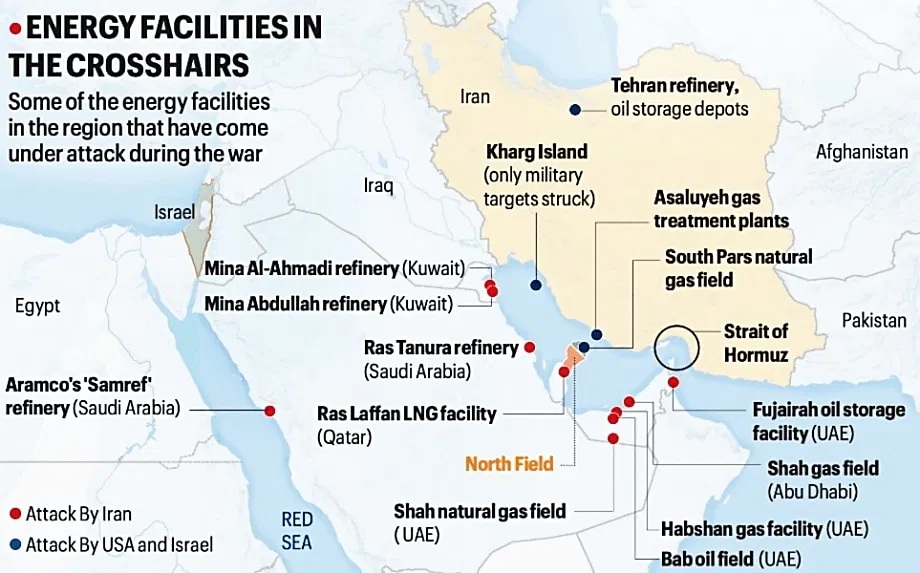
Ras Laffan–South Pars Attacks Heighten India’s Energy Concerns
- Israeli strikes on South Pars and Iranian retaliation on Ras Laffan amid escalating West Asia crisis threaten India’s energy security.
- Iran’s South Pars and Qatar’s Ras Laffan (North Field) together form a single reservoir, the world’s largest natural gas field, shared between the two nations.
Key Concerns for India
- Import Vulnerability: India imports ~90% of its crude oil and ~50% of natural gas, with Qatar providing about 40–47% of LNG and roughly one-third of LPG.
- Infrastructure Impact: Damage to LNG facilities might take 3–5 years to repair, reducing capacity by ~17% and disrupting India’s long-term contracts.
- Macroeconomic Shock: Rising crude and gas prices are increasing India’s import cost, widening the Current Account Deficit (CAD), and exerting pressure on the rupee.
- Fertiliser Stress: India’s urea industry relies on natural gas as feedstock; expensive LNG raises farm costs and increases the government’s fertiliser subsidy burdens.
- Industrial Disruption: Propane and LPG shortages are affecting fuel-dependent MSMEs in manufacturing clusters, causing output reductions and job losses.
- Climate Commitments: The supply shock weakens India’s goal of achieving a 15% natural gas share in the energy mix by 2030 for a gas-based economy.
- Diaspora Security: Attacks on Gulf Cooperation Council (GCC) energy infrastructures risk the safety of the Indian diaspora and could reduce inward remittance flows.
State of Working India Report 2026
- Azim Premji University released the State of Working India 2026 report on “Youth in the Labour Market”.
Key Findings of the Report
- Dividend Peak: India is nearing the peak of its demographic dividend. The working-age population share is projected to begin declining after 2030.
- Graduate Surplus: Between 2004 and 2023, India added roughly 5 million graduates annually, but only 2.8 million entered employment.
- Enrollment Rate: India’s tertiary enrollment rate stands at 28%, comparable to countries with similar per capita incomes.
- Education Drop: The share of young men in education fell from 38% in 2017 to 34% in 2024, as income pressures pushed many to enter the workforce.
- Graduate Unemployment: Graduates accounted for 67% of unemployed youth aged 20-29 in 2023, up from 46% in 2017.
- Salaried Jobs: Only 6.7% of male graduates secured a permanent salaried job within one year of graduating. Only 3.7% entered white-collar roles.
- Salary Trend: Entry-level salaries for young male graduates have largely stagnated since 2011. Graduates earn about twice as much as non-graduates at entry.
- Job Composition: Out of 83 million jobs added in India between 2021-22 and 2023-24, nearly 40 million were in agriculture.
NITI Aayog Publishes Report on India’s Sports Equipment Manufacturing Sector
- Context (PIB): NITI Aayog released a report titled “Realising the Export Potential of India’s Sports Equipment Manufacturing Sector”
- The report outlines a roadmap to make India a global hub for sports equipment manufacturing.
Key Findings of the Report
- Market Share: India holds 0.5% share of the $52 billion global sports equipment export market.
- Scale: MSMEs account for 90% of India’s sports equipment production.
- Clusters: Production is concentrated in clusters like Jalandhar (Punjab) and Meerut (Uttar Pradesh).
- Narrow Range: Exports are limited to cricket equipment, inflatable balls, boxing gear, and athletic or weightlifting equipment.
Structural Challenges
- Cost Gap: Indian manufacturers face a 10-20% cost disadvantage compared with China and Pakistan.
- Input Duties: High customs duties on carbon fibre, EVA foam, and polyurethane raise input costs.
- Testing Delay: Costs and delays (up to 20 weeks) in international testing and accreditation limit entry into high-value markets.
- Freight Cost: The inland locations of legacy clusters increase freight costs and extend lead times.
Strategic Roadmap
- Investment Plan: Invest ₹7,500 crore in coordinated infrastructure and ecosystem development from 2027 to 2031.
- New Clusters: Establish four greenfield clusters in port-proximate states such as Gujarat, Tamil Nadu, and Andhra Pradesh.
- Brand Push: Allocate ₹500 crore to promote a “Brand India” identity to enhance credibility with international buyers.
- Olympic Link: Leverage India’s bid for the 2036 Olympics to integrate local manufacturers into global procurement networks.
- Policy Cohesion: Integrate all sports goods policymaking under the Ministry of Youth Affairs & Sports for faster decision-making.
Expanded Targets for 2036
- Export Growth: Scale sports equipment exports from $275 million to $8.1 billion, aiming for an 11% global export share.
- Export Value: Increase total sports goods export (including apparel and accessories) from $2 billion to $24 billion.
- Job Creation: Create approximately 5.4 million new jobs across MSME-led clusters
Supreme Court urges Government to Revisit Crop Diversification Policy
- In Kisan Mahapanchayat v. Union of India and Ors, the policy of importing yellow dal without any duty was challenged.
- The policy potentially lowered domestic prices and discouraged local farmers from growing pulses.
Key Initiatives for Crop Diversification
- Crop Diversification Programme (CDP) under Pradhan Mantri- Rashtriya Krishi Vikas Yojana (PM-RKVY)
- Promotion of pulses under Mission for Aatmanirbharata on Pulses, oilseeds under the National Mission on Edible Oil (NMEO)-Oilseeds and horticultural crops under the Mission for Integrated Development of Horticulture (MIDH).
What is Crop diversification?
- It refers to the addition of new crops or cropping systems to agricultural production on a particular farm based on the different returns from value- added crops with complementary marketing opportunities.
Need for Crop Diversification
- Dominance of Wheat and Paddy: Policies and practices have resulted in surplus production of wheat and paddy, impacting production of pulses and oilseeds and increasing import dependence.
- Environmental Sustainability: The paddy-wheat cycle, especially in North India, has led to depletion of groundwater and soil degradation.
- Nutritional security: Crop diversification can ensure increased consumption of pulses in a balanced diet.
- Soil Health: Pulses are nitrogen-fixing crops which improve soil fertility, reducing the need for chemical fertilizers.
Challenges
- Absence of an incentivized MSP: This results in Pulses being sold in open market at prices below the MSP, making pulses farming unattractive for farmers.
- Mismatch in MSP and Import policies, affecting financial viability of crop diversification.
- Others: Lack of infrastructure, lack of farm resources and awareness, lack of capital and risk taking ability, climatic factors, lack of technical knowledge etc.
Key Suggestions of SC
Governance Reforms:
- Strengthen inter-ministerial coordination to address gaps in agricultural policy.
- Evolve a coordinated long-term policy for stability and predictability for pulses and oilseed farmers.
MSP and Price Support:
- MSP for pulses must be high enough to cover the specific risks and expenditures incurred by small-scale farmers, in line with the Swaminathan Committee.
- Ensuring a guaranteed platform for farmers to sell pulses at least at MSP to encourage crop diversification.
- Multi-stakeholder discussions, including ground-level experts on key issues like absence of an incentivised MSP for pulses.
- Import Policy: Aligning Import Duty Structure with the Domestic MSP to ensure that imports do not disincentivize local production.
Convention held to mark the centenary year of the Mahad Satyagraha
About Mahad Satyagraha
- Date & Place: Started on 20 March 1927 at Chavdar Tale (Tank), Mahad (Maharashtra).
- It was a non-violent protest led by Dr. B. R. Ambedkar, aimed to secure the right of untouchables to access public drinking water, which was denied due to caste discrimination.
- Symbolic acts like drinking water from the public tanks and burning of the Manusmriti were performed, rejecting the caste system.
- Key leaders: Anandrao Chitre, Bapu Sahastrabuddhe, Sambhaji Gaikwad, Ramchandra More.
- After a decade of litigation, in 1937 the Bombay High Court upheld the right of untouchables to use the public tank.
Postal Ballot
- The Election Commission has extended the facility of postal ballot voting to electors above 85 years of age and Persons with Disabilities.
About Postal Ballot
- Allows voters to cast their votes on an electronically received postal ballot, avoiding the need to visit polling stations physically.
- The voter must print it, mark their choice manually, and return it by physical post.
- Legal Framework: Governed by Conduct of Election Rules, 1961 and Representation of People Act, 1951.
- Eligibility: Service voters, special voters, absentee voters (seniors above 85, persons with disabilities, etc.) those under preventive detention, and election duty personnel.
- Service Voters include Members of the Armed Forces, central armed police forces, government servants posted abroad etc.
- Special voters include the President, Vice President, Governors, Cabinet Ministers, etc. and their spouses.
Project Insight (PI) initiative
- India’s use of Artificial Intelligence (AI) in tax governance, particularly through the Project Insight (PI) initiative, has gained attention for improving compliance and revenue mobilisation.
About Project Insight (PI) initiative:
- Project Insight is an AI-driven tax administration system that uses big data analytics to track financial transactions and detect tax evasion.
Organisation:
- Implemented by the Income Tax Department (ITD), Ministry of Finance, Government of India.
Aim:
- Enhance voluntary tax compliance: Encourage taxpayers to report accurate income through data-based nudges.
- Strengthen tax enforcement: Identify high-risk cases of tax evasion using AI and analytics.
Key Features
- INTRAC (Analytics Engine): Uses AI to create a 360° financial profile of taxpayers from multiple data sources.
- NUDGE Strategy: Sends non-intrusive reminders (SMS/email) to correct discrepancies in tax returns.
- Automated Risk Assessment: Prioritises cases based on risk level and scale of evasion, improving efficiency.
Joint Parliamentary Committee (JPC)
- The Lok Sabha has extended the tenure of the Joint Parliamentary Committee (JPC) examining the ‘One Nation, One Election’ proposal till the Monsoon Session 2026.
About Joint Parliamentary Committee (JPC):
- An ad-hoc (temporary) committee set up for a specific purpose and duration. It is dissolved once its report is submitted to the Parliament. A JPC is a powerful, ad-hoc legislative body comprising members from both Houses of Parliament, established to investigate specific issues of public importance or to scrutinize complex pieces of legislation.
- Established In: While joint committees have existed since Independence, the structured committee system was formally strengthened in 1993 to ensure greater executive accountability.
- Members: The size is not fixed and depends on the motion passed.
- Usually, the ratio of members is 2:1 (twice as many from Lok Sabha as from Rajya Sabha).
How it is Formed?
- A motion is moved in one House (typically Lok Sabha) and passed.
- The other House must agree to the motion.
- The members are then nominated/elected by the respective Houses.
Functions:
- In-depth Scrutiny: Examines specific bills (like the current ‘One Nation, One Election’ bill) or financial irregularities.
- Evidence Collection: It has the power to summon individuals, experts, or government officials to testify and can call for confidential documents.
- Fact-Finding: Investigates controversial matters (scams, pesticide residues, etc.) to identify regulatory loopholes.
- Recommendations: Suggests legislative or administrative changes to the government.
Significance
- Bi-partisan Scrutiny: Since it includes members from both Treasury and Opposition benches, it provides a balanced perspective on controversial issues.
- Expert Deliberation: It allows for a more detailed, technical discussion on bills that might not be possible on the floor of the House due to time constraints.
- Accountability: It acts as a check on the Executive, ensuring that government policies and actions are transparent and legally sound.
World Happiness Report 2026
- The World Happiness Report 2026 was recently published, highlighting the link between social media use and youth wellbeing.
About World Happiness Report
- Publication: Wellbeing Research Centre at the University of Oxford has been publishing the report annually since 2012, with Gallup and the UN Sustainable Development Solutions Network (SDSN).
- Key Parameters: It uses six indicators — GDP per capita, social support, healthy life expectancy, freedom, generosity, and perceptions of corruption.
Key Global Rankings
- Top Performers: Finland maintained 1st position for the ninth consecutive year, followed by other Nordic countries, Iceland and Denmark.
- Notable Outlier: Costa Rica rose to 4th position, marking the highest-ever rank for a Latin American country, driven by strong community bonds.
- Bottom Performers: Afghanistan ranked the lowest (147th), followed by Sierra Leone and Malawi.
India’s Position
- Rank: India rose to 116th from 118th in 2025 among 147 countries, with gains in social support and healthy life expectancy
- Regional Comparison: India stayed below Nepal (99th) and Pakistan (104th), but above Bangladesh, Sri Lanka, and Afghanistan.
Key Findings on Social Media Use and Well-being
- Age Trend: Youth aged 15–24 report lower life satisfaction than those 60+ in English-speaking Western regions (US, Canada, Australia, and New Zealand).
- Vulnerable Group: Adolescent girls spending over five hours daily on comparison-heavy platforms experience the steepest declines in mental health.
- Digital Paradox: Digital access increases happiness in developing countries like India through education and community, but overuse leads to stress.
- Optimal Threshold: Youth using social media for less than one hour daily report the highest well-being, even higher than non-users.
Banana Cluster Project
- Context (PIB): Agriculture Ministry has announced a Banana Cluster project in Jalgaon, Maharashtra.
- The cluster will develop facilities like planting material, pre-cooling units, cold chains, & food processing.
- It will promote Good Agricultural Practices (GAP), mechanisation, biocontrol, and quality planting material to improve yield and quality.
- Subsidies will be provided under the Mission for Integrated Development of Horticulture (MIDH) and Agriculture Infrastructure Fund (AIF).
Jalgaon Banana
- Jalgaon (Maharashtra) is popularly known as the “Banana City” of India.
- It contributes 16% of India’s banana production; it is the 7th largest banana producer in the world.
- Black cotton soil, tropical climate, and widespread drip irrigation make it ideal for banana cultivation.
- In 2016, the Jalgaon Banana got the Geographical Indication (GI) Tag.
Banana Cultivation in India
- Banana is native to India and is widely grown in the tropical, sub-tropical, and coastal regions of India.
- India is the largest producer of bananas in the world, with a share of around 25% in total output.
- Key Banana-Producing States: Andhra Pradesh (largest), Maharashtra, Karnataka, & Tamil Nadu.
- Banana ranks 1st in production and 3rd in area among India’s fruit crops.
- Climate: 15–35°C temperature, high humidity (75–85%), and 650–750 mm monsoon rainfall; sensitive to cold (<12°C) and strong winds.
- Soil: Grows best in deep, well-drained loamy soil rich in organic matter & nutrients.
- Challenges: It is a highly perishable crop vulnerable to pests, diseases, and price fluctuations.
Prambanan Temple Complex
- India and Indonesia have partnered to restore the Prambanan Temple Complex located in the Yogyakarta region of Java, Indonesia.
- Restoration will focus on preserving the interconnected heritage ecosystem, including Sewu and Plaosan temples.
- The project will use anastylosis technique by reassembling the temple with original material using minimal new material to maintain authenticity.
- The restoration reflects India’s use of heritage conservation as soft power to strengthen ties with Southeast Asia under its Act East Policy.
Prambanan Temple
- It is a 9th century Hindu temple complex dedicated to the Trimurti (Brahma, Vishnu, Shiva).
- Constructed by the Hindu Sanjaya dynasty (~850 CE) under King Rakai Pikatan, marking the shift of the patronage from Mahayana Buddhism to Shaivite Hinduism.
- It is the largest Hindu temple site in Indonesia and second largest in Southeast Asia after Angkor Wat.
- Ramayana: Temple walls are decorated with intricate bas-relief carvings of the Ramayana epic.
- Recognised as a UNESCO World Heritage Site (1991) for its cultural and architectural significance.
India’s Previous Restoration Projects in South-East Asia
- Angkor Wat, Cambodia: Largest Hindu temple in the world; built in the 12th century by Khmer Empire; dedicated to Vishnu; later converted to a Buddhist temple; UNESCO World Heritage Site (WHS).
- Mỹ Sơn, Vietnam: Ancient temple of the Champa Kingdom (4th –13th century) in Vietnam; a Shaivite Hindu site with Shiv lingas; UNESCO WHS.
- Ananda Temple, Myanmar: 11th – 13th century Buddhist temple (Pagan Empire); considered as one of the finest examples of Mon architecture; located in the Bagan archaeological zone; UNESCO WHS.
- Vat Phou, Laos: Ancient Khmer-Hindu temple dedicated to Shiva (6th –13th century); built at the base of Phu Kao sacred mountain; later converted for Buddhist use; UNESCO WHS.
Discovery of a New “Liquid Planet” Classification
- James Webb Space Telescope (JWST) observations showed that Planet L 98-59 d remains in a permanent molten state, establishing a new “liquid planet” category.
- Previous Categories: Small exoplanets were classified as rocky ‘gas-dwarfs’ with hydrogen atmospheres and ‘water worlds’ with deep oceans.
- Significance: Studying its persistent magma ocean can provide insights into planetary evolution and Earth’s early molten stages.
About Planet L 98-59 d
- The exoplanet lies about 35 light-years away from Earth. It has about 1.6 times Earth’s radius and roughly 2.3 times Earth’s mass.
- It has a notably low density for its size, approximately 40% that of Earth.
- It exists in a “mushy, molten state” like molasses, where the mantle is an ocean of liquid silicate.
- Atmosphere: A thick atmosphere rich in hydrogen sulphide (H₂S) surrounds the planet, giving off a characteristic rotten-egg smell.
- Heat Retention: This atmospheric insulation and tidal heating keep the planet in a permanently molten state with surface temperatures near 1,900 °C.
- Tidal Heating: The planet’s orbital motion causes varying gravitational forces that stretch and compress its interior, generating geothermal heat through internal friction.
Sathyamangalam Tiger Reserve (STR)
- Tamil Nadu government has sealed 42 illegal resorts in Sathyamangalam Tiger Reserve.
- Sathyamangalam Tiger Reserve (STR) is the largest wildlife sanctuary in Tamil Nadu and part of the Nilgiri Biosphere Reserve.
- Connectivity: It forms a vital bridge between the Western Ghats and the Eastern Ghats and is contiguous with Bandipur, Mudumalai, and Biligiri Ranganatha Temple Tiger Reserves.
- Elephant Reserve: STR forms part of the Brahmagiri-Nilgiri-Eastern Ghats Elephant Reserve. It has one of the world’s largest Asian elephant populations.
- Terrain: The Landscape is highly undulating, with elevation ranging from 750 to 1,800 metres.
- Rivers: Bhavani and Moyar rivers flow through the reserve.
- Vegetation: It is part of the South Deccan Plateau dry deciduous forests ecoregion and contains a diverse mix of deciduous, semi-evergreen, thorn, and riparian forests.
- Key Flora: Sandalwood, Teak, Bamboo, Terminalia arjuna, etc.
- Key Fauna: Tigers, Indian Elephants, Leopards, Gaurs, Dholes, Sloth Bears, Indian Vultures, etc.
- Award: STR received the TX2 Award in 2022 for doubling its tiger population since 2010.
Record Growth in Horticulture Sector
- Horticulture has emerged as a key driver in boosting farmers’ income, with record growth in both area & production.
- Area: Total horticulture area increased to 301.36 lakh hectares in 2024–25, a 3.61% rise from the previous year, reflecting expansion across crops.
- Production: Production reached 3707.38 lakh tonnes in 2024–25 (4.51% rise), showing strong growth in overall horticulture output.
- Growth in 2025–26: First Advance Estimates project 3708.46 lakh tonnes production in 2025–26.
- Fruits & Vegetables: Fruits production was up by 4.13% & vegetables by 5.11%, forming bulk of production.
- Onion Surge: Onion production rose sharply to 307.67 lakh tonnes with major area expansion.
- High-Value Crops: Significant growth in spices, flowers, & medicinal plants.
- Policy Push: Growth driven by technology, irrigation, and market support, boosting farmer income.
National Defence Industries Conclave (NDIC) 2026
- Context (PIB): NDIC 2026, held in New Delhi, emphasised defence innovation, MSME integration, and the indigenous drone ecosystem.
- It is a national-level conclave organised by the Department of Defence Production under the Ministry of Defence, aimed at promoting advanced manufacturing and indigenisation in the defence sector.
- Theme: “Advanced Manufacturing Technologies”.
- Focus: On technologies like Drone Manufacturing, AI, robotics, additive manufacturing, digital twins, and smart materials.
- Initiatives Launched: Defence India Start-up Challenge-14 and ADITI Challenges 4.0
- Significance: Strengthens MSME participation, defence indigenisation, and Atmanirbhar Bharat and enhances technological capability and global competitiveness.
- Acing Development of Innovative Technologies with iDEX (ADITI) focuses on developing high-end, strategic and deep-tech defence technologies to reduce import dependence.
- Defence India Start-up Challenge (DISC) is an initiative under iDEX to promote innovation by start-ups, MSMEs, and innovators in the defence sector; it aims to solve real-world defence problems.
Innovations for Defence Excellence (iDEX)
- Launched in 2018 by the Ministry of Defence & implemented by Defence Innovation Organisation.
- Objective: Aims to promote innovation & indigenous technology development in defence & aerospace.
- Features & Mechanism: Engages start-ups, MSMEs, innovators, and academia and provides financial grants, mentorship, and access to testing infrastructure.
- Operates through programmes like DISC, iDEX4Fauji (i4F), SPARK and ADITI.
Floating LiDAR Buoy System
- The National Institute of Ocean Technology (NIOT) has successfully tested an indigenous Floating LiDAR Buoy System off the Muttom coast in Tamil Nadu.
About Floating LiDAR Buoy System:
- The Floating LiDAR (Light Detection and Ranging) Buoy is a sophisticated oceanic platform designed to provide high-resolution vertical wind profiles and meteorological data from the sea surface.
- Developed By: The National Institute of Ocean Technology (NIOT), an autonomous body under the Ministry of Earth Sciences, Government of India.
- Aim: To accurately map offshore wind energy potential, enhance cyclone tracking, and provide real-time data for Blue Economy initiatives.
Science Behind Working:
- The system operates on the principle of Optical Remote Sensing.
- The buoy remains stable on the ocean surface while its integrated LiDAR unit emits infrared laser pulses into the atmosphere.
- These pulses hit aerosols, dust, and water droplets in the air and reflect back (Backscattering).
- The system measures the Doppler Shift in the frequency of the returned light to calculate wind speed and direction at various altitudes simultaneously.
Key Functions:
- Vertical Profiling: Unlike traditional anemometers, it can measure wind conditions at multiple heights up to 300 metres above sea level.
- Real-time Monitoring: It continuously tracks wind speed, direction, turbulence, and atmospheric pressure.
- Ocean-Atmosphere Interaction: It gathers data on how sea surface conditions influence air movement, which is critical for climate modeling.
- Data Transmission: Equipped with satellite or cellular telemetry to transmit live data to shore-based research stations.
Significance:
- Crucial for identifying the best locations for offshore wind farms, supporting India’s renewable energy targets.
- Provides more accurate data for predicting the intensity and landfall of cyclones and storms.
- Reduces India’s dependence on expensive imported buoy technologies and foreign consultancy for marine surveys.
The UN Commission on the Status of Women
- The UN Commission on the Status of Women (CSW) concluded its 70th session on March 19, 2026, where 190 member states adopted historic Agreed Conclusions.
About The UN Commission on the Status of Women:
- A functional commission of the Economic and Social Council (ECOSOC) and the primary organ for global policy-making on women’s rights. The CSW is the principal global intergovernmental body exclusively dedicated to the promotion of gender equality and the empowerment of women.
- Established In: June 1946, shortly after the founding of the United Nations.
- Aim: To promote women’s rights in political, economic, civil, social, and educational fields and to ensure that gender equality is integrated into all UN activities and national policies.
Key Functions:
- Setting Global Standards: It formulates policies, standards, and norms that define the rights of women and girls globally, such as the landmark Beijing Declaration (1995).
- Monitoring Progress: It reviews the implementation of international agreements by member states and monitors the progress of the 2030 Agenda for Sustainable Development (specifically SDG 5).
- Thematic Policy Development: Each year, the commission focuses on a priority theme to create actionable strategies for member states.
- Advocacy and Awareness: It provides a high-level platform for heads of state, NGOs, and civil society to highlight emerging issues affecting women, such as digital exclusion or climate impact.
- Addressing Crisis Contexts: The commission brings global attention to the highest price paid by women in conflict zones, from Afghanistan and Gaza to Ukraine and Sudan.
- Coordination and Accountability: It supports the work of UN Women in coordinating the UN system’s gender-related activities and ensuring institutional accountability.
Key Outcomes of the Agreed Conclusions:
- Mandatory Reform of Discriminatory Laws: States must amend laws on marriage, property, and family to eliminate gender bias, ensuring women achieve equal legal rights and protection.
- Formal Recognition of Community Justice: Paralegals and community justice workers are formally integrated into legal systems to improve access for rural women.
- Digital Justice and AI Governance: Promotes use of technology for justice delivery while regulating AI biases and tackling tech-enabled gender violence.
- Survivor-Centered Justice in Crisis Contexts: Ensures trauma-informed, accessible justice systems for victims of violence, especially in conflict and humanitarian situations.
- Universal Access to Sexual and Reproductive Health: Reaffirms women’s rights to healthcare and reproductive autonomy as essential for dignity, equality, and justice.
Malawi
- India and Malawi held a high-level bilateral meeting during the Bharat Electricity Summit 2026 in New Delhi to strengthen cooperation in the energy sector.
About Malawi:
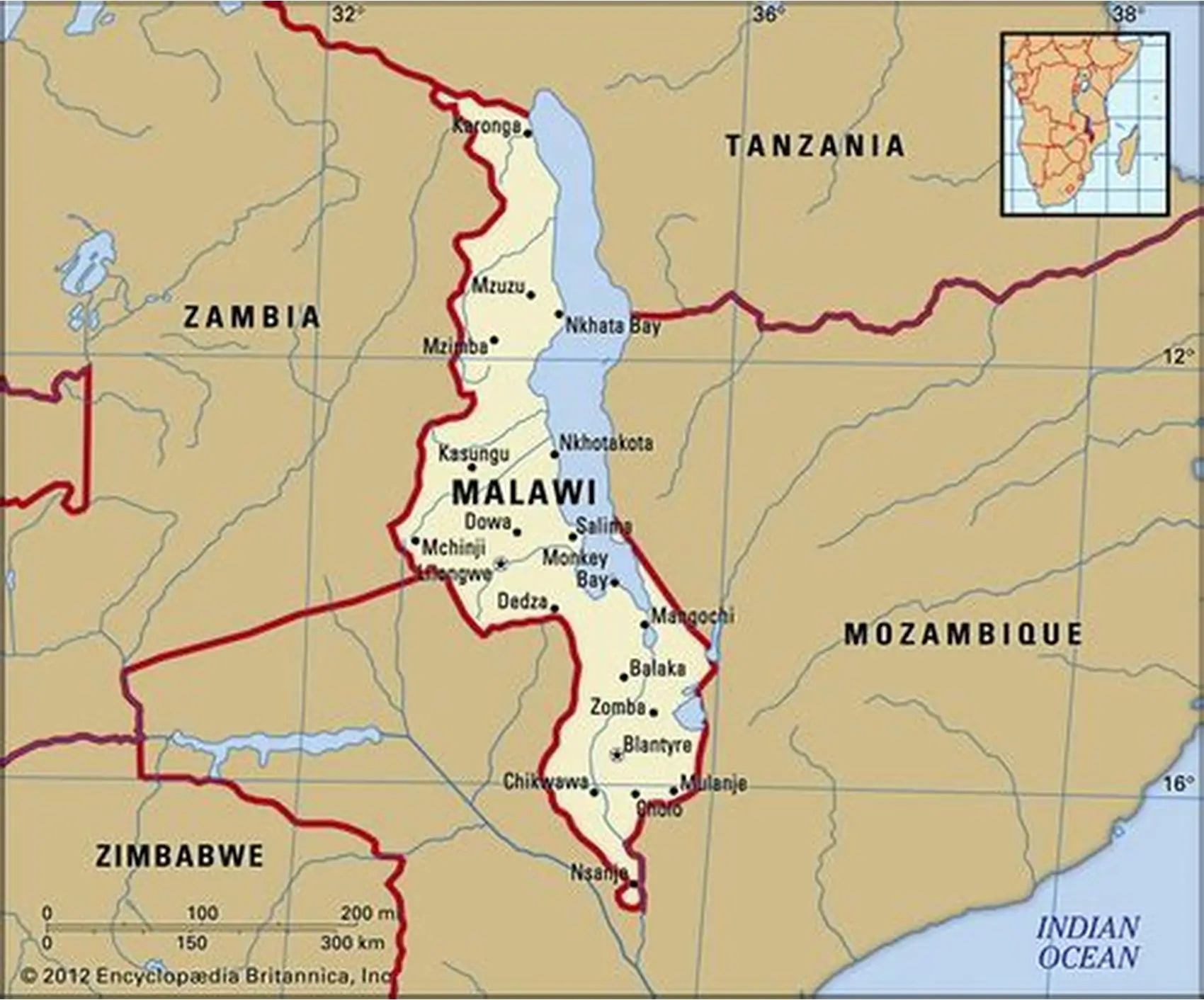
- A multiparty republic in Southeastern Africa, often referred to as the Warm Heart of Africa due to the friendliness of its people. Malawi is a resilient, landlocked nation in Southeastern Africa known for its extraordinary topography and agricultural potential.
- Located in: Southeastern Africa, occupying a narrow strip of land along the East African Rift Valley.
- Capital: Lilongwe.
- Neighboring Nations: It is bordered by Zambia to the west, Tanzania to the north and northeast, and Mozambique to the east, south, and southwest.
Key Features:
- Lake Malawi (Lake Nyasa): The dominant feature of the country, covering more than one-fifth of its total area. It is the third-largest lake in Africa and is known for its immense biodiversity.
- East African Rift Valley: A massive trough-like depression running north to south through the country, containing the lake and the Shire River valley.
- Mulanje Massif: Located in the south, it contains Sapitwa Peak, which at 3,002 meters (9,849 feet) is the highest point in South-Central Africa.
- Shire River: The only outlet of Lake Malawi, which flows south to join the Zambezi River in Mozambique, serving as a critical source for hydroelectric power.
- Highland Plateaus: Large areas of central Malawi consist of plateaus (2,500–4,500 feet) such as the Nyika and Viphya highlands, which are vital for agriculture.
Significance:
- With its extensive river systems and solar exposure, Malawi has significant untapped potential for hydroelectric and solar energy, which India is now helping to develop.
- The country is a major producer of tobacco, tea, and sugar, though it faces challenges in balancing large estates with subsistence farming.
- Lake Malawi National Park is a UNESCO World Heritage site, home to hundreds of species of cichlid fish found nowhere else on Earth.
Sea Dragon 2026
- India has participated in the United States Navy-led exercise ‘Sea Dragon 2026’ taking place in Guam.
- It is an annual multinational exercise to strengthen anti-submarine warfare (ASW) capabilities in the Indo-Pacific region.
- Participants: Five Indo-Pacific nations are participating, the US, India, Australia, Japan, & New Zealand.
- Indian Asset: Indian Navy has deployed its P-8I Poseidon maritime patrol aircraft for the exercise.
- Key Focus: Includes detecting, tracking, and responding to simulated and live submarine targets to improve maritime interoperability.
- Significance: It strengthens collective deterrence and ASW readiness against rising undersea threats and promotes a Free and Open Indo-Pacific.
Irula Tribe
- The Irula community in Tamil Nadu is celebrating the auspicious Masi Magam festival.
- Irula (or Irular) are a Dravidian ethnic group and one of India’s oldest indigenous communities.
- Distribution: They mainly reside in Tamil Nadu, Kerala, and Karnataka.
- The community is classified as a PVTG in Tamil Nadu.
- Language: They speak Irula, a South Dravidian language closely related to Tamil and Kannada.
- IVC Link: A 2019 DNA study of Indus Valley Civilisation skeletons revealed a genetic link to the Irula.
- Livelihood: Known for traditional snake and rat catching, providing 80% of India’s anti-snake venom.
- Deity: Their primary deity is Goddess Kanniamma, closely associated with the cobra.
Masi Magam Festival
- Masi Magam is a Hindu festival observed annually during the Tamil month of Masi (February-March).
- Devotees believe that heavenly beings descend to Earth to bathe in sacred water bodies.
- Theerthavari Utsavam: Deities from temples are taken to water bodies for a ceremonial bath.