



DECEMBER 15, 2025
Fourth National Lok Adalat of 2025 successfully resolved 2.59 crore disputes
- From 2022-23 to 2024-25, more than 23.5 crore cases have been resolved in various Lok Adalats across India.
Lok Adalat Framework
- Established: under the Legal Services Authorities Act, 1987 to provide speedy and cost-effective justice as an Alternative Dispute Resolution (ADR) mechanism.
- Objective: Reduce pendency (e.g. more than 4.7 crore pendency as per NJDG), promote consensual settlements, and strengthen access to justice.
- Authority: Organised by the NALSA with the CJI as Patron-in-Chief.
- Enforcement: Awards are final, binding, equivalent to a civil court decree, with no appeal provision.
- Scope: Covers pre-litigation and pending cases, excluding non-compoundable offences and divorce matters.
Types of Lok Adalats
- National Lok Adalat (NLA): Involve simultaneous, nationwide sittings on a single day at all levels of the judiciary, from the Supreme Court down to the Taluk Levels, aiming to clear a large volume of cases.
- Permanent Lok Adalat (PLA): Organized for cases related to Public Utility Services (e.g., transport, postal, telegraph, electricity, water supply) up to ₹ 1 Crore.
E-Lok Adalats and Mobile Lok Adalats:
- E-Lok Adalats allow for remote participation and bring justice through digital platforms.
- Mobile Lok Adalats are organized to travel from one location to another to resolve disputes.
NCAER Report on Employment
The National Council of Applied Economic Research (NCAER) released a report titled “India’s Employment Prospects: Pathways to Jobs.”
- It highlights skilling and small enterprises as key drivers of job creation to sustain the 8% GDP growth.
- The report underlines the role of skilling and small enterprises as key drivers of job creation in the country.
- The NCAER is India’s oldest and largest independent, non-profit think tank. Established in New Delhi in 1956, it conducts evidence-based economic research to guide public policy.
Key Findings of the Report
- Employment Pattern: India’s recent employment growth is driven mainly by necessity-based self-employment in low-technology, subsistence household enterprises.
- Income Level: Despite economic growth, India’s per capita GDP is relatively low, ranking 128th globally.
- Skill Deficit: Transition to skilled labour has been slow; only 4.1% workers had vocational training in 2024, much less than in countries like Germany, Singapore, and Canada.
- Job Potential: A 9% rise in skilled workers could generate about 9.3 million jobs by 2030.
- Multiplier Effects: Moderate growth of labour-intensive sub-sectors could increase employment in manufacturing by 53% and in services by 79%.
Policy Recommendations for Job Creation
- PLI Reorientation: Redirect Production-Linked Incentives toward labour-intensive sectors like textiles, garments, footwear, and food processing.
- Service Sectors: Increase support for tourism, education, and healthcare to generate large-scale, employment-intensive job opportunities.
- Digital Adoption: Improve access to digital technologies and credit, as enterprises using digital technologies hire 78% more workers than non-digital firms.
Empanel Heritage Conservation Architects
- The Ministry of Culture has initiated a process to empanel heritage conservation architects for the upkeep, conservation, and restoration of ASI-protected monuments.
About Empanel Heritage Conservation Architects:
- A heritage (conservation) architect is a specialised professional trained in the restoration, conservation, and management of historic structures, ensuring preservation of architectural integrity, materials, and cultural value in line with established conservation norms.
The Initiative
- The Ministry of Culture has begun empanelling qualified conservation architects to form a national pool approved by the Archaeological Survey of India (ASI).
- This allows donors, corporates, and private entities to directly engage ASI-approved professionals for conservation works funded through the National Cultural Fund (NCF).
- Key Features of the Initiative
- Donor flexibility: Donors can choose architects from the ASI-approved panel for monuments of their choice.
- ASI oversight mandatory: ASI will continue to monitor all projects to ensure compliance with scientific conservation standards.
- Defined responsibilities: Empanelled architects will prepare Detailed Project Reports (DPRs), design conservation methods, provide project management support, and supervise execution.
- Execution mechanism: Actual restoration work will be carried out by agencies selected by donors, subject to ASI approval.
- Eligibility criteria: Architects must have prior experience in conserving or restoring heritage structures over 100 years old.
- Tenure: Empanelment valid for three years, with annual performance review.
New Insurance Bill, 2025
- The Sabka Bima Sabki Raksha (Amendment of Insurance Laws) Bill, 2025, aims to modernise India’s insurance framework in line with Insurance for All by 2047.
- It has amended the Insurance Act 1938, the LIC Act 1956, and the IRDAI Act 1999 to expand the insurance coverage.
Status of Insurance Sector in India
- Insurance Market (Global): India’s overall insurance market is ranked the 10th largest in the world in terms of total premium volume.
- Life Insurance Sector: India also ranks 10th globally in the life insurance business.
- LIC Global Ranking: The Life Insurance Corporation of India (LIC) is ranked among the 3rd strongest insurance brands globally according to Brand Finance’s 2025 report.
- Market Size: The Indian insurance market was valued at approximately USD 303.3 billion (₹25 lakh crore) in 2024 and is expected to grow substantially in the coming decade.
- Penetration: Insurance penetration in India stood at around 3.7% of GDP (latest for FY24), with life insurance accounting for ~2.8% and non-life for ~0.9%.
Need for the New Insurance Bill
- Low Insurance Penetration: Insurance penetration in India is only ~4% of GDP, compared to the global average of ~7%, leaving large populations uninsured.
- Capital & Investment Deficit: Long-term insurance requires deep capital, but restricted inflows limited expansion. E.g. Raising FDI to 100% can attract global insurers into a market with a 1.4 billion population.
- Reinsurance Concentration Risk: India’s reinsurance market is dominated by GIC Re (General Insurance Corporation of India Reinsurance), limiting risk diversification.
- Weak Consumer Protection: Earlier regulatory tools had limited deterrence against unfair practices.
Key Provisions of the Bill
- FDI Liberalisation: Raises insurance FDI cap from 74% to 100%, enabling global capital inflows.
- Reinsurance Entry: Cuts Net Owned Funds for foreign reinsurers from ₹5,000 crore to ₹1,000 crore.
- Equity Flexibility: Raises IRDAI approval threshold for share transfer from 1% to 5%.
- Autonomy: Allows LIC to open zonal offices and restructure overseas operations without prior approvals.
- IRDAI Empowerment: Grants powers for disgorgement, penalties and one-time registration.
- Disgorgement: A regulatory enforcement tool that requires entities to return unlawfully gained profits, preventing unjust enrichment and deterring violations.
Key Issues Within the Bill
- Composite Licensing: No provision allowing insurers to operate across life and non-life segments.
- Entry Barriers: ₹100 crore minimum paid-up capital for insurance companies (life and general insurers) and ₹200 crore for reinsurance companies, remaining unchanged under the Bill
- Limited Inclusion: Missed opportunity for niche, regional, health-only, or micro-insurers.
- Product Silos: No permission for bundled insurance or cross-financial product distribution.
- Risk Innovation: Absence of a framework for captive insurance for large corporations.
- Captive Insurance: A risk-management arrangement where a company creates its own subsidiary insurer to cover internal risks and reduce dependence on external insurance markets.
Way Forward
- Composite Licensing: Allow single insurers to operate across life, health and general insurance; E.g. global markets like the UK and Australia permit composite insurers.
- Capital Rationalisation: Reduce minimum paid-up capital to enable niche and regional players; E.g. micro-insurance models in ASEAN markets expanded coverage among low-income households.
- Inclusive Insurance: Promote health-only, micro and rural insurers to reach underserved groups; E.g. PMFBY and Ayushman Bharat show targeted schemes improve last-mile coverage.
- Regulatory Safeguards: Strengthen IRDAI’s supervision alongside liberalisation to protect policyholders; E.g. SEBI-style disgorgement powers ensure market discipline.
National Blood Transfusion Bill, 2025
- Thalassaemia patient groups welcomed the National Blood Transfusion Bill, 2025, introduced in Parliament.
- The Bill proposes a National Blood Transfusion Authority to enforce uniform statutory blood management standards, to consolidate the fragmented regulation framework.
- Blood regulation in India currently operates under the Drugs and Cosmetics Act, 1940; the National Blood Transfusion Council, created by a Supreme Court directive, issues non-statutory guidelines.
About Thalassaemia
- Thalassemia is an inherited genetic blood disorder in which defective haemoglobin production leads to chronic anaemia.
- Types: There are two main types based on the haemoglobin protein affected.
- Alpha thalassaemia: Insufficient production of the Alpha globin chain of haemoglobin; disease severity increases as more genes are affected.
- Beta thalassaemia: Insufficient production of the Beta globin chain; one affected gene causes beta-thalassaemia minor (mild), while two affected genes cause beta-thalassaemia major (severe).
- Globin chains are the protein building blocks of haemoglobin that enable red blood cells (RBCs) to carry oxygen throughout the body.
- Treatment: Severe cases need regular blood transfusions coupled with Iron Chelation Therapy; a Bone Marrow Transplant (BMT) or Hematopoietic Stem Cell Transplantation (HSCT) is the only cure.
- India’s Burden: India accounts for about 25% of the global beta-thalassaemia burden; it affects around 3–4% of the population.
Govt Initiatives for Thalassemia Control
- Thalassemia Bal Sewa Yojana: A Coal India Limited CSR initiative providing up to ₹10 lakh for bone marrow transplants of underprivileged children with thalassaemia major or aplastic anaemia.
- NHM Support: The National Health Mission supports states with blood banks, transfusion day-care centres, free blood products, iron chelation drugs, diagnostics, and trained healthcare personnel.
- National Guidelines 2016: The Ministry of Health and Family Welfare issued guidelines for the prevention and control of haemoglobinopathies, including thalassaemia.
- e-RaktKosh Platform: A national digital platform linking licensed blood banks to provide real-time blood availability for patients needing regular transfusions.
- Legal Recognition: Thalassaemia is recognised as a disability under the Rights of Persons with Disabilities (RPwD Act), 2016, enabling access to welfare benefits.
Emperor Perumbidugu Mutharaiyar II
- Prime Minister of India has welcomed the release of a commemorative postage-stamp honouring Emperor Perumbidugu Mutharaiyar II (Suvaran Maran), recognising his administrative excellence and patronage of Tamil culture.
About Emperor Perumbidugu Mutharaiyar II:
- Perumbidugu Mutharaiyar II, also known as Suvaran Maran or Shatrubhayankar, was a prominent ruler of the Mutharaiyar lineage who ruled during c. 705–745 CE.
- Belonged to the Mutharaiyar dynasty, a powerful Tamil ruling lineage.
- Functioned as feudatories of the Pallavas, particularly under Pallava king Nandivarman II.
- Controlled the central Cauvery region, including Thanjavur, Tiruchirappalli, Pudukkottai, Perambalur, and surrounding areas.
- Ruled primarily from Tiruchirappalli, exercising authority for nearly four decades.
Key Contributions
Administrative & Military Achievements:
- Known as a formidable administrator with strategic foresight and governance stability.
- Fought several battles alongside Pallava forces, helping maintain regional order during Pallava decline.
Temple Building & Architecture:
- The Mutharaiyars were among the early temple builders of Tamil Nadu, contributing to rock-cut and structural temples.
- Their architectural innovations influenced the early Chola temple tradition, even before the rise of Vijayalaya Chola.
Cultural & Religious Patronage:
- Patronised Shaivism, while also hosting philosophical debates involving Jain scholars such as Acharya Vimalachandra, reflecting religious pluralism.
- Supported Tamil language, literature, and religious institutions, as evidenced by inscriptions.
Public Works:
- Inscriptions attest to his contributions to temple endowments, irrigation systems, and agrarian infrastructure, strengthening the Cauvery delta economy.
Significance
- Historical significance: Represents the rise of powerful regional chieftains during the weakening of imperial Pallava authority.
- Cultural legacy: Acts as a bridge between Pallava and Chola traditions, especially in temple architecture and governance.
- Social relevance: Revered as an icon by the Mutharaiyar community, classified among Most Backward Classes (MBCs) in Tamil Nadu.
|
About Pallava Dynasty
|
Dandami Maria Tribe
- The Bison Horn Maria dance of the Dandami Madia (Maria) tribe of Bastar, Chhattisgarh, has drawn attention for its enduring cultural vitality despite modern influences.
Dandami Maria Tribe:
- The Dandami Maria, also known as Bison Horn Maria or Khalpati Maria, are a tribal community belonging to the broader Gond (Koytorias) ethnic group.
- They are recognised for their distinctive ceremonial dance and headgear resembling bison horns, which has become a cultural marker of their identity.
Origin:
- The Dandami Maria trace their lineage to the ancient Gondwana region, once spread across central India.
- They identify as part of the Gond tribal tradition, one of the oldest indigenous groups of the Deccan plateau.
- Linguistically, they speak Dandami Maria, with many also using Gondi dialects, an oral language of Dravidian origin.
Habitat and Distribution:
- Predominantly inhabit the Bastar region of southern Chhattisgarh, especially in Darbha, Tokapal, Lohandiguda, Dantewada, and surrounding forested tracts.
- Their settlements are closely integrated with dense forests, shaping their subsistence patterns, rituals, and worldview.
- They practice agriculture, supplemented by hunting and fishing.
Key Cultural Characteristics
Bison Horn Maria Dance:
- Performed by both men and women during festivals, rituals, and communal gatherings.
- Men wear horn-shaped bamboo headgear decorated with bison or cattle horns, feathers, cowries, and cloth strips, along with bead necklaces and ankle bells.
- Women wear handwoven saris, heavy silver and brass jewellery, coin ornaments, and ceremonial crowns.
Social and Cultural Life:
- The ghotul (youth dormitory) plays a vital role in socialisation, cultural transmission, and community cohesion.
- Distinct hairstyles, traditional ornaments, and ceremonial objects such as tobacco boxes and combs are culturally significant.
- They permit divorce and widow remarriage, reflecting flexible social norms.
Significance
- Represents a living tribal heritage that preserves Gond identity and pre-Aryan cultural traditions.
- Embodies a nature-centric worldview, celebrating hunting traditions, seasonal cycles, and forest deities like Budhadev and Danteshwari Mai.
Bondi Beach attack
- Australia was shaken by a deadly terror-linked mass shooting at Sydney’s Bondi Beach during a Jewish festival, prompting the government to consider tougher gun laws.
About Bondi Beach:
- Bondi Beach is a world-famous ocean beach and adjoining suburb in Sydney, known for its surf culture, tourism, and public recreation. It is among the most visited beaches in Australia and a major symbol of the country’s coastal lifestyle.
Location:
- Situated 7 km east of Sydney’s Central Business District (CBD).
- Lies in the Eastern Suburbs of Sydney within the Waverley Council local government area.
- Neighbouring suburbs include North Bondi, Bondi Junction, Rose Bay, and Bellevue Hill.
Key features
- Natural setting: Crescent-shaped sandy beach facing the Tasman Sea, popular for surfing and swimming.
- Cultural prominence: Featured in global TV series such as Bondi Rescue and Bondi Vet.
- Demographics: Historically multicultural, with a strong Jewish community and migrant heritage.
- Indigenous heritage: Traditionally inhabited by Bidjigal, Birrabirragal, and Gadigal Aboriginal peoples.
- Name origin: Derived from the Dharawal word “Bondi”, meaning a loud thud, like waves crashing on rocks.
Significance
- Tourism & economy: A key contributor to Sydney’s tourism-driven economy and international image.
- Cultural history: Site of major social movements, including early 20th-century debates on public decency and beach culture.
- Public safety relevance: The recent attack highlights challenges of urban security, counter-terrorism, and public space safety.
National Energy Conservation Awards
- The President of India felicitated the winners of the National Energy Conservation Awards (NECA) 2025 on National Energy Conservation Day at Vigyan Bhawan, New Delhi.
About National Energy Conservation Awards:
- The National Energy Conservation Awards (NECA) are annual national-level awards that recognise industries, institutions, establishments, and innovators for outstanding achievements in energy efficiency and reduction of energy consumption while maintaining or improving productivity.
Launched in:
- Instituted in 1991 (under the Energy Conservation framework)
- Presented annually on 14 December, observed as National Energy Conservation Day
- Nodal Ministry: Ministry of Power
- Implementing Agency: Bureau of Energy Efficiency (BEE)
- BEE was established under the Energy Conservation Act, 2001
Aim:
- Promote energy conservation and efficiency across sectors of the economy.
- Encourage adoption of energy-efficient technologies and practices.
Key Features of NECA 2025
- Wide sectoral coverage: Industry, Buildings, Transport, Institutions, Appliances, Innovation, and Professionals
- High participation: 558 applications received across categories
- New category introduced: Social Media Influencers & Digital Content Creators to promote behavioural change through digital outreach
Transparent selection process:
- Technical Committee (headed by Member–Thermal, CEA)
- Award Committee chaired by Secretary (Power)
Significance of NECA
- Energy security: Promotes “energy saved = energy produced” approach without resource depletion.
- Climate action: Supports India’s decoupling of GDP growth from GHG emissions.
- Policy alignment: Complements schemes like PAT, Standards & Labelling, RCO, and ADEETIE.
Preah Vihear Temple
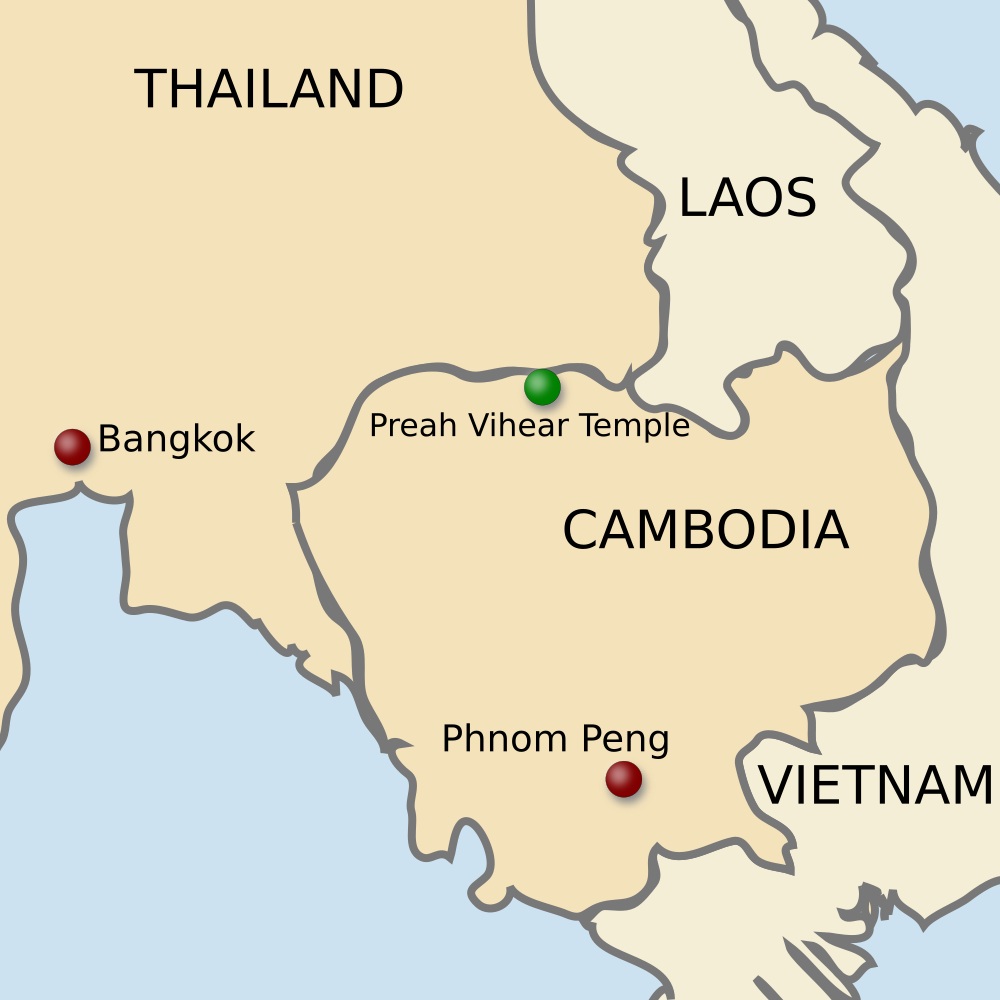
- India expressed concern over reported damage to conservation facilities at the Preah Vihear temple amid ongoing Thailand-Cambodia border clashes.
About Preah Vihear Temple
- It is a Hindu temple dedicated to Lord Shiva, located in Preah Vihear province, northern Cambodia, situated atop a cliff in the Dangrek Mountains along the Cambodia-Thailand border.
- It was constructed during the Khmer Empire in the 11th-12th centuries CE, initially built under Suryavarman I (1002-1050 CE) and later expanded by Suryavarman II (1113-1150 CE).

- It embodies the Khmer temple architecture, aligned along an ~800-metre axial processional path with a sequence of five gopuras connected by stairways and pavements.
- It was inscribed as a UNESCO World Heritage Site (2008) for its architectural significance and outstanding testimony to the Khmer civilisation.
Sahyog Portal
- Disclosures show a rising number of unlawful content removal orders issued through the Sahyog Portal.
Recent Trends in Sahyog Portal
- 2,312 blocking orders were issued between October 2024 and October 2025, averaging about 6 daily.
- Each blocking order typically contained multiple links or user accounts.
- Meta platforms accounted for over 78% of all blocking orders, with WhatsApp receiving the highest.
- More than 118 online intermediaries have been onboarded to the Sahyog Portal.
About Sahyog Portal
- Sahyog is a centralised portal designed to streamline the removal of unlawful content from the internet.
- Objective: It creates a single window for government agencies to report unlawful online content.
- Nodal Ministry: The portal functions under the Ministry of Home Affairs.
Indian Cyber Crime Coordination Centre (I4C) manages the Sahyog portal.
- Mechanism: Authorised officials flag unlawful URLs on the portal instead of emailing grievance officers.
- The system automatically forwards takedown requests to intermediaries as formal notices.
- Legal Basis: The portal operates under Section 79(3)(b) of the Information Technology Act, 2000, and Rule 3(1)(b) of the 2021 IT Rules.
- Section 79(3)(b): Creates a legal obligation for intermediaries to remove unlawful content.
- Rule 3(1)(b): Defines categories of content that users are prohibited from hosting.
- Intermediaries lose safe harbour immunity if unlawful content is not removed after ‘actual knowledge’.
MahaCrimeOS AI
- Maharashtra launched MahaCrimeOS AI to strengthen its response to rising cybercrime using artificial intelligence.
About MahaCrimeOS AI
- Platform: It is an advanced AI co-pilot system, in collaboration with Microsoft, utilizing Azure OpenAI Service.
- Objective: To streamline the workflow by analyzing vast, unstructured and multilingual data (e.g., FIRs, bank statements) and reducing investigation turnaround time by up to 80%.
- Function: It automates data extraction, guides investigators through protocols, and identifies complex crime linkages.
Operation Thunder 2025
- 30,000 live animals were seized under Operation Thunder 2025.
About Operation Thunder
- It was coordinated by INTERPOL and the World Customs Organization (WCO), with the support of the International Consortium on Combating Wildlife and Forestry Crime (ICCWC).
- It sought to intercept and seize illegally traded wildlife and forestry commodities across the global supply chain and identify, disrupt and dismantle criminal networks involved in these types of environmental crime.