



Export Concentration in Few States
- RBI Handbook of Statistics on Indian States 2024-25 showcases export performance masked by a growing regional imbalance, raising concerns about inclusive growth.
Pattern of Export Concentration
- Top-Heavy Share: The top five States, Maharashtra, Gujarat, Tamil Nadu, Karnataka and Uttar Pradesh account for ~70% of India’s exports, up from ~65% five years ago.
- Core-Periphery Divide: Coastal western and southern States are integrating into global value chains, while large northern and eastern regions remain weakly linked.
- Rising Concentration: The Herfindahl–Hirschman Index (HHI) of India’s export geography has increased, indicating growing spatial concentration rather than dispersion.
- HHI: A standard indicator used to measure concentration, where a higher value shows dominance by a region and a lower value indicates a more even distribution.
Structural Reasons Behind Export Concentration
- Value Over Volume: Global merchandise trade growth has slowed to 0.5–3%, pushing capital towards high-complexity, high-value clusters rather than low-skill regions.
- High Global Concentration: Since the top 10 global exporters control ~55% of world merchandise trade, India’s smaller exporting base faces tougher entry barriers and higher competitive pressure.
- Capital Deepening: Fixed capital investment rose ~10.6% (ASI 2022–23) while factory employment grew only 7.4%, raising capital per worker to ₹23.6 lakh.
- Employment Stagnation: Manufacturing’s share in total employment remains stuck at ~11.6–12%.
- Financial Asymmetry: High-export States show credit–deposit ratios above 90%, while States like Bihar and eastern Uttar Pradesh remain below 50%, indicating capital flight.
- Credit-Deposit Ratio: A measure showing how much of a bank’s deposits are lent out as credit, with higher ratios indicating greater local use of savings for investment.
Implications for the Indian Economy
- Urban Congestion Costs: Export clustering in coastal metros has raised stress; E.g., industrial land prices in major export corridors have risen 2–3 times in a decade, discouraging decentralisation.
- Regional Income Divergence: Export-heavy States report per-capita incomes 2–3 times higher than low-export States, reinforcing long-term regional inequality.
- External Dependence Risk: India’s exports to the US and EU form ~40% of total exports, so a demand slowdown there can quickly transmit stress to export-linked States and sectors.
- Policy Measurement Gap: Using export growth alone as a success metric can mislead, because national aggregates may rise even when many States see limited export dynamism and spillovers.
- Forex Vulnerability: Merchandise exports are dominated by a few States, while India still ran a current account deficit of ~1.1% of GDP (FY24), making forex stability sensitive to regional export shocks.
Way Forward
- Financial Rebalancing: Improve local credit flow in hinterland States; E.g., targeted lending mandates and regional development finance institutions.
- Place-Based Policy: Tailor industrial strategy to State-specific strengths; E.g., agro-processing in eastern India and logistics-linked manufacturing in the north.
- Employment Focus: Complement export policy with labour-absorbing sectors; E.g., Vietnam’s export strategy combined electronics exports with large-scale textiles, footwear and food-processing clusters.
- Capability Building: Invest in skills, logistics and supplier ecosystems in lagging States; E.g., district-level industrial capability hubs rather than isolated parks.
Electronics Sector in India
- The Union Minister for Electronics and Information Technology recently said that India’s electronics sector is creating large-scale blue-collar jobs, especially for women.
About Blue-Collar Jobs
- Blue-collar workers are individuals who perform manual labour or skilled trades in sectors like manufacturing, construction, and logistics.
- They constitute about 80% of India’s non-agricultural workforce, with nearly 300 million workers.
- Blue-collar wages are rising by about 5–6% annually in 2025, supplemented by performance-linked incentives to manage high attrition.
India’s Electronics Sector
- Production: Domestic electronics output reached ₹11.32 lakh crore in FY2024–25, a six-fold increase over the last decade (2014–15).
- Export: Electronics became India’s third-largest export category in FY2024–25 and FY2025–26, with exports exceeding $40 billion.
- Mobile Manufacturing: India is the world’s second-largest mobile phone manufacturer, with exports touching ₹2 lakh crore after a rapid decade-long growth.
- Employment Base: The electronics sector employs about 25 lakh people nationwide and is India’s largest employer of women in organised manufacturing.
- National Target: The government aims to build a $500 billion electronics manufacturing ecosystem by FY 2030–31, with $120 billion in exports by FY 2025-26.
Key Government Initiatives
- PLI Scheme 2.0: The Production-Linked Incentive scheme offers around 5% incentives on incremental sales of IT hardware such as laptops, tablets, and servers manufactured in India.
- ECMS 2025: The Electronics Components Manufacturing Scheme promotes ‘passive components’ and sub-assemblies to reduce import dependence.
- SPECS: The Scheme for Promotion of Manufacturing of Electronic Components and Semiconductors offers 25% capex incentives for component manufacturing.
- DLI Scheme: The Design Linked Incentive scheme supports domestic chip design through financial and infrastructure assistance.
- EMC 2.0: Modified Electronics Manufacturing Clusters create world-class electronics infrastructure, including semiconductor parks.
- Skilling Push: The ‘Chip-in’ programme aims to train industry-ready engineers to meet demand for one million skilled workers by 2030.
India’s First National Counter-Terrorism Policy
- The Union Home Ministry is set to introduce India’s first National Counter Terrorism Policy and Strategy.
Key Pillars of the New Counter-terrorism Policy
- Unified SOP: Establishes a common Standard Operating Procedure for all Indian states to ensure uniform responses to terror incidents.
- Online Radicalisation: Prioritises countering digital radicalisation occurring via social media platforms and encrypted messaging applications.
- Border Misuse: Addresses exploitation of the open Nepal border, where terrorists enter Nepal on foreign passports and infiltrate India via UP-Bihar border routes.
- Data Integration: Expands use of the National Intelligence Grid (NATGRID) to enable shared database access for early threat detection.
- Terror Financing: Targets terror funding through foreign-funded conversion networks, Aadhaar spoofing, and narcotics-based finance channels.
- Information Sharing: Shifts law enforcement culture from a “need-to-know model” toward a “duty-to-share approach”.
Need for a New Counter-Terrorism Policy
- Jurisdictional Gap: Despite NIA’s federal mandate, immediate jurisdiction rests with local police, causing coordination delays in the initial ‘Golden Hours’ after terror attacks.
- UAPA cases handled by state police show 20-30% convictions, compared to 95% under NIA.
- Border Exploitation: Weak border management allows terror networks to infiltrate India via open borders like Nepal.
- Following the Pahlgam attack, 35 infiltrators attempted entry through the Indo-Nepal border.
- Technological Asymmetry: Rising terrorist use of drones and cryptocurrency outpaces the technical capacity of most police stations. In 2025, micro-payload drone drops increased by 30%.
- Digital Radicalisation: Self-radicalisation via encrypted apps bypasses conventional intelligence collection and surveillance systems.
- Global Terrorism Index 2025 reports 93% of fatal attacks in Western countries involve lone-wolf actors.
India’s Current Counter-Terrorism Framework
Legislative Framework
- Unlawful Activities (Prevention) Act 1967: Allows designation of persons and organisations as terrorists, with asset seizure and up to 180 days’ detention without charge sheet.
- National Investigation Agency Act 2008: Gives the National Investigation Agency nationwide jurisdiction to investigate terror offences without state permission.
- National Security Act 1980: Permits preventive detention of persons for acts prejudicial to national security and public order.
- Bharatiya Nyaya Sanhita 2024: Defines “terrorist act” under Section 113, bridging the gap between local police action and NIA investigations.
Institutional Architecture
- National Investigation Agency: Serves as the primary federal agency for terror prosecution, with nearly 95% conviction in UAPA cases.
- National Intelligence Grid (NATGRID): Links 21 databases, including banking and travel records, to detect suspicious patterns and trace terror financing.
- Specialised Units: National Security Guard (NSG) and state Anti-Terrorism Squads (ATS) serve as primary strike forces for urban terror incidents and hostage rescue.
- National Security Council Secretariat: Headed by the National Security Adviser (NSA), it coordinates inter-agency responses and integrates defence, intelligence, and diplomacy.
Strategic Doctrine
- Decisive Retaliation: Treats any terror attack as an act of war, allowing India to choose timing, scale, and nature of response.
- Sponsor Liability: Removes distinction between terrorists and sponsoring states, holding both equally accountable for terror actions.
- Punitive Deterrence: Shifts from ‘deterrence by denial’ to ‘deterrence by punishment’, inflicting unacceptable damage to deter future attacks.
- Net Security: Frames counter-terror actions as defence of global norms rather than bilateral disputes.
ISRO Launches Heaviest Satellite BlueBird Block-2
- ISRO successfully launched the BlueBird Block-2 satellite (BlueBird-6) aboard the Launch Vehicle Mark 3 (LVM3).
- The launch was conducted by NewSpace India Limited (NSIL), the commercial arm of ISRO, from the Satish Dhawan Space Centre in Sriharikota.
- It marked the sixth operational flight of LVM3, designated as LVM3-M6.
- Significance: The launch marked two milestones for India – deployment of the heaviest satellite from Indian soil and the largest commercial communications satellite into the Low Earth Orbit (LEO).
- LEO ranges from about 160 km to 2,000 km above Earth’s surface.
About BlueBird Block-2 Satellite
- It is a next-generation communications satellite developed by a U.S.-based company.
- It enables 4G/5G voice and video calls, data transfers, and messaging directly to phones without needing specialised ground equipment or antennas.
- Key Features: It carries a 223 sq m phased-array antenna and weighs about 6,100 kg.
- Capacity gain: It delivers nearly ten times higher data capacity, enabling continuous 24/7 coverage.
About Launch Vehicle Mark-3 (LVM3)
- The LVM3, earlier called GSLV Mk-III, is ISRO’s most powerful and heaviest launch vehicle; it is also known as “Baahubali“.
- It is a three-stage launch vehicle consisting of two solid motors (S200), a liquid propellant stage (L110), and a cryogenic-fueled upper stage (C25).
- Payload Capacity: It can lift about 4,000 kg to Geosynchronous Transfer Orbit (GTO) and nearly 8,000 kg to Low Earth Orbit (LEO).
- Key Feature: It is powered by the indigenous CE-20, India’s largest cryogenic engine.
- Key Missions: It launched Chandrayaan-2, Chandrayaan-3, LVM3-M6, and is designated for the Gaganyaan human spaceflight mission.
China files WTO complaint against India
- China has filed a fresh complaint against India at the World Trade Organization (WTO) challenging India’s solar subsidies and tariff measures.
What is the issue?
- China has sought formal consultations with India under the WTO framework regarding subsidies for India’s photovoltaic (solar) sector.
It claims that India’s policies:
- Violate bound tariff commitments and national treatment obligations.
- Constitute prohibited import-substitution subsidies, favouring domestic producers over foreign firms.
- This follows an earlier Chinese complaint (October 2025) against India’s EV and battery subsidies, signalling rising trade frictions over green industrial policies.
WTO Dispute Settlement System:
- The WTO Dispute Settlement System (DSS) is a rules-based, compulsory and multilateral mechanism to resolve trade disputes between WTO Members.
- It operates under the Dispute Settlement Understanding (DSU), which is an integral part of the WTO Agreement.
Aim:
- Ensure security, predictability and stability in international trade.
- Uphold WTO rights and obligations while preventing unilateral trade retaliation.
Key stages of WTO dispute settlement
- Consultations: The disputing members first hold formal consultations to resolve the issue amicably without litigation, reflecting the WTO’s preference for negotiated and mutually agreed solutions.
- Panel stage: If consultations fail, an independent panel of experts examines factual evidence and legal arguments to determine whether WTO rules have been violated.
- Appellate review: Parties may appeal panel findings on points of law before the Appellate Body, though this stage is currently stalled due to non-functioning of the body.
- Adoption of reports: Panel or Appellate Body reports are adopted by the Dispute Settlement Body (DSB), making the rulings legally binding on the parties.
- Implementation: The losing member must bring its measures into compliance within a “reasonable period of time,” monitored by the DSB.
- Retaliation (if needed): If compliance is not achieved, the complainant may seek DSB authorisation to impose proportionate trade countermeasures.
Key features
- Compulsory jurisdiction: All WTO Members are bound once they join the WTO.
- Time-bound process: Normally ~12 months (or ~16 months with appeal).
- Ban on unilateral action: Members cannot impose trade sanctions without WTO authorisation.
- Exclusive forum: WTO disputes cannot be taken to parallel international bodies.
India’s First PPP-Model Medical Colleges
- India has announced its first-ever PPP-model medical colleges in the tribal districts of Dhar and Betul (Madhya Pradesh).
India’s first PPP-model medical colleges:
- India’s first medical colleges under the Public–Private Partnership (PPP) model are being set up in tribal-dominated districts of Madhya Pradesh.
- Four such colleges are planned (Dhar, Betul, Katni, Panna), linked with existing district hospitals to strengthen both medical education and public healthcare delivery.
What is the PPP model?
- Public–Private Partnership (PPP) is an arrangement where the government and private sector jointly provide public infrastructure or services.
- The private partner invests in construction, management or operations, while risks and responsibilities are clearly shared, and payments are linked to performance standards.
Types of PPP models
- BOT / DBFOT (Build–Operate–Transfer / Design–Build–Finance–Operate–Transfer): Private entity designs, builds, finances and operates the asset for a fixed period before transferring it to the government.
- Operations & Maintenance (O&M): Private player manages and maintains public assets for a shorter contractual duration.
- Lease–Develop–Operate–Maintain: Existing public assets are leased to private entities for development and operation during the concession period.
Government incentives for PPP
- Viability Gap Funding (VGF): Capital grant of up to 40% of project cost to improve financial viability.
- India Infrastructure Project Development Fund (IIPDF): Financial support for feasibility studies and project structuring.
- IIFCL financing: Long-term debt support for infrastructure projects with long gestation periods.
- FDI support: Up to 100% FDI permitted in most PPP sectors through the automatic route.
Subansiri Lower Hydroelectric Project
- India’s largest hydropower project, the 2,000 MW Subansiri Lower Hydroelectric Project, has become operational after nearly 20 years, with the commissioning of its first 250 MW unit.
Subansiri Lower Hydroelectric Project (SLHEP)
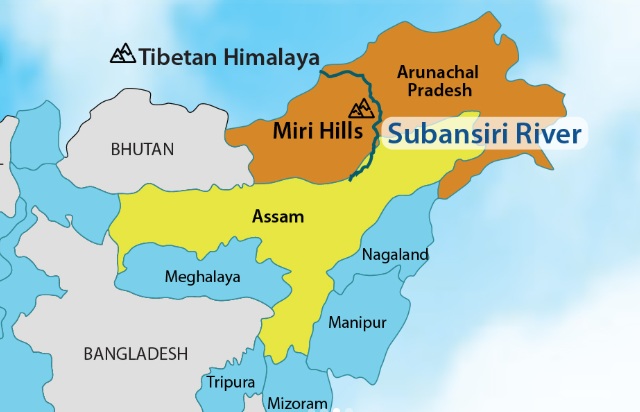
- The Subansiri Lower Hydroelectric Project is a run-of-the-river hydropower project with an installed capacity of 2,000 MW, making it India’s largest hydropower project once fully commissioned.
- Located in: Gerukamukh, on the Assam–Arunachal Pradesh border
- Implemented by NHPC Limited (National Hydroelectric Power Corporation)
- River flow through: Built on the Subansiri River (a.k.a Gold river), the largest tributary of the Brahmaputra River
Project History
- Approved: 2003
- Challenges (2011–2019): Progress was delayed by environmental impact studies, seismic safety reviews, and public protests in downstream Assam.
- Operational Launch: The first 250 MW unit began operation in December 2025.
- Completion Schedule: The remaining seven units (250 MW each) are scheduled for commissioning between 2026 and 2027.
Key Specifications
Type: Concrete Gravity Dam
Height: 116 m (from riverbed) / 210 m (from deepest foundation)
Length: 284 m
- Engineering Highlights: The dam features several landmark achievements for India’s hydroelectric sector, including:
- The country’s heaviest hydro generator rotors.
- Its largest stators and inlet valves.
- The first use of the Rotec Tower Belt system for dam concreting.
- Strategic Benefits: Beyond power generation, the project will provide:
- Flood Control: Moderation of downstream flooding in Assam.
- Grid Stability: Enhanced resilience and reliability of the national power grid.
- Clean Energy Goals: Direct support for national Net Zero and renewable energy targets.
Industrial Parks (IP) emerging as a key pillar of India’s Innovation and Industrial Growth
- India’s industrial parks, developed with government and private sector support, boost economic growth, attract FDI, promote sustainability, and enhance ease of doing business through various initiatives and infrastructure development.
- Developed in partnership with state governments and private sector, they offer shared infrastructure, streamlined approvals and a predictable regulatory environment.
Status of IP in India
- Currently, India has more than 4,500 industrial parks as per India Industrial Land Bank (IILB).
- 306 plug-and-play industrial parks and 20 parks and smart cities are being developed under National Industrial Corridor Development Corporation (NICDC).
Key Benefits offered by Industrial Parks
- Economic Growth: Integrate scarce factors of production, generate higher productivity and operational efficiency, attract FDI (India among the top 5 global destinations for greenfield projects as per UNCTAD), creating jobs, and improved wages, etc.
- Environmental and Social Responsibility: Promote eco-friendly practices, support resource efficiency, etc., along with offering gender sensitive facilities, health and security systems to employees.
Initiatives taken to promote them
- Plug-And-Play Industrial Parks: Union Budget 2025-26 allocated Rs. 2,500 crores for their development.
- India Industrial Land Bank (IILB): Developed by Department for Promotion of Industry and Internal Trade (DPIIT) as a centralized Geographic Information System (GIS)-enabled platform offering spatial and non-spatial information on industrial land.
- Industrial Park Rating System (IPRS): Comprehensive framework for assessing performance and quality.
- IPRS 3.0 was launched in September 2025 with enhanced parameters on sustainability, skill linkages, digitalization, etc.
- Ease of Doing Business Reforms: Through National Business Reforms Action Plan (BRAP), 2014; Goods and Services Tax (GST), reducing compliance burden, etc.