



Sabhasaar Initiative
- SabhaSaar Initiative is in the news as over 1.11 lakh Gram Panchayats have adopted this AI-enabled tool for automated Gram Sabha meeting summarisation as of January 2026.
Sabhasaar Initiative:
- SabhaSaar is an AI-powered voice-to-text and meeting summarisation platform designed to automatically generate structured Minutes of Meetings (MoM) from Gram Sabha and Panchayat meeting recordings.
- Launched in: 14 August 2025
Organisations involved:
- Ministry of Panchayati Raj – Nodal implementing ministry
- IndiaAI Mission under Ministry of Electronics and Information Technology – AI & cloud infrastructure
Aim:
- To strengthen participatory democracy, transparency, and efficiency in local self-government by digitising and standardising Gram Sabha documentation.
Key features:
- AI & NLP-based transcription: Converts audio/video discussions into structured minutes, capturing decisions, action points, and deliberations.
- Multilingual support: Integrated with Bhashini; currently supports 13 Indian languages, with plans for expansion.
- Secure data governance: Operates entirely within government infrastructure, compliant with the Digital Personal Data Protection (DPDP) Act, 2025.
- Governance analytics: Tracks meeting type, frequency, attendance, resolutions, and follow-up actions.
Significance:
- Boosts grassroots governance: Reduces manual workload, allowing Panchayat officials to focus on service delivery.
- Enhances transparency & accountability: Standardised, verifiable meeting records improve public trust.
- Digital empowerment of Panchayats: Aligns with Digital India and AI-for-Governance objectives, especially in rural areas.
India Joins BRICS Centre for Industrial Competencies
- India has joined the BRICS Centre for Industrial Competencies (BCIC) to provide integrated support to manufacturing firms and MSMEs across BRICS countries.
- The National Productivity Council has been designated as India’s nodal centre to lead engagement with BCIC.
What is the BRICS Centre for Industrial Competencies (BCIC)?
- The BRICS Centre for Industrial Competencies (BCIC) is a multilateral, public–private platform that supports manufacturing companies and MSMEs in adopting advanced manufacturing, digital technologies, and sustainable practices across BRICS and BRICS Plus countries.
- Established in: 2024–25
- Launched at the headquarters of United Nations Industrial Development Organization (UNIDO).
- Supported under the BRICS Partnership on New Industrial Revolution (PartNIR).
- Aim: To enhance industrial competitiveness, productivity, and digital transformation of manufacturing enterprises and MSMEs across the BRICS region through cooperation, innovation, and capacity building.
Key functions:
- Digital & Industry 4.0 support: Helps manufacturers adopt advanced technologies and transition into Factories of the Future.
- Partnership facilitation: Connects firms with technology providers, research institutions, and business partners across BRICS.
- Market intelligence & advisory: Provides guidance on market access, scaling operations, sustainability, and access to finance.
- Capacity building: Promotes productivity enhancement, skill development, and industrial modernisation.
Significance:
- Boost to Indian manufacturing & MSMEs: Enables Indian firms to integrate into BRICS value chains and access new markets.
- Supports Make in India & Atmanirbhar Bharat: Encourages productivity, innovation, and global competitiveness.
16th Finance Commission (FC) gives recommendations for strengthening local bodies
- It has recommended a total grant of ~₹7.9 Lakh crore to India’s rural and urban local bodies for the next five years (FY 2026-27 to 2030-31) with other important recommendations.
Challenges in Local Body Financing
- Structural Revenue Gaps: E.g., Property tax collections are low due to incomplete and inaccurate property records, low coverage, undervaluation of properties etc.
- Overdependence on Union/State Govt.: E.g., Panchayats’ reliance on Grants (over 90% of their revenues)
- Limited Access to Debt and Capital Markets: Municipal borrowings in India are estimated at less than 0.05% of GDP.
- Other: Underdeveloped Bond Market; Data Gaps and Accounting Issues; Delays in Constitution of State Finance Commissions (SFCs) etc.
Recommendations by 16th Finance Commission
- Property database: States should develop a citizen friendly GIS based property tax IT system.
- Rural-Urban Split: The aggregate grant to be divided in a 60:40 ratio between RLBs and ULBs.
- Urbanisation Premium: An allocation of ₹10,000 crore is designated to incentivize merger of peri-urban villages into adjoining larger ULBs (with population > 1 lakh).
- Constitutional Amendment: Removing constitutional requirement (Articles 280(3) (bb) and (c)) that binds Central FC to make recommendations "on the basis of" SFC recommendations.
- Best Practices: NITI Aayog recommended to study SFC functioning and publish a compendium of good practices for States.
|
Sources of Local Body Financing
|
Union Budget pushes Elderly Care in India
- Union Budget 2026-27 announced a plan to train 1.5 lakh caregivers in one year through programmes aligned with the National Skills Qualifications Framework (NSQF) to strengthen India’s geriatric (elderly care) and long-term care workforce.
Need for Strengthening Elderly Care
- Elderly Population: Senior citizens (aged 60+) currently comprise over 10% of the population (about 104 million) and are projected to reach 19.5% (319 million) by 2050.
- Health Implications: 75% of the elderly have one or more chronic diseases and medical expenses are more than double for this population segment.
- Rural Concentration: Approximately 71% of the elderly population resides in rural areas, which often lack medical infrastructure.
- Erosion of Social Support: Diminishing traditional family support, low awareness of legal rights, domestic abuse etc.
- Inadequate Financial Security: Vulnerability to financial fraud, financial dependence (78% without any pension cover), low Insurance Coverage (only 18%) etc.
- Digital Divide: High levels of digital illiteracy exist, with approximately 85.8% of the elderly being digitally illiterate.
Government Initiatives
- Policy and Legal Frameworks: The Maintenance and Welfare of Parents and Senior Citizens Act, 2007, National Policy on Older Persons (NPOP).
- Health Initiatives: National Programme for the Health Care of the Elderly, Ayushman Bharat, Vayo Mitra.
- Social and Economic Support: Atal Vayo Abhyudaya Yojana, Rashtriya Vayoshri Yojana (RVY), Elder Line (14567), Seniorcare Ageing Growth Engine (SAGE) initiative, SACRED Portal (for re-employment) etc.
Way Forward for Strengthening Elderly Care
- Health Empowerment: Comprehensive Care Packages, Home-based Care, Workforce Training, Adult Immunization
- Social Inclusion: One-Stop Portal, Community Support, Elder for elderly model to reduce isolation
- Economic Security: Silver Economy (products and services for elderly), development of comprehensive geriatric health insurance, Facilitate re-employment opportunities.
- Digital Inclusion: Digital literacy campaigns, discounts on digital devices and broadband, development of user-friendly technology.
Anthropic AI Workplace Suite
- Global tech stocks fell sharply after Anthropic launched a new AI-powered workplace automation suite, triggering fears that AI could replace core software and IT services rather than merely augment them.
Anthropic AI Workplace Suite: What it is?
- Anthropic’s AI workplace suite is a set of AI agent–based automation tools that can directly perform complex office and enterprise tasks—bypassing conventional software platforms and human workflows.
- Developed by: Anthropic, creators of the Claude AI model.
Aim:
- To automate end-to-end white-collar workflows (legal, sales, compliance, analytics, operations) using autonomous AI agents, reducing dependence on traditional Software-as-a-Service (SaaS) platforms and human intermediaries.
Key features:
- Claude Cowork agents & plug-ins: 11 new AI plug-ins that can execute tasks such as contract review, NDA analysis, compliance monitoring, sales tracking, and data analysis.
- Platform bypass capability: AI agents can directly perform tasks earlier dependent on tools like CRM, ITSM, and workflow software—without needing interfaces such as Salesforce or ServiceNow.
- Autonomous execution: Moves beyond assistive AI to action-taking AI, capable of decision-making and workflow completion.
SaaSpocalypse: What it is?
- SaaSpocalypse is a term coined by analysts (notably Jefferies) to describe a potential existential crisis for Software-as-a-Service (SaaS) companies, where AI agents may replace entire software layers and service models.
Key features:
- Disintermediation of software firms: AI agents perform tasks directly, reducing the need for multiple enterprise software subscriptions.
- Threat to IT services outsourcing: Impacts countries like India whose IT sector depends on services such as data processing, compliance, customer support, and enterprise operations.
- Market re-rating: Sharp valuation corrections in global tech stocks as investors reassess long-term revenue models.
PM-Virasat Ka Samvardhan (PM VIKAS)
- Source (PIB): The Union Budget 2026-27 has allocated fresh funding to the PM-Virasat Ka Samvardhan (PM VIKAS) scheme.
- PM VIKAS is a Central Sector Scheme, officially launched in 2025, for the skill development and upliftment of minority communities.
- Nodal Ministry: The scheme is implemented by the Ministry of Minority Affairs through the Skill India Mission framework.
- Key Components: It comprises four components – Skilling, Entrepreneurship, Education, and Infrastructure Development.
- Scheme Convergence: It subsumes five schemes – Seekho Aur Kamao, USTTAD, Hamari Dharohar, Nai Roshni and Nai Manzil.
- Target Groups: The scheme covers six notified minority communities: Muslims, Christians, Sikhs, Buddhists, Jains, and Parsis.
- Inclusion Mandate: A minimum of 33% reservation for women in skilling components and 3% for Persons with Disabilities (PwDs) across all scheme activities.
- Financial Linkages: The scheme facilitates credit access by linking beneficiaries with loan programmes of the National Minorities Development and Finance Corporation (NMDFC).
- Key Goal: To train approximately 1.51 lakh beneficiaries across States and Union Territories.
India’s first cooperative-based taxi service – Bharat Taxi
- India’s first cooperative-based taxi service ‘Bharat Taxi’ is being formally launched by Union Minister in New Delhi.
- The launch marks a major push to cooperative-led, driver-owned mobility, aligned with the vision of Sahkar se Samriddhi.
Bharat Taxi: What it is?
- Bharat Taxi is India’s first cooperative-sector, driver-owned ride-hailing platform, designed as an indigenous alternative to aggregator-based models like Ola and Uber, with drivers (Sarathis) as owners and stakeholders.
Organisation(s) involved:
- Ministry of Cooperation – policy guidance
- Sahkar Taxi Cooperative Limited – operating entity
- Registered under the Multi-State Cooperative Societies Act, 2002
- Established on June 6, 2025
- Aim: To promote inclusive, citizen-centric mobility by empowering drivers through cooperative ownership, ensuring fair income distribution, social security, and freedom from exploitative commission-based platforms.
Key features:
- Driver-owned model: Guided by the principle Sarathi hi Malik—drivers are shareholders and decision-makers.
- Zero-commission & surge-free pricing: Entire fare initially goes to drivers; profits are redistributed within the cooperative.
- Strong social security: ₹5 lakh accident insurance, ₹5 lakh family health insurance, retirement savings, and emergency support.
- Women empowerment initiatives: Sarathi Didi and Bike Didi, with 150+ women drivers onboard.
- Digital & safety integration: Multilingual app, transparent fares, real-time tracking, verified ride data, and police integration.
- Non-exclusive model: Drivers can work simultaneously on other platforms.
Significance
- Strengthens cooperative movement: Extends cooperatives into the digital platform economy.
- Improves driver welfare: Enhances income security, dignity of labour, and long-term financial stability.
- Indigenous mobility alternative: Reduces dependence on foreign-funded aggregators and aligns with Atmanirbhar Bharat.
NDMA Released India’s First Guideline for Disaster Victim Identification (DVI)
- The National Disaster Management Authority (NDMA) released India’s first-ever Standard Operating Procedure (SOP) and Guidelines for Disaster Victim Identification (DVI).
- Commemorative Release: The guidelines were released on the 25th anniversary of the 2001 Bhuj earthquake to standardise responses to Mass Fatality Incidents (MFIs).
- Scientific Alignment: The framework replaces ad hoc body disposal with a scientific DVI protocol aligned with Interpol standards.
- NDMA is India’s apex statutory body for disaster management, under the Ministry of Home Affairs, established by the Disaster Management Act, 2005.
Key Guidelines for Disaster Victim Identification (DVI)
- Identification Workflow: The identification process follows a mandatory four-stage workflow:
- Systematic Recovery: Organised retrieval of remains to prevent commingling or loss of evidence.
- Post-Mortem (PM) Data: Gathering biometric data like DNA and fingerprints from the deceased.
- Ante-Mortem (AM) Data: Collecting medical records and personal details from the victims’ families.
- Reconciliation: Scientifically matching PM and AM data to establish positive identification before releasing the remains.
- Humanitarian Focus: The guidelines emphasise Humanitarian Forensics, treating the dignified management of the dead as a fundamental human right.
- Psychosocial Support: Psychosocial support for families is integrated into the official protocol to minimise trauma during the waiting period.
- Dental Registry: It proposes creating a National Dental Data Registry, since dental evidence is often the main surviving identifier in high-impact disasters.
- Forensic Archaeology: Forensic Archaeology is recognised as a standard method for the systematic recovery of buried remains.
- Specialised Teams: States are mandated to establish DVI Teams comprising police, pathologists, and archaeologists to ensure coordinated action.
- Disposal Mandate: Mass burials or unscientific disposal of unidentified bodies are prohibited to preserve the possibility of identification.
Research, Development, and Innovation (RDI) Fund Launched
- The Technology Development Board (TDB) officially launched the first open call for the Research, Development, and Innovation (RDI) Fund.
- Rolling Application: Project proposals are accepted 24/7, 365 days a year through the TDB RDI Portal to ensure continuous innovation support.
- Operational Role: The TDB serves as a Second-Level Fund Manager (SLFM), deploying a designated portion of the total RDI corpus.
- Technology Development Board (TDB) is a statutory body under the Department of Science & Technology (DST), mandated to commercialise indigenous research.
About Research, Development and Innovation (RDI) Fund
- Legal Status: The RDI Fund operates as a Special Purpose Fund (SPF) under the Anusandhan National Research Foundation (ANRF) Act, 2023.
- Financial Corpus: A corpus of ₹1 lakh crore is allocated for deployment over a 5 to 6-year horizon.
- Primary Objective: It aims to facilitate the transition from academic research to industrial application by catalysing private investment.
- Nodal Authority: The Department of Science & Technology (DST) serves as the implementing agency.
- Target Stage: Projects at Technology Readiness Level (TRL) 4 and above are prioritised for scaling and commercialisation rather than for basic research.
- Fund Management: A two-tiered mechanism separates high-level policy and capital allocation (Tier 1) from project-level evaluation and disbursement (Tier 2).
- Primary Custodianship: The Special Purpose Fund (SPF) under ANRF manages the corpus and policy framework.
- Intermediary Distribution: Funds are channelled through Second-Level Fund Managers (SLFMs), such as AIFs, NBFCs, TDB, and BIRAC.
- Concessional Financing: Support is provided through equity infusions or collateral-free long-term concessional loans; grants are strictly excluded to ensure commercial accountability.
- Cost Sharing: Up to 50% of the assessed project cost is financed by the fund, with a matching contribution required from the private sector.
- Strategic Sectors: Investments are prioritised in “sunrise sectors” like deep-tech, quantum computing, clean energy, and AI.
- Deep-Tech Focus: A significant portion of the corpus will serve as a ‘Fund of Funds’ to support deep-tech startups with long gestation periods.
Dholpur-Karauli Tiger Reserve (DKTR)
- The Rajasthan Government assured local communities that residents of the Dholpur-Karauli Tiger Reserve (DKTR) will not be displaced without their consent.
About Dholpur-Karauli Tiger Reserve (DKTR)
- Reserve Status: Spanning 1,111 sq. km in eastern Rajasthan, the forest was officially notified in 2023 as India’s 54th and Rajasthan’s 5th tiger reserve.
- Geological Setting: The terrain lies at the geological junction of the Vindhyan and Aravalli hill ranges.
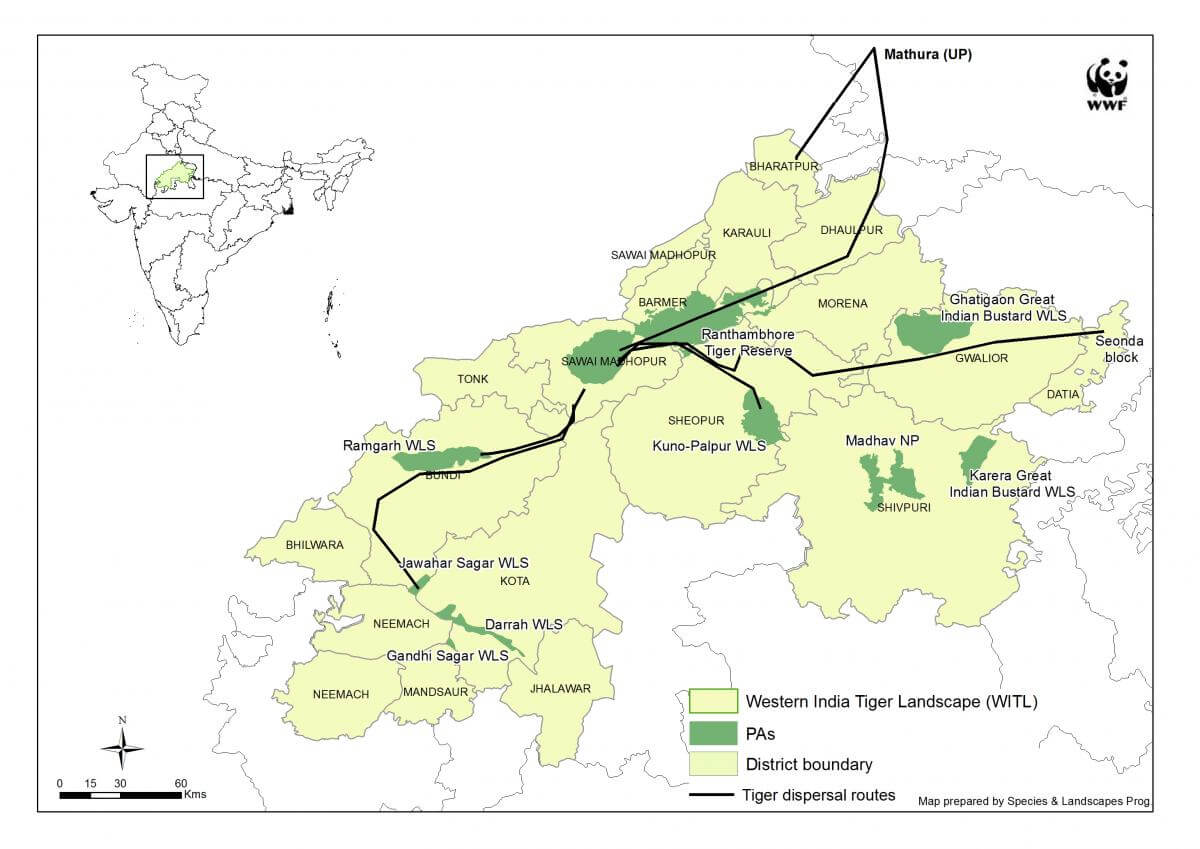
- Topography: Its landscape is uniquely characterised by the rugged and extensive ravines of the Chambal River basin.
- Hydrology: The perennial Chambal River flows along the eastern boundary and serves as the primary water source.
- Vegetation Type: The forest is classified as a tropical dry deciduous forest, dominated by Dhok, Khair, Tendu, and Babool trees.
- Faunal Diversity: Bengal Tiger, Indian Leopard, striped hyenas, sloth bears, golden jackals, Sambar deer, Chital, Nilgai, etc.
- Ecological Role: It serves as a vital sink area to accommodate the spillover tiger population from the overcrowded Ranthambore Tiger Reserve.
- Wildlife Corridor: Dholpur-Karauli is a critical corridor connecting Ranthambore (Rajasthan) to Kuno and Madhav National Parks (Madhya Pradesh).
Military exercises in news
- India is conducting multiple high-profile military exercises in early 2026—including Exercise Khanjar, Exercise Agni Pariksha, and Exercise Vayu Shakti-2026—highlighting enhanced operational readiness, jointmanship, and defence diplomacy.
Military exercises in news:
- Exercise Khanjar:
- Host / Location: India | Missamari, Assam
Participants:
- Indian Army – Parachute Regiment (Special Forces)
- Kyrgyzstan – ILBRIS Special Forces Brigade
Aim: To enhance interoperability and operational synergy in counter-terrorism and special forces operations.
Key features:
- Annual bilateral exercise held alternately in India and Kyrgyzstan (13th edition).
- Focus on urban warfare, mountain warfare, sniping, and complex building intervention.
- Strengthens India–Central Asia defence cooperation and counter-terrorism collaboration.
- Exercise Agni Pariksha:
- Host / Location: India | Sigar, Arunachal Pradesh
Participants:
- Indian Army
- Indo-Tibetan Border Police (ITBP)
Aim: To familiarise non-artillery personnel with artillery procedures and improve inter-force combat integration.
Key features:
- First-of-its-kind joint training exposing infantry and ITBP to artillery firing missions.
- Breaks traditional role silos and enhances firepower coordination and joint operational trust.
- Focused on future battlefield requirements and integrated combat capability.
- Exercise Vayu Shakti-2026:
- Host / Location: India | Pokaran Field Firing Range, Rajasthan
Participants:
- Indian Air Force (IAF) units from across the country
Aim: To demonstrate IAF’s air-power capability, operational strategy, and precision strike readiness.
Key features:
- Largest day-to-night air-power exercise of the IAF.
- Participation of 120+ aircraft and helicopters, including Rafale, Su-30 MKI, Tejas, Mirage-2000, Apache, Chinook, and Dhruv.
- Execution of Offensive & Defensive Counter Air, SEAD, precision strikes, airborne command (AWACS), and Para-commando airdrops.
- Showcase of indigenous systems such as Akash air defence.
Karimpuzha Wildlife Sanctuary
- A recent faunal survey in the Karimpuzha Wildlife Sanctuary has recorded several new species of birds, butterflies, and odonates, significantly enriching Kerala’s biodiversity database.
Karimpuzha Wildlife Sanctuary:
- Karimpuzha Wildlife Sanctuary is a protected area in the Western Ghats, known for its exceptional biodiversity, wide altitudinal range, and intact forest ecosystems.
Located in:
- The sanctuary falls under the Nilambur forest landscape, an ecologically rich belt of the Western Ghats known for dense forests and high endemism.
- Its position on the Nilgiri slopes places it within a critical Western Ghats biodiversity hotspot, influencing rainfall, vegetation, and species diversity.
History:
- Notified in 2020
- Kerala’s 18th Wildlife Sanctuary and 24th Protected Area
- First wildlife sanctuary in Malappuram district
Key geographical & ecological features:
- Sharp altitudinal gradient (40 m to >2,550 m): The wide elevation range creates varied climatic conditions, supporting species adapted to both lowland and montane ecosystems.
- Seven forest types (unique in Kerala): The coexistence of seven distinct forest types in one landscape makes it ecologically exceptional and highly biodiverse.
- Semi-evergreen & evergreen forests: Support dense canopy, high rainfall species, and endemic flora.
- Moist deciduous forests: Act as crucial habitats for large mammals and seasonal biodiversity.
- Sub-tropical savannah & hill forests: Provide transitional ecosystems supporting grassland–forest species.
- Montane wet temperate forests & grasslands: Sustain high-altitude endemics and regulate hydrology.
- Ecological corridor: By linking Silent Valley National Park and Mukurthi National Park, it ensures habitat continuity for wildlife movement across state boundaries.
- New Amarambalam Reserve inclusion: This largely undisturbed forest tract preserves near-pristine ecosystems, serving as a genetic and ecological refuge within the Western Ghats.
Significance:
- Biodiversity hotspot:
- Hosts key Western Ghats endemics such as Nilgiri tahr and lion-tailed macaque
- Rich diversity of birds, butterflies, odonates, amphibians, reptiles, and freshwater fish
- Landscape connectivity: Ensures habitat continuity across Kerala–Tamil Nadu forests, crucial for large mammals and migratory species
Central Board of Film Certification (CBFC)
- Source (PIB): The Central Board of Film Certification (CBFC) reduced the feature film certification time to 18 working days, from the statutory 48 working days limit.
- The CBFC is a statutory body established under the Cinematograph Act, 1952, and operates under the Ministry of Information and Broadcasting.
- Mandate: It regulates the public exhibition of films, requiring a certificate for legal screenings in cinemas or on television.
- Structure: The board comprises the Chairperson and 12 to 25 members appointed by the Central Government for a three-year term.
- Institutional Presence: It is headquartered in Mumbai and operates through nine regional offices, supported by Advisory Panels.
- Constitutional Basis: Certification is governed by the Cinematograph Act, reflecting “reasonable restrictions” under Article 19(2) of the Constitution.
- Appellate Mechanism: The Film Certification Appellate Tribunal (FCAT) was abolished in 2021, requiring filmmakers to approach the High Courts for grievances.