
Two potential cyclonic storms are forming in the Bay of Bengal, with global forecast models indicating a possible Fujiwhara interaction between them.
Fujiwhara Effect
- A rare meteorological phenomenon where two nearby cyclonic systems begin to rotate around a common centre due to interaction of their wind circulations.
- Identified by Sakuhei Fujiwhara (1921), it occurs mostly in the tropical cyclone belt when storms are within ~1,400 km of each other.
Factors Aiding Its Occurrence:
- Proximity of two cyclones within a threshold distance (typically <1400 km in the Indian Ocean).
- Similar rotational direction (counter-clockwise in the Northern Hemisphere).
- Favourable sea surface temperatures >26°C supporting sustained convection.
- Low vertical wind shear allowing stable cyclone structure.
How it forms?
- Close Formation: Two cyclones forming within ~1400 km begin influencing each other’s wind fields and natural movement patterns due to proximity.
- Wind Interaction: Their outer rainbands and upper-level winds overlap, creating deformation zones that gradually pull the systems toward each other.
- Coupled Circulation: The interacting winds generate a shared pivot point, forcing both cyclones to rotate in curved, mutually influenced paths.
- Orbiting: If one storm is stronger, the weaker one revolves around it and may eventually be absorbed due to energy imbalance.
- Merger: When centres move very close, the vortices fuse into a single, larger cyclone with enhanced convection and stronger winds.
- Weakening: Competition for heat and moisture can deprive the weaker cyclone of inflow, triggering rapid weakening or dissipation.
- Deflection: If interaction is weak, storms may push each other onto diverging paths, adding significant uncertainty to forecasts.
Key features -
- Mutual Rotation: Both cyclones circle a common centre anti-clockwise, altering their original trajectories and movement speed.
- Energy Transfer: The stronger system can steal momentum or moisture from the weaker one, reshaping their relative strengths.
- Track Uncertainty: Steering winds get disrupted, making prediction of landfall, intensity, and movement highly challenging for meteorological agencies.
- Possible Fusion: Close approach may cause the cyclones to merge into a more intense system with higher rainfall and damaging winds.
- Stalling: Storms may slow down or stall during interaction, prolonging rainfall events and increasing flood risks.
Implications:
- Forecast Challenges: High uncertainty delays accurate warnings for landfall and complicates planning for evacuation and relief operations.
- Heavy Rainfall: Prolonged interaction increases rainfall over TN, Andhra, Odisha, Bengal, Sri Lanka, and Myanmar, worsening flood potential.
- Intensification Risk: Energy transfer or merger can rapidly strengthen one system, raising threats of severe winds, storm surge, and coastal damage.
Ethiopia’s Hayli Gubbi volcano
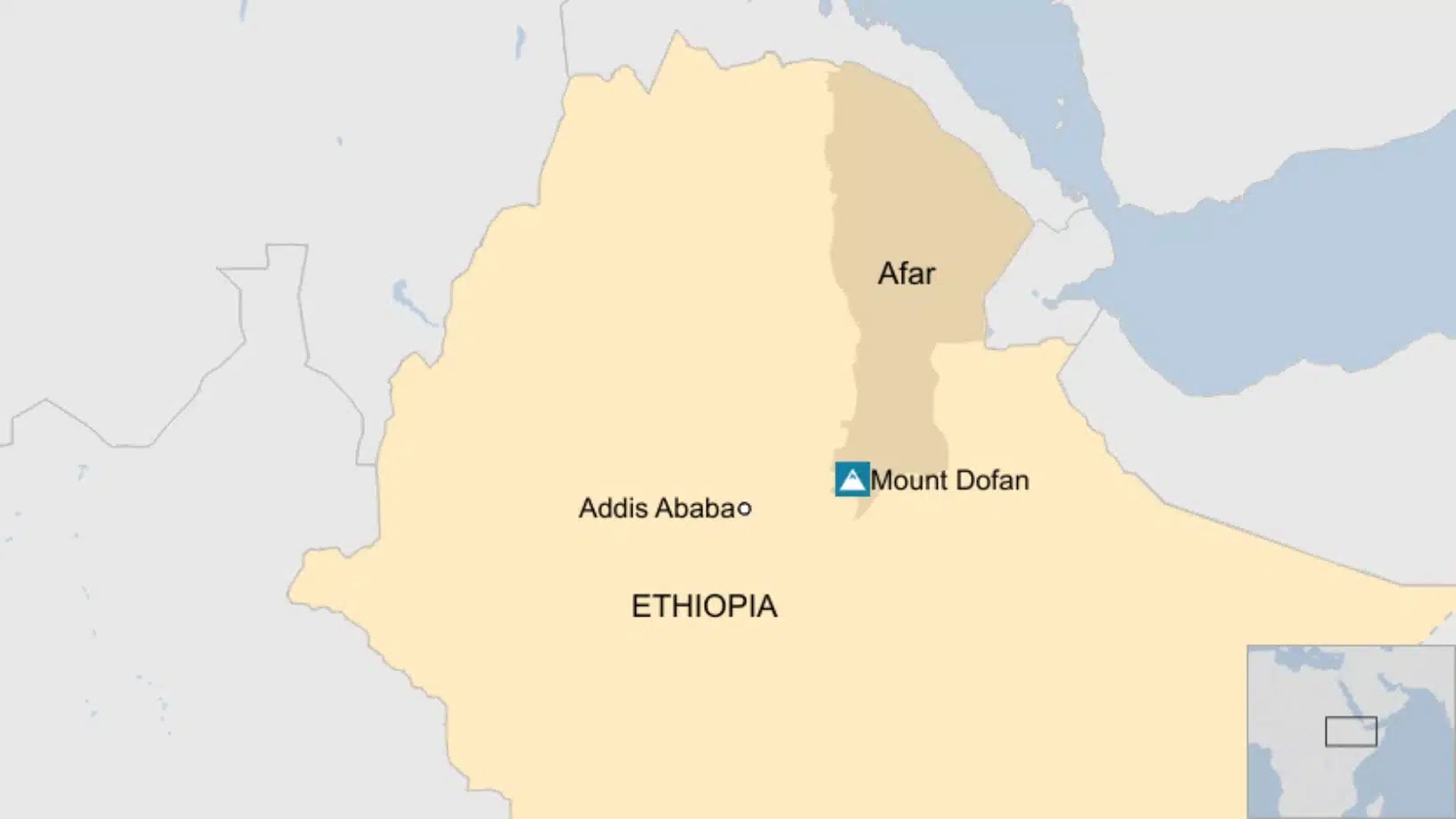
- A massive volcanic ash cloud from Ethiopia’s Hayli Gubbi volcano—which erupted after nearly 10,000 years—has drifted toward India, raising concerns over air quality and aviation.
- Hayli Gubbi is a shield volcano in Ethiopia’s Afar Region, known for broad, gently sloping volcanic structures formed by low-viscosity basaltic lava typical of the East African Rift system.
Located In: It lies in the Afar Depression of Ethiopia, at the southern end of the Erta Ale volcanic range, one of the most active tectonic and volcanic zones in the world.
History Background:
- No confirmed eruptions for ~10,000–12,000 years (Holocene).
- On 23 November 2025, a sudden sub-plinian eruption produced an ash plume reaching 45,000 ft (FL450).
- The plume drifted across Red Sea, Yemen, Oman, and then moved east toward western India.
Key Features:
- Shield volcano type—broad, low-gradient, large lava fields.
- Part of the divergent plate boundary where the African Plate is rifting.
- Eruption produced volcanic ash, SO₂, glass shards, and rock particles transported at high altitudes (15,000–45,000 ft).
- Classified as sub-plinian due to vertical column height and ash dispersal scale.
Other Major Volcanoes in Africa:
- Mount Nyiragongo (DR Congo) – One of the world’s fastest lava flows.
- Mount Silali (Kenya) – Extinct caldera volcano.
- Dabbahu Volcano (Ethiopia) – Rift-related fissure eruptions.
- Mount Alayta (Ethiopia) – Part of Afar Rift.
- Ardoukoba (Djibouti) – Erupted in 1978.
- Mallahle (Ethiopia) – Stratovolcano.
- Asavyo (Ethiopia) – Volcanic field within Afar rift.
Impact on India:
- Air Quality: Ash is at high altitudes, limiting ground-level mixing; Delhi is unlikely to see major AQI deterioration.
- Skies may appear hazy/darker but pollutants will remain mostly aloft.
- Health & Climate: SO₂ can contribute to acid rain regionally, but concentrations over India appear limited.
- Volcanic particles may briefly affect solar radiation and visibility.
Road Dust Management
Road dust has become a major contributor to PM₁₀ levels across Indian cities, prompting renewed scrutiny under the NCAP’s 40% PM₁₀ reduction target for 2025–26.
Consequences of Road Dust
- Health Burden: Continuous inhalation of coarse and fine particles increases respiratory illnesses and eye irritation in exposed populations. E.g., ICMR notes higher OPD visits during PM spikes.
- Ambient Pollution: Road dust contributes 20–52% of PM₁₀ and 8–25% of PM₂.₅, worsening overall AQI levels and amplifying winter smog across large urban clusters.
- Heat Intensification: Bare road verges and open surfaces increase local temperatures and turbulence, aiding dust circulation. E.g., IPCC AR6 shows greening reduces heat by 2–4°C.
- Economic Costs: Pollution-linked morbidity lowers labour productivity (WB estimate: 1.4% GDP loss).
Significance of Reducing Road Dust
- Major Share: Road dust forms the largest PM₁₀ fraction (20–52% contribution across 17 cities) , making mitigation crucial for meeting NCAP goals and reducing premature mortality risks.
- Regional Priority: Northern India’s higher silt loads make dust control essential for stabilising urban air quality. E.g. Delhi averages 14.47 g/m² silt load.
- Policy Prioritisation: Nearly 64% of NCAP spending has already been directed towards dust reduction.
- Urban Mobility: CAQM notes improved road performance post-sweeping, reducing accident risk.
Challenges Faced in Controlling Road Dust
- Fragmented Jurisdiction: Multiple agencies handle roads without clear accountability, slowing coordinated dust control efforts. E.g. Delhi has 12 agencies sharing responsibilities.
- Machine Shortage: Cities lack adequate mechanised sweepers needed for the daily cleaning of mapped stretches. E.g. Delhi requires 200 machines but operates only 85.
- Poor Road Condition: Damaged surfaces and potholes trap silt that quickly resuspends with traffic movement. E.g. the CAQM pilot found 24% roads in poor shape.
- Weak SOPs: No national-level standards exist for dust disposal, sweeping methods or suppressant use, reducing consistency. E.g. Construction and Demolition Waste Rules 2025 omit dust pathways.
Way Forward
- Unified Agency: Establish a single nodal body in each city to coordinate all road dust management responsibilities. E.g. NCR’s CAQM model of central oversight.
- Verge Greening: Expand roadside greening and paving to reduce loose dust and stabilise open edges effectively. E.g. Bengaluru’s verge-greening experiments.
- Machine Deployment: Procure context-specific sweepers suited to varying road widths, traffic and debris characteristics. E.g. EU practice of calibrated cleaning machinery.
- Dust Suppressants: Evaluate chemical agents through controlled Indian studies before adoption at scale. E.g. CSIR-CRRI pilot trials on natural polymers.
Excercise AUSINDEX 2025
AUSINDEX 2025, a bilateral, biennial maritime exercise between the Indian Navy and the Royal Australian Navy, took place in the Northern Pacific Ocean.
- Objective: To improve naval interoperability & deepen India–Australia strategic maritime coordination.
- Participants: The indigenously built stealth frigate INS Sahyadri represented the Indian Navy, and frigate HMAS Ballarat represented the Royal Australian Navy.
- Focus Areas: Included anti-submarine warfare, gunnery drills, and advanced flying operations.
- Significance: The exercise reinforces a shared commitment to a free, open, and inclusive maritime order in the Indo-Pacific.
| The AUSTRAHIND 2025, the fourth edition of the annual joint military exercise between the Indian Army and the Australian Army, was also recently conducted in Perth, Australia. |
HAMMER precision-guided air-to-ground weapon system
- Bharat Electronics Limited (BEL) and France’s Safran Electronics & Defence have signed a Joint Venture Cooperation Agreement to manufacture the HAMMER precision-guided air-to-ground weapon system in India.
- The HAMMER (Highly Agile Modular Munition Extended Range) is a smart, precision-guided, air-to-ground weapon designed to strike hardened targets with high accuracy from stand-off ranges.
- Developed by: Originally developed by Safran (Sagem), France, and now set for joint manufacturing with BEL in India.
- Aim: To provide the IAF and Navy with a combat-proven, modular, precision weapon suitable for mountainous warfare, quick deployment, and integration with aircraft like Rafale and Tejas.
Key Features of HAMMER:
- Modular Architecture: Features a guidance kit + range-extension kit that can be fitted onto multiple types of general-purpose bombs, enhancing flexibility across missions.
- High Accuracy Precision Strike: Uses GPS/INS, infrared, and laser-guided options, enabling accurate strikes on bunkers, hardened shelters, airstrips, and enemy infrastructure.
- Extended Stand-Off Range: Can hit targets up to 70 km, enabling aircraft to strike without entering high-risk airspace—crucial for operations in contested zones.
- High Agility & Manoeuvrability: Optimised for mountain warfare (e.g., Ladakh), allowing precision strikes even in complex topography and high-altitude environments.
- Platform Compatibility: Integrated with Rafale, and to be integrated with LCA Tejas, providing flexibility across Air Force and Navy combat platforms.
- Joint Manufacturing & Indigenous Capability: The BEL–Safran JV will achieve 60% localisation, with BEL leading final assembly, testing, and quality assurance, reducing foreign dependence.
Significance:
- Boost to ‘Make in India’ Defence Manufacturing: Local production strengthens India’s self-reliance in advanced, high-precision weapon systems and supports export potential.
- Enhances Air Force Strike Capability: Provides India with a versatile, precision strike weapon capable of neutralising hardened targets — essential for operational readiness against adversaries.
- Faster, Cost-Effective Availability: Indigenous manufacturing avoids delays associated with emergency imports and reduces long-term procurement costs.
WHO Declares Indonesia Polio-Free
- World Health Organization (WHO) declared the end of Indonesia’s poliovirus type-2 outbreak after it met the Global Polio Eradication Initiative (GPEI) criteria.
- GPEI Criteria: A country must show zero indigenous wild poliovirus cases for 36 months, maintain high population immunity (≥90% coverage) & implement stringent monitoring before regional certification.
Polio :-
- Disease Profile: Poliomyelitis (polio) is a highly infectious enteroviral disease spread via the faecal–oral route, causing irreversible paralysis in ~1 out of 200 infections.
- Types: Three serotypes exist – Poliovirus 1, 2 and 3; wild poliovirus type-2 was globally eradicated in 2015, though vaccine-derived strains can still cause outbreaks.
- Vaccines: Oral Polio Vaccine (OPV) and Inactivated Polio Vaccine (IPV).
- Global Status: As of 2024, wild poliovirus remains endemic only in Pakistan and Afghanistan, per WHO surveillance reports.
- India’s Status: Certified polio–free in 2014 following nationwide Pulse Polio campaigns. India continues sewage surveillance in high-risk cities and uses bivalent OPV (bOPV) plus IPV in routine immunisation.
|
Asian and Pacific Centre for Development of Disaster Information Management
- The 10th Session of the Asian and Pacific Centre for Development of Disaster Information Management (APDIM) Governing Council took place in New Delhi.
- The discussions focused on enhancing inclusive disaster risk data governance in the Asia-Pacific.
- India hosted the meeting, reaffirming regional cooperation under the Prime Minister’s 10‑Point Agenda for Disaster Risk Reduction.
- Participation: Member states, including Bangladesh, Iran, Kazakhstan, the Maldives, Mongolia, Turkey, and representatives from UN ESCAP and APDIM Secretariat attended.
- Significance: The session advanced APDIM’s 2026–2030 Strategic Action Plan in alignment with the Sendai Framework and the 2030 Agenda.
- UN ESCAP: The United Nations Economic and Social Commission for Asia and the Pacific is the UN’s regional development arm for the Asia-Pacific. Founded in 1947, it is based in Bangkok, Thailand.
APDIM:-
- It is a regional institution of the UN ESCAP, headquartered in Tehran, Iran.
- Objective: To minimise disaster losses through effective disaster risk reduction (DRR) policies and improved information management.
- Establishment: UN ESCAP resolutions in 2011 and 2015 approved its creation and statute, leading to its formal establishment in 2018.
- Key Functions: It serves as a regional disaster data hub, promotes knowledge sharing, and enhances cooperation on transboundary hazards like sand and dust storms.
- Governance Structure: APDIM’s Governing Council has eight elected ESCAP members plus Iran; it meets annually to review progress and plan future work.
- India Role: India is a founding member and serves as an elected Council member for 2022–2025.
Delhi Government is planning to adopt a WhatsApp-based e-governance system
- Delhi Government is planning to adopt a WhatsApp-based e-governance system and has proposed a study tour to states like Tamil Nadu, Andhra Pradesh and Karnataka to learn best digital governance practices.
WhatsApp Governance:
- A digital public service platform that allows citizens to apply for services, verify documents, and download certificates directly through WhatsApp.
- It integrates government services with WhatsApp’s API and GenAI tools to provide an automated, user-friendly interface.
Key Features-
- Single-window access: Multiple government services available through one WhatsApp number.
- AI-enabled assistance: Chatbot + GenAI for query resolution, document verification, and guided applications.
- No app required: Works on a platform most citizens already use.
- Multi-department integration: Birth/marriage certificates, licences, caste certificates, and more.
- 24×7 accessibility: Eliminates physical visits and reduces bureaucratic delays.
Significance-
- Citizen-centric governance: Brings government to people’s phones, improving convenience and inclusivity.
- Improves efficiency: Reduces footfall in offices and speeds up service delivery.
- Supports Digital India goals: Aligns with national focus on DPI, AI-enabled governance, and service automation.
- Scalable model: Can be expanded across departments and replicated by other states.
Prime Minister paid tributes to Ahom general Lachit Borphukan on his birth anniversary.
About Lachit Borphukan (1622-1672):
- Birth: 24 November 1622 at Charaideo, Assam.
- Held several positions in the Ahom Kingdom including the Commander-in-Chief.
- Founded by the Sukapha, Ahom dynasty ruled over much of Assam and the North East from 1228 to 1826 AD.
- Chosen as one of five Borphukans of Ahom kingdom and given administrative, judicial, and military responsibilities.
- Battle of Saraighat (1671): Defeated the Mughal forces, led by Raja Ramsingh-I.
- Recognition: National Defence Academy (NDA) gives Lachit Barphukan Gold Medal to best cadet since 1999; Lachit Divas on November 24; 125 feet Bronze statue.
- Values: Courage, Patriotism, Leadership.
Abujhmadiya Tribe
- Members of the Abujhmadiya Tribe took part in the Bastar Olympics, reflecting broader integration of remote tribal communities.
About Abujhmadiya Tribe-
- Status: Recognised as one of the seven Particularly Vulnerable Tribal Groups (PVTG) in Chhattisgarh, under the Ministry of Tribal Affairs. As per the 2011 census, the tribe has about 40,000 members.
- Location: A subgroup of the Gond tribe, primarily concentrated in the Abujhmad area of Chhattisgarh (Narayanpur & parts of Bijapur) which is historically unmapped and remote.
- Abujhmad area became an unofficial headquarters of the Maoists due to its remoteness and lack of development.
- Language: Speak Abujhmaria, considered a variant of the Gondi (Dravidian) language family, with largely oral transmission.
- Economy: Subsistence base includes shifting cultivation, forest produce collection, minor agriculture, and livestock, with low integration into formal markets.
- Development: Characterised by low literacy, high geographic isolation, fragile health indicators, and minimal access to public services.
| Bastar Olympics is a ₹5-crore, government-backed multi-sport initiative across seven districts of Chhattisgarh, engaging 3.91 lakh participants—including women, PVTGs and former cadres to promote sports and rebuild trust in a post-insurgency region. |
350th Shaheedi Diwas of Guru Tegh Bahadur
- India observed the 350th Shaheedi Diwas of Guru Tegh Bahadur, during which the Prime Minister unveiled a special coin and a commemorative stamp.
Guru Tegh Bahadur:
- Guru Tegh Bahadur was the ninth Sikh Guru. He was born in Amritsar in 1621 and became the leader of the Sikhs from 1665 until he died in 1675.
- Born as Tyag Mal in Amritsar, he was the youngest son of Guru Hargobind Sahib, the sixth Guru.
Early Life:
- Born on 1 April 1621 at Amritsar; trained in martial skills, scriptures, archery, horsemanship, and classical texts like the Vedas/Upanishads.
- Displayed exceptional bravery in the Battle of Kartarpur (1634); earned the title “Tegh Bahadur” (Brave of the Sword).
- Married Mata Gujri (1632); lived at Bakala for over 20 years, meditating in seclusion.
Major Works & Contributions:
Extensive Preaching Journeys:
- Travelled across Punjab, UP, Bengal, Bihar, Assam, and Dhaka, spreading Guru Nanak’s message.
- Established centres of Sikh teaching; dug wells, started langars, and supported poor communities.
Founding of Anandpur Sahib:
- Purchased land from Rani Champa of Bilaspur; founded Chakk Nanaki (later Anandpur Sahib) in 1665–72, which became a major Sikh centre.
Social-Reformist Role:
- Condemned casteism, fanaticism, ritualism, and tyranny.
- Strengthened Sikh identity through a philosophy rooted in fearlessness (nirbhau) and freedom from enmity (nirvair).
Spiritual & Literary Contributions:
- Composed 59 Shabads and 57 Shaloks across 15 Raagas.
- His hymns form an integral part of Guru Granth Sahib, added by Guru Gobind Singh.
Conflict with Aurangzeb & Execution:
- He was publicly beheaded in Delhi on 24th November 1675 (Shaheedi Divas), by order of Aurangzeb, for refusing forced conversion to Islam and resisting state-backed religious persecution.
- Gurudwara Sis Ganj Sahib and Gurudwara Rakab Ganj Sahib in Delhi mark the places of Guru Tegh Bahadur’s execution and cremation.
- Guru Tegh Bahadur is honoured as the ‘Protector of Humanity’ (Srisht-di-Chadar), and he championed Ik Onkar, meaning “There is only one God”.
- He stood up for the Kashmiri Pandits, who sought his help against Aurangzeb’s religious oppression.
- Inspired by Guru Tegh Bahadur, his son, Guru Gobind Singh Ji, went on to formalise the Sikh community into the distinguished and symbolic society known as the Khalsa.