



 Latest News
Air Pollution in India an Invisible Epidemic
- Globally, air pollution is a silent killer. The air pollution levels in India are among the highest in the world, posing a heavy threat to the country''s health and economy. All of India’s 1.4 billion people are exposed to unhealthy levels of ambient PM 2.5 – the most harmful pollutant - emanating from multiple sources. These small particulates with a diameter of less than 2.5 microns, is about one-thirtieth the width of a human hair. Exposure to PM 2.5 can cause such deadly illnesses as lung cancer, stroke, and heart disease. 1.67 million deaths were attributable to air pollution in India in 2019, accounting for 17.8% of the total deaths in the country. The health impacts of pollution also represent a heavy cost to the economy. Lost output from premature deaths and morbidity attributable to air pollution accounted for economic losses of US$28.8 billion and $8 billion, respectively, in India in 2019. This total loss of $36.8 billion was 1.36% of India''s gross domestic product (GDP).
- A new assessment shows that air pollution is now India’s largest health threat, cutting life expectancy, worsening disease burdens, and affecting vulnerable groups nationwide.
Invisible Epidemic?
Trends in India’s Air Pollution:
- Air pollution is no longer a seasonal winter issue, but a perennial national health crisis affecting rural and urban regions alike.
- Of 256 cities monitored in 2025, 150 exceeded PM2.5 limits, indicating widespread non-compliance.
- Delhi’s seasonal PM2.5 levels reached 107–130 µg/m³, far above India’s limit (60 µg/m³) and WHO guideline (15 µg/m³).
- India’s AQI system still caps readings at 500, masking extreme pollution that often crosses 600–1,000.
- Long-term exposure now reduces life expectancy by 3.5–8 years across northern India.
Causes of Air Pollution in India
- Structural issues:
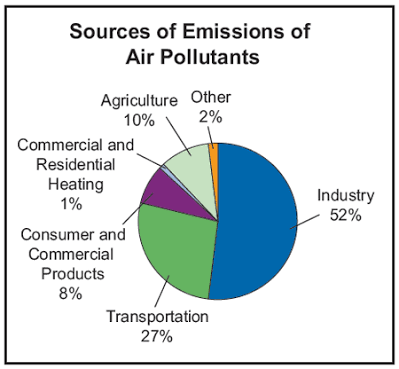
- Vehicular emissions: Rapid motorisation, old diesel fleets, traffic congestion, and poor public transport lead to continuous NOx, PM2.5 and ozone formation, especially in metros.
- Industrial pollution: Coal-based power plants, refineries, brick kilns, and chemical units release sulphur dioxide, nitrogen oxides, heavy metals and particulate matter throughout the year.
- Construction and demolition dust: Unregulated digging, material loading, concrete mixing, and demolition generate large amounts of PM10/PM2.5, worsening air quality in expanding urban corridors.
- Household biomass use: Firewood, dung cakes and crop residues burned in rural and peri-urban kitchens produce indoor and outdoor smoke, contributing heavily to PM2.5 levels.
- Seasonal Amplifiers:
- Stubble burning: post-harvest crop burning in Punjab-Haryana adds massive but short-term particulate spikes, worsening air quality in Delhi and the Indo-Gangetic Plains.
- Winter inversion layers: Cold, stagnant air traps pollutants near the surface, preventing dispersion and causing PM2.5 to accumulate for days or weeks in northern India.
- Fireworks and festival combustion: Diwali and New Year fireworks, combined with low wind speeds, create sudden surges in toxic gases and particulates, amplifying existing pollution loads.
Impacts of Air Pollution on the Human Body
Cardiovascular System:
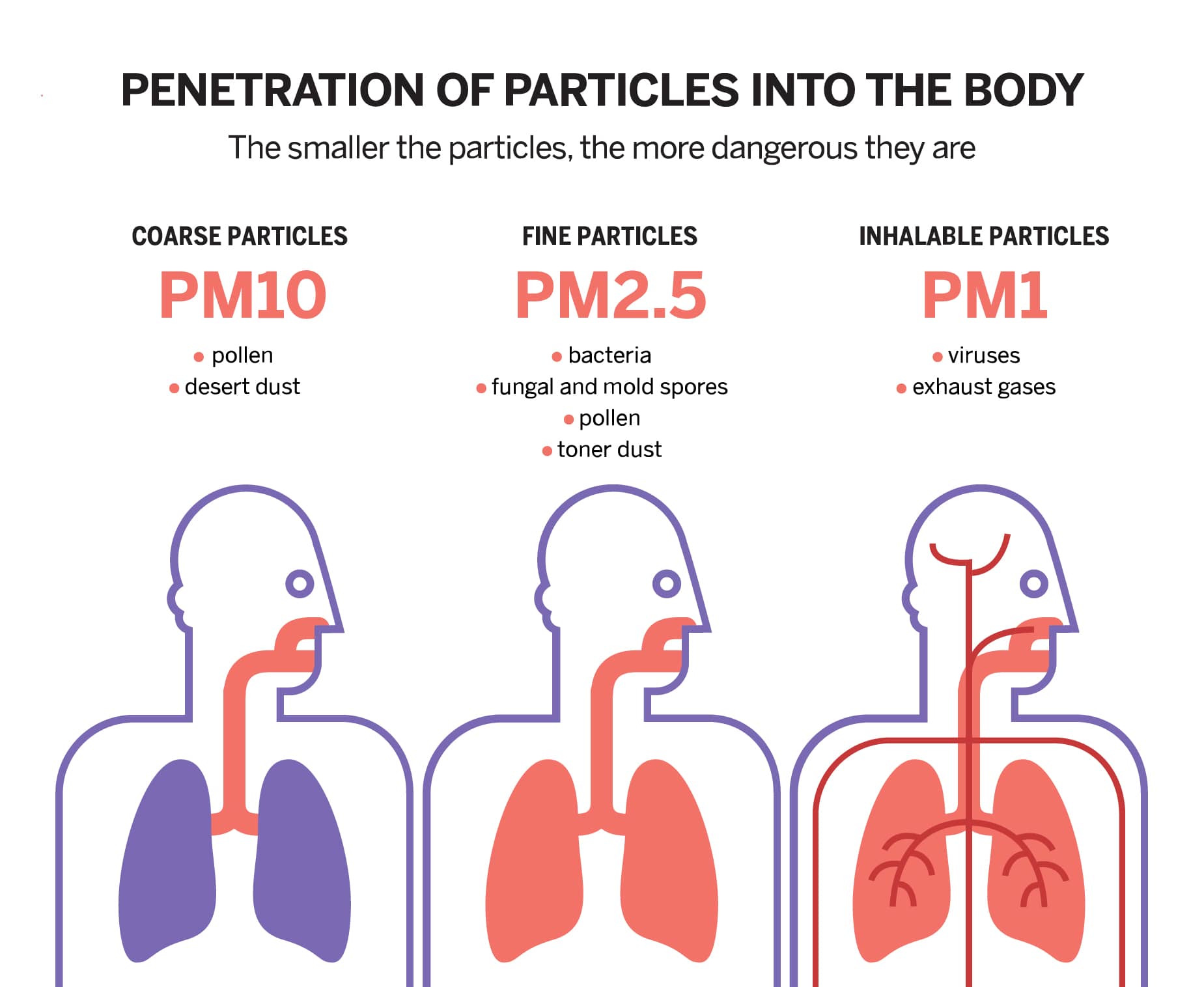
- PM2.5 enters bloodstream, causing inflammation, hypertension, heart attacks, strokes.
- Every 10 µg/m³ increase leads to 8% rise in annual mortality.
Respiratory System:
- Rising cases of asthma (6% of Indian children), COPD, chronic bronchitis.
- PM2.5 increases paediatric emergency visits by 20–40%; lung capacity drops 10–15% in exposed children.
Neurological System:
- PM2.5 crosses the blood–brain barrier → neuroinflammation, cognitive decline, dementia risk (+35–49%).
- Linked to reduced academic performance in polluted Indian cities.
Maternal & Child Health:
- Higher risks of preterm birth, low birth weight, stillbirths, and neonatal mortality.
- Worsens intergenerational health inequities.
Social & Economic Inequalities:
- The poor live closest to roads, industrial belts, landfills, suffering disproportionate exposure and healthcare burdens.
Initiatives Taken by India
To combat air pollution, the Government of India has implemented several national and regional strategies focused on vehicular, industrial, and agricultural emissions.
Major National Initiatives
- National Clean Air Programme (NCAP): Launched in 2019, this flagship initiative originally aimed for a 20–30% reduction in PM concentrations by 2024. In 2022, the target was revised to achieve a 40% reduction in PM10 levels by 2025–26 across 131 "non-attainment" cities.
- National Air Quality Index (AQI): Launched in 2015, the AQI categorizes air quality into six levels (Good, Satisfactory, Moderate, Poor, Very Poor, Severe) to provide easy-to-understand real-time information to the public.
- PRANA Portal: The PRANA (Portal for Regulation of Air Pollution in Non-Attainment Cities) dashboard was launched to monitor the progress of NCAP implementation across cities.
Sector-Specific Measures
1. Vehicular Emissions:
- BS-VI Norms: India leapfrogged from BS-IV to BS-VI fuel and vehicle standards nationwide in April 2020 to reduce harmful exhaust.
- FAME-II Scheme: Provides subsidies to promote the adoption of electric and hybrid vehicles.
- Ethanol Blending: The government is promoting a 10% to 20% ethanol blend in petrol to lower emissions.
2. Industrial Emissions:
- Continuous Monitoring: High-polluting "red category" industries are mandated to install Online Continuous Emission Monitoring Systems (OCEMS).
- Fuel Shifts: Major industrial units in the National Capital Region (NCR) have been shifted to cleaner fuels like Piped Natural Gas (PNG) or biomass.
3. Agricultural Stubble Burning:
- Subsidies: Farmers in Punjab, Haryana, and Uttar Pradesh receive 50% to 80% subsidies for crop residue management machinery (e.g., Happy Seeders).
- Bio-decomposers: The use of "Pusa Bio-decomposer" capsules is promoted to decompose stubble in-situ, turning it into manure instead of burning it.
Regional Emergency Measures (Delhi-NCR)
- Graded Response Action Plan (GRAP): An emergency response mechanism that triggers specific restrictions (e.g., banning construction, restricting truck entry) based on deteriorating AQI levels.
- Following a recent deterioration in air quality, GRAP Stage 3 was most recently invoked on December 13, 2025.
- Commission for Air Quality Management (CAQM): A statutory body established in 2021 specifically to coordinate and oversee air quality management in Delhi and adjoining states.
- Technological Interventions: Implementation of smog towers, anti-smog guns at construction sites, and pilot cloud-seeding experiments (conducted in late 2025) to provide temporary relief during peak pollution periods.
Policy & Regulatory Measures:
- Judicial Interventions: Supreme Court and NGT directives on stubble burning, fireworks, and industrial emissions.
- Technological Steps: Real-time monitoring, satellite-based assessments, low-emission zones (pilot), and EV incentives.
Way Ahead
- Modernise Air Quality Governance: Reform the AQI system by removing the 500 cap, aligning thresholds with WHO norms, and making PM2.5 the central regulatory metric for all clean-air planning.
- Strengthen Environmental Institutions: Increase staffing, funding, and technical capacity of pollution control boards, ensure independent oversight, and enforce real-time, science-based compliance monitoring.
- Transform Transport and Industry: Accelerate electrification of buses, autos and two-wheelers; shift freight to rail; and mandate strict industrial emission standards while phasing down coal-heavy processes.
- Regulate Construction and Waste Burning: Implement compulsory dust suppression, enclosure norms and mechanised sweeping, while reforming municipal waste systems to end open burning in all urban clusters.
- Integrate Health & Community Action: Embed AQI advisories in healthcare, expand lung-function testing and COPD screening, and promote citizen-led air monitoring and localised clean-air interventions.
Conclusion
- India’s air pollution is an invisible epidemic—silent, chronic, and the largest threat to public health. The evidence is unequivocal: it shortens lives, harms the unborn, weakens the brain, and deepens inequity. Clean air must now be recognised as a fundamental right and national priority, anchored in science, backed by political will, and implemented with urgency to secure a healthier, equitable future.
POSTED ON 12-12-2025 BY ADMIN
Next previous  General Studies
Political Science and International Relations
Some Reference Essays
List of previous year essay topics (1997-2019)

IAS GOOGLE is googled by the team of Raja Sir’s Cracking IAS Academy. Sources include The Hindu, Indian Express, pib.nic.in, Down To Earth, Economic Times, Vigyan Prasar, AIR and the like. IAS GOOGLE has been prepared in pace with emerging UPSC Trends.