




 Latest News
JANUARY 12, 2026 Current Affairs
ISRO’s PSLV-C62/EOS-N1 Mission Encountered Anomaly during 3rd Stage
- The launch marked the 64th flight of Polar Satellite Launch Vehicle (PSLV) and 9th dedicated commercial mission undertaken by New Space India Limited (NSIL).
- NSIL, incorporated in 2019, is wholly owned Government Company under administrative control of Department of Space and is the commercial arm of Indian Space Research Organisation (ISRO).
About PSLV-C62 / EOS-N1 Mission
- It includes the launch of EOS-N1 earth observation satellite along with 15 co-passenger satellites from domestic & international customers.
- EOS-N1 is designed to strengthen space-based monitoring capabilities.
- It will also demonstrate KID or Kestrel Initial Technology Demonstrator from a Spanish startup.
- KID is a small-scale prototype of a re-entry vehicle which after launch is slated to re-enter the earth’s atmosphere towards splashdown in South Pacific Ocean.
- EOS-N1 and 14 Co-passenger satellites will be injected into a Sun Synchronous Orbit and KID Capsule into a re-entry trajectory.
About PSLV
- 3rd generation launch vehicle and is first Indian launch vehicle to be equipped with liquid stages.
- Workhorse of ISRO: Consistently delivered satellites to Low Earth Orbits, can take up to 1,750 kg of payload to Sun-Synchronous Polar Orbits of 600 km altitude.
|
Stages in PSLV
|
Notable Missions: Chandrayaan-1, Mars Orbiter Mission, Aditya-L1 and Astrosat Mission, PSLV set a world record by launching 104 satellites in a single mission in 2017.
Swachh Jal Abhiyan
- Madhya Pradesh has launched the Swachh Jal Abhiyan after over 20 deaths in Indore’s Bhagirathpura due to contaminated drinking water.
Swachh Jal Abhiyan:
- A state-wide technology-driven drinking water safety campaign launched by the Madhya Pradesh government to ensure safe, clean and accountable water supply after the Indore contamination disaster.
- Aim: To ensure zero tolerance to contaminated drinking water through mapping, monitoring, grievance redressal, and accountability across urban and rural MP.
Key Features
- GIS mapping: Creates a digital map of all water and sewer lines so leaks, overlaps, and contamination risks can be quickly identified and fixed.
- Robotic inspection: Uses robots to check underground pipelines at critical junctions where sewage and drinking water may mix.
- Jal Sunwai: Weekly public hearings allow citizens to directly report water problems and demand accountability from officials.
- CM Helpline 181: A dedicated phone platform ensures fast registration and tracking of drinking water complaints across the state.
- Time-bound disposal: Sets fixed deadlines for officials to resolve complaints, preventing delays and bureaucratic neglect.
- Accountability and ethical governance, Public service values, Probity in governance, and Attitude of public servants
OrbitAid’s AyulSAT
- India is set to demonstrate in-orbit satellite refuelling for the first time as Chennai-based OrbitAid’s AyulSAT is launched onboard ISRO’s PSLV-C62.
AyulSAT:
- AyulSAT is a 25-kg dedicated tanker-satellite and target spacecraft designed to demonstrate fuel transfer, power transfer and data transfer in orbit using a standardized docking and refuelling interface.
- Developed by: OrbitAid Aerospace, a Chennai-based Indian space startup founded by Sakthikumar Ramachandran.
- Launched through: ISRO’s PSLV-C62 mission.
- Aim: To demonstrate in-orbit propellant transfer and docking readiness, enabling satellite life-extension, servicing, and reduction of space debris, and to lay the foundation of an on-orbit space economy.
Key Features
- Internal refuelling demonstration: Transfers fuel from one tank to another within the same satellite to study fluid behaviour in microgravity.
- SIDRP interface: Uses OrbitAid’s Standard Interface for Docking and Refuelling Port for future spacecraft-to-spacecraft refuelling.
- Multi-utility transfer: Capable of fuel, power and data transfer.
- RPOD-ready: Will act as the target satellite for a future chaser satellite that will dock and perform actual in-orbit refuelling by end-2026.
- Commercially oriented: India’s first commercial docking and refuelling interface deployed in orbit.
Significance
- Satellite life extension: Allows satellites in LEO and GEO to be refuelled instead of being abandoned.
- Space debris reduction: Prevents dead satellites from becoming orbital junk, supporting Debris-Free Space Mission 2030.
Orobanche aegyptiaca
- India’s largest oilseed crop, mustard, is facing a major yield threat due to the rapid spread of the parasitic weed Orobanche aegyptiaca in Rajasthan and Haryana.
Orobanche aegyptiaca:
- Orobanche aegyptiaca (locally called Margoja) is a root-parasitic flowering weed that attaches itself to the roots of crops like mustard, extracting water, carbon and nutrients, leading to severe yield loss.
- Origin: It is native to the Mediterranean–West Asian region and has spread to South Asia, North Africa and parts of Europe, becoming a major problem in oilseed and vegetable crops.
Spread and habitat:
- Thrives in mustard-growing regions of north-western India, especially Rajasthan and Haryana.
- Its seeds can remain viable in soil for up to 20 years, allowing infestation to recur even after crop rotation.
- Spreads through wind, irrigation water, farm tools and contaminated soil.
Key features
- Obligate parasite: Cannot survive without a host plant.
- Underground attack: Attaches to crop roots before appearing above ground, making early detection difficult.
- High reproductive capacity: One plant produces 40–45 flowers, each releasing 4,000–5,000 microscopic seeds.
- Triggered by irrigation: Moist soil after the first irrigation promotes seed germination and attachment to mustard roots.
Implications:
- Causes wilting, yellowing, stunted growth and yield loss of mustard.
- Reduces farmers’ confidence, leading to shift away from mustard cultivation.
- Threatens India’s goal of cutting edible oil imports, as mustard contributes over 4 million tonnes to domestic oil production.
Operation Hawkeye
- The United States carried out large-scale airstrikes against ISIS targets in Syria under Operation Hawkeye after an ISIS ambush in Palmyra killed two US soldiers and a civilian interpreter.
Operation Hawkeye:
- Operation Hawkeye is a US-led military counter-terrorism operation involving air and precision strikes against Islamic State (ISIS) targets across Syria.
- Launched by: The operation was launched by the United States under President Donald Trump and executed through US Central Command (CENTCOM) in December 2025.
Aim:
- To avenge and respond to the Palmyra ISIS ambush that killed American personnel.
- To degrade ISIS networks, prevent regrouping, and protect US and coalition forces operating in Syria.
- To reinforce the message that attacks on US personnel will invite direct military retaliation.
Syria:
- Syria is a sovereign Middle Eastern country that has emerged from a 13-year civil war (2011–2024) and is currently governed by an interim government led by President Ahmed al-Sharaa.
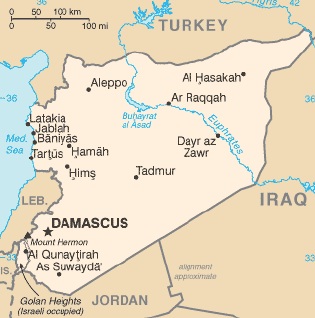
- Located in: Syria lies in south-western Asia on the eastern coast of the Mediterranean Sea, forming a strategic land bridge between West Asia, the Levant and Mesopotamia.
- Capital: Damascus, one of the oldest continuously inhabited cities in the world.
- Neighbouring nations: Turkey, Iraq, Jordan, Lebanon and Israel.
Key features
- Mediterranean coastline – Gives Syria sea access for trade and naval activity.
- Al-Ansariyah Mountains – Separate the humid coast from the dry interior.
- Anti-Lebanon & Mount Hermon – Form a natural border and water source.
- Syrian Desert – A vast arid interior with strategic importance.
- Euphrates River – Syria’s main lifeline for irrigation and power.
- Orontes River – Supports fertile western valleys and settlements.
Bhairav Battalion
- India’s newly raised Bhairav Battalions will make their first public appearance at the Army Day Parade in Jaipur.
Bhairav Battalion:
- The Bhairav Battalion is a new-generation high-speed offensive combat unit of the Indian Army, created for hybrid warfare, rapid raids, drone operations and tactical special missions.
- Under: These battalions operate under Corps and Division-level formations of the Indian Army.
- Positioned mainly along: sensitive borders such as Rajasthan, Jammu, Ladakh and the Northeast.
- Aim: To bridge the gap between Para Special Forces and regular infantry by providing commanders with “fight tonight” units capable of quick, decisive and tech-enabled operations.
Key Features:
- Compact strength of about 200–250 highly trained soldiers
- Specialised in drone warfare, electronic disruption, reconnaissance and rapid strikes
- Designed for hybrid warfare, combining ground action, unmanned systems and cyber-electronic support
- Deployed close to the border for immediate tactical response
- Integrated with the Army’s one lakh+ drone operator ecosystem
Significance:
- Enables the Army to respond instantly to border crises and grey-zone threats.
- Enhances India’s ability to conduct fast, precise and technology-driven military operations.
- Forms a key pillar of the Army’s force restructuring and modernisation, alongside Rudra Brigades and unmanned warfare units.
India Tightens Crypto KYC to Curb Money Laundering and Terror Financing
- India has introduced stricter KYC and Anti-Money Laundering (AML) norms for cryptocurrency users by mandating live selfie verification, geo-tagging and bank account validation.
Crypto KYC :
- It is a mandatory digital identity verification framework for users of cryptocurrency exchanges, requiring them to prove their real identity, physical presence and financial linkage before trading virtual digital assets.
Organisation involved:
- The framework is issued and enforced by the Financial Intelligence Unit (FIU-India) under the Union Ministry of Finance, in line with the Prevention of Money Laundering Act (PMLA).
Aim:
- To prevent money laundering, terror financing and proliferation financing through crypto assets.
- To ensure that crypto transactions are traceable, accountable and linked to real individuals.
Key features:
- Live selfie with liveness detection – Confirms the user’s physical presence and identity by detecting real-time movements, preventing deepfakes and fake photo uploads.
- Geo-tagging with IP address – Records the exact location and device network of onboarding to trace suspicious or cross-border activities.
- PAN and secondary ID – Links crypto accounts to a verified legal identity, enabling tax tracking and law-enforcement verification.
- Penny-drop bank verification – A Re 1 transfer ensures the bank account is active and belongs to the user, blocking mule or fake accounts.
- OTP verification – Confirms control over registered mobile and email, adding an extra layer of authentication.
- Periodic KYC updates – Keeps customer information current and risk-sensitive, especially for high-risk users.
- Ban on mixers, tumblers and privacy tokens – Stops tools that hide transaction trails, enabling better tracking of illicit crypto flows.
Significance:
- Brings crypto exchanges under the formal financial surveillance system.
- Enhances investor protection and platform accountability.
- Aligns India with global FATF standards on crypto regulation.
EU - Mercosur Trade Deal
- The European Union (EU) and Mercosur bloc will soon formally sign their Free Trade Agreement (FTA), concluding negotiations ongoing since 1999.
- Opposition Bloc: France, supported by Ireland, Poland, Austria, and Hungary, has historically opposed the deal, citing risks to farmers’ incomes and concerns about Amazon deforestation.
- Mercosur, or the Southern Common Market, is a South American trade bloc created to promote free trade and economic integration. It includes five full members—Argentina, Bolivia, Brazil, Paraguay, and Uruguay and six associate members.
Significance
- Market Scale: The agreement creates the world’s largest free trade area, involving over 700 million people and key economies.
- Geopolitical Shift: The deal supports EU trade diversification, reduces dependence on China, and offsets U.S. tariff pressures.
- Economic Gains: It eliminates nearly 90% of export duties; EU cars, machinery, chemicals, and pharmaceuticals gain market access, while Mercosur primarily benefits through agricultural exports.
- Critical Minerals: The agreement secures EU access to essential raw materials, like lithium from Argentina, and graphite and rare earths from Brazil, aiding the green energy transition.
35 Years After the New Economic Policy
- Context (IE): 2026 marks 35 years of the New Economic Policy (NEP) 1991, which was “substantial but incomplete” in delivering mass non-farm job creation.
- India must revise its thinking, as China (similar per-capita GDP in 1991) is now ~5x higher.
Key Features of New Economic Policy (NEP), 1991
- Core Focus: Based on Liberalisation–Privatisation–Globalisation (LPG) to reduce State control, expand private participation, attract foreign capital, and modernise the economy.
- Fiscal Discipline: Targeted at reducing fiscal deficit to ~3–4% (medium term) through subsidy rationalisation, lower non-plan expenditure and wider tax reforms to raise revenue.
- Monetary Reforms: Adopted a tighter monetary stance to curb imports and current account stress; used tools like treasury bills and long-term securities, and raised import credit costs.
- Banking Liberalisation: Gave banks greater autonomy to set deposit interest rates and maturity terms, moving away from heavy administrative control.
- Trade Reforms: Devalued the rupee by ~18% to boost exports, eased import restrictions for exporters, and liberalised capital goods imports without prior approvals.
- Industrial Policy Reforms: Abolished industrial licensing for most sectors, reduced public sector exclusivity, and opened key industries to private entry to raise competition.
- MRTP & SSI Reforms: Amended Monopolies and Restrictive Trade Practices Act to remove expansion approvals for large firms; allowed small enterprises to sell up to 44% equity to larger companies.
- FDI Reforms: Raised Foreign Direct Investment (FDI) cap from 40% to 51% in priority industries and created the Foreign Investment Promotion Board (FIPB) for faster clearances.
Achievements of the 1991 Reforms
- Mobility Rise: Vehicle ownership increased ~45 times, reflecting rising income capability.
- Formal Savings: Provident Fund rose ~75 times, signalling expansion of formal wage employment.
- External Strength: Foreign exchange reserves jumped ~120 times, improving macro-stability.
- Capital Markets: Stock market value expanded ~500 times, enabling deeper investment.
- Connectivity Boom: Phone connections rose ~600 times, powering productivity and services growth.
What 1991 Failed to Fix?
- Farm Dependence: ~ 45% of India’s workforce is still in agriculture, showing unfinished transformation.
- Informality Trap: India has ~6.3 crore enterprises, but only ~8 lakh are Provident Fund-paying employers, signalling the very thin formal base.
- Weak Manufacturing Jobs: Manufacturing workforce share is only ~11%, similar to the post-industrial phase, indicating premature deindustrialisation.
- Trust Deficit on Enterprise: Over-regulation and suspicion toward entrepreneurs kept firms small; India’s growth didn’t translate into enough stable wage jobs.
- Job Supply Mismatch: India adds ~20 million entrants annually but creates only ~2 million jobs per year, widening underemployment pressure.
Revisions in Thinking Needed for Bypassing Failures
- Wealth Creation: “Garibi Hatao” needs “Ameeri Banao”, because only expanding incomes, firms and tax base can sustainably fund welfare and jobs.
- Policy Experimentation: “Cross the river by feeling the stones”, shift from policy paralysis to calibrated trials, piloting reforms in select sectors/States and scaling what works fast.
- Pragmatism Over Ideology: “Black/white cat”, back any State/sector/firm (manufacturing or services, domestic or foreign) that delivers high-wage non-farm job creation, not ideological preferences.
- Risk Acceptance: “When you open the window, some flies will always get in” Fraud cases should be handled through smarter enforcement, not blanket over-criminalisation that discourages investment.
Reform Agenda for 2026
- Deregulation: Cut licensing, inspections and notices to reduce compliance fear; E.g., implement Jan Vishwas Siddhant as a single-source regulatory truth system.
- Decriminalisation: Replace jail-based compliance with civil penalties and graded deterrence; E.g., expand Jan Vishwas 2.0/3.0 to rationalise economic offences.
- Digitisation: Make government interface paperless and cashless to cut transaction costs; E.g., single-window approvals and faceless compliance like GST portal workflows.
- Decentralisation: Devolve funds, functions and functionaries to local levels for job creation ecosystems; E.g., 15th Finance Commission local body grants & SVAMITVA Scheme to strengthen Panchayat revenues.
PARAM Shakti Supercomputer
- The Ministry of Electronics and Information Technology (MeitY) has launched ‘PARAM Shakti’ supercomputing facility at the IIT Madras.
Param Shakti
- Param Shakti is a state-of-the-art supercomputing facility inaugurated at IIT Madras as part of the National Supercomputing Mission (NSM).
- Indigenous Hardware: The system is built on the indigenous Rudra motherboard, designed and manufactured by C-DAC.
- Computing Power: Param Shakti achieves a peak performance of 3.1 Petaflops, performing over 3.1 quadrillion calculations every second.
- Network Fabric: The system uses the Trinitra interconnect, an indigenously developed high-speed communication fabric that links computing nodes.
- Energy Efficiency: It has high energy efficiency, with a Power Usage Effectiveness (PUE) ratio between 1.2 and 1.4.
- Access Model: The facility follows an open-access model, with 40% of capacity reserved for external researchers from academic institutions.
- Software Stack: The system operates on a native AlmaLinux-based software stack, offering full control over the operating environment.
Key Areas of Application
- Healthcare Research: Simulates molecular interactions to accelerate drug discovery.
- Climate Science: High-resolution weather forecasting and advanced climate change modelling.
- Engineering Design: Simulations in aerospace propulsion, nuclear sciences, and fluid dynamics.
- Artificial Intelligence: Training of large-scale AI models for the IndiaAI Mission.
|
Supercomputers in India
|
POSTED ON 12-01-2026 BY ADMIN
Next previous  General Studies
Political Science and International Relations
Some Reference Essays
List of previous year essay topics (1997-2019)

IAS GOOGLE is googled by the team of Raja Sir’s Cracking IAS Academy. Sources include The Hindu, Indian Express, pib.nic.in, Down To Earth, Economic Times, Vigyan Prasar, AIR and the like. IAS GOOGLE has been prepared in pace with emerging UPSC Trends.