
- Trump’s Arctic Ambition over Greenland raises questions of US expansionism, Arctic security, rare earth minerals, and international law after Venezuela.
Trump’s Arctic Ambition
- Leaders of Denmark and Greenland have sharply rejected US President Donald Trump’s assertion that the United States needs Greenland “for defence”.
- The response comes amid a year-long US campaign signalling interest in taking control of Greenland. Trump has repeatedly floated the idea of “purchasing” the Arctic island, and has not ruled out the use of force, escalating tensions.
- The crisis intensified after Trump doubled down on Greenland’s strategic necessity, while aides shared provocative maps showing the island draped in the US flag.
- Denmark has accused Washington of encouraging secessionist sentiments within Greenland, turning the issue into a major diplomatic flashpoint with implications for Arctic security, sovereignty, and international law.
Why the US Wants Greenland:
Strategic and Resource Interests
- US interest in Greenland is primarily driven by geostrategy. During the Cold War, Greenland served as a crucial forward base, a role that continues today.
- The US operates the Pituffik Space Base (formerly Thule Air Base), which enables early warning and missile defence, allowing monitoring of potential threats from Russia, China, and North Korea.
- Its location also offers strategic reach across Europe and Asia.
Arctic Power Competition
- As Russia and China expand their Arctic military presence, Greenland’s importance has grown.
- Control or influence over the island strengthens US positioning in the emerging Arctic security theatre, where melting ice is opening new routes and strategic spaces.
Critical Minerals and Supply Chains
- Greenland holds significant rare earth mineral reserves, vital for electronics, electric vehicles, and defence systems.
- With China dominating global supply, access to alternative sources is strategically attractive.
- However, Greenland passed a law banning uranium mining in 2021, complicating large-scale extraction plans.
A Longstanding US Interest in Greenland
- The United States has expressed interest in Greenland for over a century. As early as 1867, the US State Department noted Greenland’s strategic location and natural resources, though no formal action followed.
- During World War II, the US moved into Greenland after Nazi Germany occupied Denmark. In 1946, President Harry S Truman offered $100 million to Denmark to purchase Greenland, and even explored exchanging parts of Alaska for Greenlandic territory.
- In 1951, the US and Denmark signed a defence agreement allowing the US to build and operate military bases in Greenland, cementing a long-term American military presence.
- Interest resurfaced during Donald Trump’s first term (2017–21), when he publicly proposed buying Greenland as a “large real estate deal.”
- After Danish Prime Minister Mette Frederiksen dismissed the idea as absurd, Trump cancelled an official visit to Denmark, highlighting the diplomatic sensitivity around the issue.
Why Denmark and Greenland Are Wary of Trump
- Concerns in Denmark and Greenland have intensified following US President Donald Trump’s actions in Venezuela, including the capture of President Nicolás Maduro.
- The episode heightened anxieties about sovereignty and intervention, making Trump’s remarks on Greenland more alarming.
Alleged ‘Three-Phase’ Strategy
- A report by Danish Broadcasting Corporation (DR) claimed the Trump administration pursued a three-phase plan to take over Greenland:
- Charm offensive—including outreach such as a visit by Donald Trump Jr
- Direct pressure on Denmark—with JD Vance travelling to Greenland and publicly criticising Denmark
- Influence operations—alleged efforts to identify and cultivate local supporters to fuel a secessionist movement
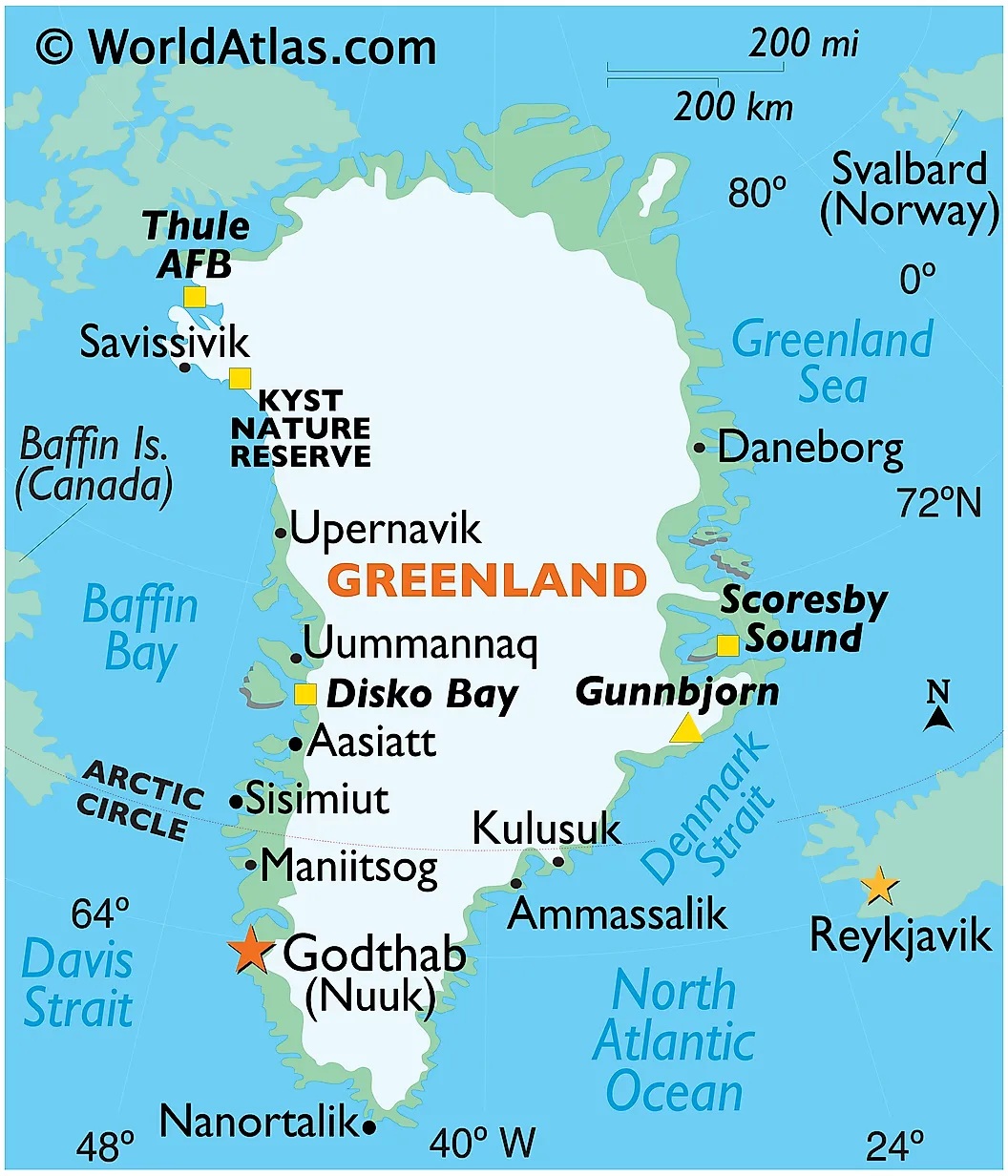
Has the US Bought Territories in the Past
- Alaska Purchase (1867) – The United States purchased Alaska from Russia in 1867 for $7.2 million, adding about 1.5 million sq km to US territory. Alaska became a US state in 1959.
- Louisiana Purchase (1803) – In 1803, under President Thomas Jefferson, the US bought over 2 million sq km of land from France for $15 million, dramatically expanding the nation westward.
- Danish West Indies (1917) – In 1917, the US purchased the Danish West Indies from Denmark. The islands were renamed the US Virgin Islands, becoming a permanent US territory
Strategic and Legal Implications
Trump’s statements challenge:
The UN Charter
- Principles of sovereignty and self-determination
- The episode exposes rising Arctic militarisation and great-power competition.
- It risks destabilising NATO unity, as Denmark is a NATO ally.
Way Forward
- Strengthening Arctic governance through multilateral forums
- Respecting international law and sovereignty
- Cooperative resource development instead of coercive geopolitics
- Addressing Arctic security through diplomacy rather than unilateralism