AUGUST 10, 2026 CURRENT AFFAIRS
|
EoDB: From Ease of Ranking to Ease of Enterprise GS-II:Governance. Context The Parliamentary Standing Committee on Commerce has examined “Doing Business in India: The Way Forward”, focusing on reducing regulatory burdens and improving the business environment. What is Ease of Doing Business? EoDB means creating a regulatory and administrative ecosystem where businesses can start, operate, expand and exit with minimum unnecessary compliance costs and procedural delays. Key Facts · India’s World Bank Doing Business ranking improved from 142nd (2015) to 63rd (2020). · Recognised startups increased from 502 in 2016 to 2.23 lakh+ by 2026. · Startups have generated around 23.3 lakh formal jobs. · The Districts as Export Hubs approach seeks to decentralise export promotion. Major Issues · Regulatory fragmentation : Multiple laws, licences and overlapping compliances. · Weak State/local-level implementation : National reforms do not always translate into ground-level ease. · Approval delays : Licences, NOCs and renewals can delay investment. · Uneven implementation among States : Reform rankings may not fully capture actual business experience. · MSME credit constraints : Collateral and documentation requirements restrict working capital. · Customs/export bottlenecks : Fragmented procedures and clearance delays increase transaction costs. Committee's Way Forward · One Licence–One Renewal Merge multiple licences into a single one with a common renewal date. · Risk-based regulation : Regulate businesses based on their risk level, not uniformly. · Expand D-BRAP : Push ease-of-doing-business reforms down to the district level. · Integrate with NSWS : Bring all approvals onto one national online window. · Time-bound/deemed approvals : Approval deemed granted if not decided within a fixed time. · Automatic renewals : Renew compliant businesses' licences without fresh applications. · Outcome-based BRAP : Rank states by real ground outcomes, not just reforms announced. · Ground Reality Verification & third-party audits : Independently verify if reforms are actually working. · Expand Udyam and credit guarantees : Widen MSME registration and guaranteed credit access. · Collateral-free, cash-flow-based lending : Lend to MSMEs based on cash flow, not physical collateral. · Digitise trade procedures/upgrade ICEGATE : Use AI to speed up customs clearance digitally. Remember · NSWS → single-window mechanism for business approvals. · BRAP → Business Reform Action Plan. · D-BRAP → district-level business reforms. · ICEGATE → Indian Customs Electronic Gateway. · Districts as Export Hubs → district-oriented export promotion.
|
||||||||||||||
From Firefighting to Fire ResilienceGS-III:Environment. ContextThe Parliamentary Standing Committee on Science & Technology, Environment, Forests and Climate Change examined forest fires in the Himalayan region, their adverse effects and mitigation measures. Core IssueThe problem is not merely forest fire suppression, but forest ecology , climate variability ,fuel load, invasive species, livelihood factors. Major Issues Identified· Climate-fire linkage gap : Lack of dedicated region-specific studies establishing the relationship between climate change and increasing fire frequency. · Data gap : No consolidated national database of forest-fire casualties and compensation. · Satellite monitoring gap :Dependence on polar-orbiting satellites can create gaps in continuous fire monitoring. · Chir Pine dominance : Historical ecological changes and the role of Chir Pine in fire vulnerability require deeper study. · Pine needle problem: Collection becomes economically difficult in forests far from motorable roads. ImpactEcological · Biodiversity loss: Kills plants, animals and microorganisms. · Habitat degradation: Reduces the quality of wildlife habitats. · Forest fragmentation: Breaks continuous forests into smaller patches. · Soil erosion: Removes vegetation cover, exposing soil to erosion. Climate · Carbon emissions: Fires release stored carbon into the atmosphere. · Loss of carbon sinks: Damaged forests absorb less CO₂. Socio-economic · Livelihood losses: Affects agriculture, livestock and forest-based incomes. · Community impacts: Reduces access to forest resources. · Tourism losses: Degrades landscapes and affects tourism-dependent economies. Recommendations· Region-specific studies: Identify local climate–fire patterns and risks. · Centralised database: Maintain comprehensive records of forest fires and damages. · Geostationary satellites: Enable near-continuous fire detection and monitoring. · Historical-ecological studies: Understand changes in Himalayan forest composition. · Invasive-species eradication: Remove highly fire-prone invasive vegetation. · Oak & Deodar Regeneration Mission: Restore native, ecologically valuable forests. · Biomass Management Framework: Promote scientific collection and utilisation of forest biomass. · Pine Needle Management Board: Coordinate collection, processing and sustainable utilisation.
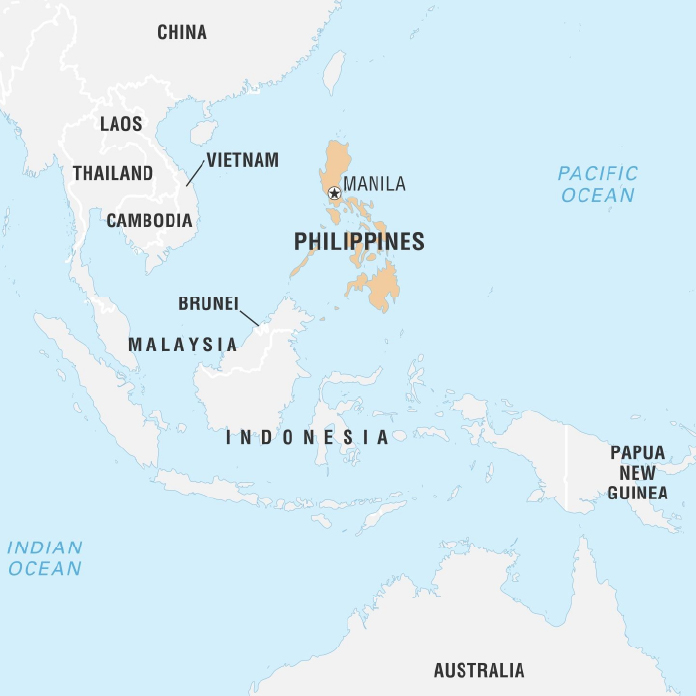
Philippines - The Archipelagic Gateway to the Western Pacific Maritime boundaries· West: Vietnam · North: Taiwan · East: Pacific/Philippine Sea · South: Malaysia & Indonesia Important Geography· Capital: Manila · Major island groups: Luzon, Visayas, Mindanao · Highest peak: Mount Apo · Active volcano: Mayon · Climate: Tropical monsoon · Important rivers: Cagayan, Agno, Pampanga, Pasig, Bicol
|
||||||||||||||
Bank-in-a-BoxGS-III – Economy , Banking What?A ready-made, integrated banking technology platform that allows institutions to deploy multiple banking services through a single system. Bank-in-a-Box vs BaaS
Significance· Useful for Urban Cooperative Banks (UCBs) undergoing digital transformation. · Can reduce technology costs and implementation time. · Supports digital banking and financial inclusion.
|
||||||||||||||
Bhopal Declaration - Culture as a Bridge of BRICS CooperationContext· Adopted at the 11th BRICS Culture Ministers’ Meeting held in Bhopal. · Aims to strengthen cultural cooperation among BRICS countries. Key Focus· Cultural cooperation: Exchange of cultural practices and experiences. · Creative industries: Promote art, media and cultural entrepreneurship. · UNESCO nominations: Cooperation in preserving and promoting heritage. · Cultural-property restitution: Address return of cultural objects to their countries of origin. · Traditional Knowledge: Protect and promote indigenous cultural knowledge. · Museums & libraries: Encourage institutional cooperation. · Creators’ rights: Strengthen protection of artists and cultural creators. · Artist Registry: Pilot initiative to facilitate recognition and networking of artists. Significance· Cultural diplomacy: Uses culture to strengthen BRICS relations. · Soft power: Enhances India’s cultural influence globally. · Heritage protection: Promotes preservation of cultural heritage and traditional knowledge. · People-to-people ties: Encourages exchanges among artists, institutions and communities. · Creative economy: Supports creative industries and artists.
|
||||||||||||||
Eco-Educational Hub – Prakriti Gyan Dham· What? : India’s first-of-its-kind Eco-Educational Hub, established in Lucknow. · Developed by: CSIR–National Botanical Research Institute (NBRI). · Aim: Connect scientific knowledge with public awareness and hands-on environmental learning. Key Features· PAaVan Path: Learning about plants and associated vegetation. · Vibhav Enclave: Conserves rare, endangered and threatened plants. · Bhairav Enclave: Showcases State plants. · Bamboosteum: Dedicated to bamboo diversity. · Indian Heritage Garden: Highlights India’s plant heritage.
|
||||||||||||||
|
GeM: A Decade of Digital Public Procurement GS-II: Governance GS-III: MSMEs, entrepreneurship, inclusive growth, digital economy ContextGovernment e Marketplace completed 10 years since its launch in 2016. Recent PIB data records more than 2.1 lakh women-led enterprises registered on GeM and more than ₹28,000 crore in contracts awarded to them. What is GeM?GeM is a 100% Government-owned Section 8 company under the Department of Commerce, Ministry of Commerce & Industry. AimTo create a transparent, efficient, digital and inclusive public procurement ecosystem. Major Impact· Around 1.37 lakh+ government buyers · Around 25 lakh sellers · Paperless procurement · Reduced transaction costs · Greater transparency · Reduced discretionary decision-making · Wider market access for MSMEs, startups and women entrepreneurs. Inclusive Procurement
The Womaniya initiative has crossed ₹28,000 crore in procurement from women-led enterprises and exceeded the mandated 3% procurement target in the reported period. Significance· Democratises access: Gives small businesses direct access to government markets. · Reduces information asymmetry: Makes prices, products and procurement processes transparent. · Boosts MSMEs: Expands their participation in government procurement. · Women entrepreneurship: Creates market opportunities for women-led enterprises. · Reduces corruption: Minimises discretion through digital, transparent processes. · Value for money: Enables competitive procurement at better prices. Challenges· Digital divide: Small/rural sellers may lack digital access and skills. · MSME capacity: Small firms may struggle with scale, compliance and documentation. · Financing constraints: Sellers may lack working capital to fulfil large orders. · Quality assurance: Ensuring consistent product quality remains challenging. · Limited adoption: Not all government entities fully utilise GeM. Way Forward· Digital literacy: Train small and rural sellers to use GeM effectively. · Better financing: Expand easy and affordable seller credit. · Quality certification: Strengthen product and vendor verification. · Rural access: Expand GeM Suvidha Kendras to reach remote sellers. · AI/data analytics: Use procurement data to detect fraud and irregularities.
|
||||||||||||||
India’s Green Power MilestoneContextIndia crossed 300.50 GW of installed non-fossil electricity capacity as of 31 July 2026, representing more than 54% of total installed capacity. GS-III: Energy, environment, climate change, infrastructure India had also recognised large hydropower as renewable energy in 2019. Capacity Composition
Aim· To accelerate India's transition towards a low-carbon, energy-secure and increasingly self-reliant power system. · Key Achievement· 300.50 GW non-fossil capacity · 55.29 GW added during 2025–26 · Solar addition: 44.6 GW · Wind addition: 6 GW · More than 60% of the 500 GW 2030 target already achieved. Significance· Climate mitigation - Supports India's Paris Agreement commitments. · Energy security - Reduces dependence on imported fossil fuels. · Green industrialisation - Promotes solar manufacturing, batteries, green hydrogen and related industries. · Employment - Creates opportunities across renewable-energy value chains. · Strategic autonomy - Reduces vulnerability to fossil-fuel price volatility. Challenges· Intermittency: Solar and wind generation varies with weather conditions. · Storage deficit: Insufficient storage limits reliable renewable-power supply. · Grid challenges: Existing grids need upgrades to handle variable renewable power. · Import dependence: Heavy reliance on imported solar cells and critical components. · Land/ecological concerns: Large projects can create land-use and biodiversity conflicts. · Just transition: Coal-dependent regions face employment and livelihood risks. Way Forward· Battery storage: Store surplus renewable power for later use. · Pumped hydro: Provide large-scale, long-duration energy storage. · Green hydrogen: Use renewable electricity to produce clean hydrogen. · Domestic manufacturing: Reduce dependence on imported solar components. · Strong transmission: Expand interstate grids to transfer renewable power efficiently. · Just transition: Reskill workers and diversify coal-dependent economies. India needs:· Battery Energy Storage Systems (BESS): Store surplus renewable power and supply it when solar/wind generation falls. · Pumped-Storage Hydropower: Acts as large-scale energy storage by pumping water uphill during surplus power and generating electricity during peak demand. · Green Hydrogen: Provides clean fuel for hard-to-abate sectors such as steel, fertilisers and heavy transport. · Domestic Manufacturing of Cells/Wafers: Reduces import dependence and strengthens India’s solar and battery supply chains. · Strong Interstate Transmission: Enables renewable power from resource-rich states to reach high-demand regions efficiently. · Just-Transition Policies for Coal Regions: Support workers and local economies through reskilling, alternative industries and economic diversification as coal dependence declines.
|
||||||||||||||
Lindsey O. Graham Sanctioning Russia and Iran Act, 2026GS-II: India-US & India-Russia relations, Strategic Autonomy | GS-III: Energy Security, Trade Context· US Senate advanced legislation proposing up to 100% tariffs on countries buying Russian energy. · India could face pressure due to its Russian energy imports. Why Important for India?· Russian energy offers affordable supplies and diversification. · Possible US secondary sanctions could hurt Indian exports and India-US trade. Impact on India· Energy security: US pressure on Russian oil purchases could make India’s energy imports more costly or uncertain. · Export losses: Higher US tariffs could make Indian products less competitive in the US market. · Trade tensions: Could complicate the ongoing India-US trade relationship. · Strategic autonomy: India may face pressure to balance its US partnership with its long-standing Russia ties. · Inflation risk: If cheaper Russian energy becomes harder to access, higher energy costs could affect the wider economy. · Diplomatic challenge: India would need to maintain relations with both Washington and Moscow while protecting its national interests. Way Forward· Diversify energy suppliers and export markets. · Promote rupee/local-currency settlements where feasible. · Maintain balanced engagement with US and Russia. · Expand renewable and nuclear energy to reduce external vulnerability
|
||||||||||||||
MSS+ TechnologyWhat is MSS+?MSS+ (Modified Mix Seal Surfacing Plus) is a road construction and maintenance technology developed by CSIR–Central Road Research Institute (CRRI). Purpose· Designed mainly for low-to-medium traffic roads. · Can be prepared at ambient temperature, unlike conventional hot-mix asphalt. Key Benefits· Lower emissions: Reduces carbon footprint. · Energy efficient: Requires less heating and energy. · Cost-effective: Can reduce construction and maintenance costs. · Durable: Improves road service life. · Better skid resistance: Enhances vehicle safety. · All-weather performance: Suitable for varying weather conditions. Why Important?· It promotes green and energy-efficient road construction, supporting sustainable infrastructure development.
|
||||||||||||||
Samudra PlatformWhat?A single-window digital platform for maritime governance, aimed at shifting maritime administration from paper-based processes to transparent digital governance. Ministry & Agency
Key Features· Online applications & fee payments: Users can apply and pay fees digitally without physical visits. · Application tracking: Applicants can check the real-time status of their applications. · Digital certificates: Certificates can be issued and accessed electronically, reducing paperwork. · Digital Seafarers Employment Agreements: Employment agreements can be created and managed digitally. · Seafarer tracking: Enables better monitoring and management of seafarers. · Online grievance redressal: Seafarers can submit and track complaints digitally. · Faceless & digital-first governance: Minimises physical interaction and paperwork, promoting transparency, efficiency and accountability. Significance of E-Samudra· Ease of Doing Business: Simplifies maritime approvals and compliance. · Transparency: Digital tracking reduces delays and scope for discretion. · Lower costs: Reduces paperwork, travel and administrative costs. · Seafarer welfare: Enables easier access to certificates, agreements and grievance redressal. · Faster governance: Online services make maritime administration more efficient. · Maritime competitiveness: Supports a modern, digitally enabled Indian maritime sector.
|
||||||||||||||
Typhoon DolphinWhat is a Typhoon?A typhoon is a tropical cyclone that forms in the Western North Pacific Ocean. Typhoon Dolphin· It made landfall in China’s Zhejiang region. · It caused heavy flooding and transport disruption in eastern China. Formation ConditionsTyphoons generally require: · Warm sea-surface temperatures → provide energy. · Moist air → supports cloud formation. · Coriolis force → provides rotation. · Low vertical wind shear → allows the storm to remain organised. · Pre-existing disturbance → acts as the initial system. · Atmospheric instability → promotes rising air and convection. Regional names :· Hurricane → Atlantic & Eastern Pacific · Typhoon → Western Pacific · Cyclone → Indian Ocean & South Pacific
|