
JANUARY 21, 2026 Current Affairs
ECI Convenes Global Meet IICDEM 2026
- The Election Commission of India (ECI) is hosting the inaugural India International Conference on Democracy and Election Management (IICDEM) 2026 in New Delhi.
IICDEM 2026
- 3-day global conference on democracy and election management, focused on sharing best practices among Election Management Bodies (EMBs) at Bharat Mandapam, New Delhi.
- Organised By: India International Institute of Democracy and Election Management (IIIDEM) under the aegis of Election Commission of India (ECI).
Key Focus Areas
- Voter Roll Integrity: Showcasing Special Intensive Revision (SIR) of electoral rolls as a credible reform.
- Election Technology: Discussions around technology interventions, including modern practices.
About IIIDEM
- IIIDEM is the capacity-building & training arm of the Election Commission of India.
- Foundation: Set up by ECI in 2011 to professionalise election management and democratic processes.
- Location: Independent campus at Dwarka, New Delhi.
- Training: Conducted 1300+ national training programmes & trained 2800+ international participants.
|
Election Commission of India (ECI)
|
Trump Cites Diego Garcia to Justify Greenland Claim
- President Donald Trump cited Diego Garcia as a cautionary example to justify his renewed efforts to acquire Greenland.
About Chagos Islands and Diego Garcia
- Chagos is a group of 58 islands in the central Indian Ocean, located about 500 km south of the Maldives and 1,600 km southwest of India.
- It forms the southernmost part of the Chagos–Laccadive Ridge, a submerged mountain chain.
- Diego Garcia is the largest and southernmost island of the group; it is a V-shaped coral atoll with a deep-water lagoon.
Significance of Diego Garcia
- Military Hub: It hosts a major joint US–UK military base that serves as a critical hub for operations across the Middle East, Africa, and South Asia.
- Maritime Surveillance: It supports monitoring of key chokepoints, such as the Strait of Malacca and the Bab el-Mandeb, and helps counter China’s influence in the Indian Ocean Region (IOR).
Historical and Legal Context
- BIOT Formation: In 1965, three years before Mauritius’s independence, the UK detached the Chagos Islands from Mauritius, creating the British Indian Ocean Territory (BIOT).
- Military Base: In 1966, the UK leased Diego Garcia to the United States for a long-term military base.
- Forced Displacement: The UK forcibly expelled the entire indigenous population (Chagossians) to Mauritius and Seychelles to clear the islands.
- Mauritius’s Claim: Mauritius has claimed sovereignty over the island since independence, arguing that the detachment violated UN decolonisation principles.
- ICJ Opinion: In 2019, the International Court of Justice ruled that Mauritius’ decolonisation was incomplete and the UK’s administration illegal.
- UN Resolution 2019: The UN General Assembly demanded the UK’s withdrawal from the Chagos Islands within six months.
- 2025 Agreement: The UK agreed to transfer sovereignty of the Chagos Islands to Mauritius; it retained control over Diego Garcia under a 99-year lease, paying an annual fee.
- India’s Stand: India has consistently supported Mauritius’ claim as a necessary step toward decolonisation in the Global South.
Key Reasons for the UK Ceding Sovereignty
- International Pressure: The 2019 ICJ opinion and UNGA resolution held the UK administration illegal and a violation of the right to self-determination.
- Military Base Security: Sovereignty transfer with a 99-year lease for Diego Garcia legally insulated the joint UK–US base from future litigation.
- Diplomatic Reset: The move supports the UK’s post-Brexit “Global Britain” identity by shedding its colonial image and improving ties with the Global South.
- Financial Gain: Paying an annual fee is cheaper and less risky than maintaining an internationally contested colonial possession.
Trump’s Arguments and Comparison Rationale
- Strategic Justification: Trump argued that acquiring strategic territories is necessary to reduce reliance on alliances like the UK for defence.
- Rival Signalling: He claimed that China and Russia would interpret the deal as ‘Western weakness’, extending the logic to Arctic geopolitics.
- Sovereignty Logic: He dismissed long-term leases as insecure, arguing that only full US sovereignty over Greenland ensures permanent security.
- Alliance Pressure: The comparison sought to pressure Denmark and other NATO allies to align with US security priorities.
Supreme Court Rules that GAAR Can Override Tax Treaties
- The Supreme Court of India held that capital gains arising from Tiger Global’s 2018 Flipkart stake sale to Walmart are taxable in India.
- Treaty Claim: US-based Tiger Global claimed an exemption under the India-Mauritius DTAA by routing investments through Mauritius-based entities.
- Lack Substance: The Court held that the Mauritius entities were conduit structures lacking genuine commercial substance; real decision-making was exercised from the United States.
Legal Implications of the Supreme Court Ruling
- Substance Over Form: The company’s economic reality takes precedence over its legal structure to detect and penalise tax evasion.
- TRC Role: A Tax Residency Certificate (TRC) is required to claim treaty benefits; however, it alone does not establish eligibility for tax exemption.
- GAAR Override: General Anti-Avoidance Rules (GAAR) prevail over tax treaties (DTAAs) when an arrangement is primarily designed to avoid tax.
- Business Substance: Foreign investors must demonstrate active business operations and decision-making authority in the treaty country to claim tax benefits.
- Grandfathering Scope: Investments made before April 2017 (the effective date for GAAR) can be scrutinised if the structure is a sham or a colourable device.
- Indirect Transfers: Taxation now applies to the sale of offshore shares if their value is derived mainly from Indian assets.
Positive Consequences of the Ruling
- Revenue Augmentation: Taxing high-value offshore transactions increases government revenue from cross-border investments.
- Global Alignment: India’s tax framework now aligns with OECD standards to curb Base Erosion and Profit Shifting.
- Market Integrity: Deterring treaty shopping and round-tripping encourages cleaner, more transparent capital inflows into India.
- Level Playing Field: Eliminating treaty-based tax advantages creates fair competition between foreign investors and domestic businesses.
Negative Consequences of the Ruling
- Investor Uncertainty: Fear of retrospective scrutiny may temporarily weaken global investor confidence in India.
- Compliance Burden: Foreign funds will face higher costs to set up offices and hire staff to demonstrate genuine commercial substance.
- Startup Impact: Taxing exit profits may deepen the ongoing funding slowdown for Indian startups.
- Litigation Risk: Subjective assessments of commercial substance increase the risk of official discretion and disputes.
About General Anti-Avoidance Rule (GAAR)
- GAAR is a set of anti-abuse provisions under Chapter X-A of the Income Tax Act, designed to curb aggressive tax planning.
- Objective: It allows authorities to deny tax benefits if a transaction is legally valid yet lacks commercial substance.
- Recommendation: The Parthasarathi Shome Committee played a key role in shaping GAAR’s final structure.
- Applicability Threshold: GAAR applies only when the tax benefit of an arrangement exceeds ₹3 crore in a financial year.
- Treaty Override: GAAR provisions can override tax treaties (DTAAs) when an arrangement is found to be abusive.
- Trigger Condition: It is invoked when an arrangement is declared an Impermissible Avoidance Arrangement (IAA); a deal must pass a two-step test to be an IAA:
- Main Purpose Test: The primary objective of the deal is to secure a tax benefit.
- Tainted Element Test: It must have one of these flaws:
- It creates rights/obligations not found in normal trade (at arm’s length).
- It results in the misuse or abuse of tax laws.
- It lacks commercial substance (e.g., a shell company).
- It is not bona fide (not genuine).
Sacred Groves in the Northern Western Ghats
- A new study comparing four forest protection regimes in the Konkan–Northern Western Ghats finds that sacred groves face the highest human disturbance.
Key Findings of the Study
- High Disturbance: Sacred groves recorded the highest Combined Disturbance Index (CDI) ~47.75, indicating maximum cumulative human pressure.
- Private Forests: Private forests (coffee plantations/silviculture, etc.) had CDI ~34.5, showing high degradation among non-state regimes.
- State Protection: Reserve Forests CDI ~31.5 and Protected Areas CDI ~17.5, showing stronger control.
- Landscape Richness: Researchers recorded 3,360 woody plants from 148 species and 43 families.
- Shared Biodiversity: ~ 50% species were shared across all four regimes, showing ecological overlap.
Why Sacred Groves are Facing Higher Pressure?
- Urbanisation Spillover: Expansion of settlements and roads increases fragmentation of groves.
- Cultural Erosion: Decline of taboos and nature-worship norms weakens community enforcement.
- Livestock & Fuel Dependence: Grazing & lopping for fodder & firewood gradually damage the canopy.
- Festival/Tourism Load: Study counts festivals & tourism as a disturbance driver; E.g., Kodagu’s “Devara Kadu Habba” (Sacred Grove Festival) draws visitors and increases trampling inside groves.
Way Forward
- Mosaic Governance: Manage landscapes as a mixed protection system (sacred groves + reserve forests + protected areas + private forests) with regime-specific disturbance control.
- Community Revival: Rebuild local conservation norms through Gram Sabha & community bodies.
- Disturbance Zoning: Create entry/path regulation, seasonal caps on festivals, and no-construction buffer zones; E.g., notified “eco-sensitive micro-zones” around groves.
- Fire Management: Install early warning and a joint fire-preparedness model with the Forest Department.
|
Sacred Groves
|
Himachal Pradesh Demands 100% Import Duties on Foreign Apples
- Himachal Pradesh Chief Minister requested a 100% import duty on foreign apples to protect local growers.
- Seasonal Ban: The state sought a complete ban on apple imports during the peak domestic harvest season from July to November.
- Policy Trigger: The demand follows the recent tariff cut on New Zealand apples from 50% to 25% under a Free Trade Agreement (FTA).
- Price Impact: Cheaper off-season imports are driving down prices for domestic inventory.
Apple Production in India
- Global Rank: India is the world’s fifth-largest apple producer, after China, the European Union (treated as a single bloc), the United States, and Turkey.
- Production Volume: Apple output rose by 6% in 2024-25, reaching 2.5 million metric tonnes.
- Regional Share: Jammu and Kashmir accounts for 70% of the output, followed by Himachal Pradesh at 20% and Uttarakhand at 10%.
- Productivity Gap: Indian apple yields average 6-8 tonnes per hectare, well below the global average of 40-60 tonnes.
- Import Dependence: India imports around 0.6 million metric tonnes annually.
- Source Countries: Turkey and Iran supply lower-cost apples, whereas New Zealand and Chile supply counter-seasonal varieties.
- Cultivation Shift: Farmers are shifting from traditional varieties like Royal Delicious to high-density Gala and Fuji plantations.
- Key Challenges: Rising temperatures, erratic snowfall, inadequate cold-chain infrastructure, etc.
‘Kill Switch’ and ‘Cyber Insurance’ Solutions for Digital Arrests
- The Ministry of Home Affairs is considering ‘kill switches’ and ‘cyber insurance’ to counter rapidly rising “digital arrest” scams.
Kill Switch
- About: Kill switch is a single-point emergency button embedded in banking or UPI applications for instant user protection.
- Mechanism: Once activated, it immediately freezes all outgoing transactions from linked bank accounts, credit cards, and digital wallets.
- Objective: It halts real-time fund transfers when victims are under psychological stress.
Cyber Insurance
- About: Cyber insurance, also called Cyber Sachet, serves as a post-incident recovery tool after a successful digital fraud.
- Coverage Gap: Traditional insurance policies often exclude losses arising from victims being manipulated into authorising fraudulent transfers.
- Risk Pooling: RBI has proposed a fraud insurance pool, similar to terrorism pools, to distribute risk throughout the banking system.
- Regulatory Shift: RBI now treats digital fraud as a systemic balance-sheet risk rather than a narrow compliance failure.
RBI Recommends Connecting CBDCs of BRICS Nations
- The Reserve Bank of India suggested connecting the Central Bank Digital Currencies (CBDCs) of BRICS nations to facilitate direct cross-border transactions.
- Direct Payments: The linkage would allow users to pay foreign merchants directly without first converting funds into US dollars.
- Faster Payments: The proposal aims to make trade and tourism payments faster and cheaper by removing intermediary correspondent banks.
- Trapped Funds: Countries can use bilateral currency swaps to net-off trade imbalances and prevent the accumulation of idle “trapped” funds.
- Possible Roadblocks: The proposal faces risks from
- Punitive US economic measures for bypassing the dollar
- Potential Chinese Yuan dominance due to advanced infrastructure
- Difficulty in agreeing on common cybersecurity standards
- India has consistently opposed a single BRICS currency because it would dilute India’s independent control of monetary policy.
Department of Posts Revamps ATM Infrastructure
- Context (PIB): The Department of Posts announced a revamp of its ATM infrastructure, with over 800 ATMs now installed nationwide.
- The initiative aims to improve access to basic banking services in rural and underserved areas.
ATMs in India
- Regulatory Authority: Reserve Bank of India (RBI) regulates ATM policy, while National Payments Corporation of India (NPCI) enables nationwide ATM interoperability.
- Major Types:
- White Label ATMs: WLAs are owned and operated by non-bank entities and are licensed under the Payment and Settlement Systems Act, 2007, to expand rural banking access.
- Brown Label ATMs: Under this model, third parties own the hardware and site, while sponsor banks handle branding and cash management.
- Micro-ATMs: These handheld PoS devices are used by Business Correspondents to provide basic banking services through the Aadhaar-enabled Payment System in remote areas.
- Cash Recycler Machines: These advanced ATMs reuse notes to accept deposits and dispense cash, lowering manual replenishment costs.
- ATM Landscape: Public sector banks operate the largest ATM network; bank-owned ATMs have declined while white-label ATMs expanded.
Japan’s Akatsuki Mission
- Japan officially terminated the Akatsuki mission after losing contact with the spacecraft for more than a year.
- Akatsuki, also known as PLANET-C or the Venus Climate Orbiter (VCO), was a mission by the Japan Aerospace Exploration Agency (JAXA) and the only active spacecraft orbiting Venus.
- Objective: It studied Venusian volcanism and atmospheric dynamics, particularly super-rotation.
- Super-Rotation: Venusian winds circulate nearly 60 times faster than the planet’s slow rotation.
- Orbit: It operated in an elliptical near-equatorial orbit, enabling continuous monitoring of cloud movements and global atmospheric flows.
- Scientific Payload: The orbiter had five cameras across infrared, ultraviolet, and visible bands, plus an ultra-stable oscillator for 3D atmospheric radio-science mapping.
Key Findings:
- The mission discovered a massive 10,000 km bow-shaped wave in the upper atmosphere that remained stationary over a highland region.
- Observations showed that Venus’s super-rotation is driven by solar heating and thermal tides.
India’s Venus Mission
- ISRO will launch India’s maiden mission to Venus, the Venus Orbiter Mission (VOM), also known as Shukrayaan-1, in 2028.
- Objectives: To map Venus’s surface and subsurface geology, analyse its atmosphere, study its interaction with the solar wind, and understand its evolutionary differences from Earth.
- Launch Vehicle: It will use LVM-3 (Launch Vehicle Mark 3), India’s heaviest operational rocket.
- Orbit: The spacecraft will begin in a highly elliptical orbit, later lowered through aerobraking to a lower science orbit.
Nagpur Ammunition Facility
- Defence Minister inaugurated a Medium Calibre Ammunition Manufacturing Facility at Solar Defence & Aerospace Limited (SDAL), Nagpur, Maharashtra.
- The Defence Minister also flagged off the first export tranche of Guided Pinaka rockets to Armenia.
- The facility is a fully automated plant designed to manufacture 30mm ammunition for the Indian Army and the Indian Navy’s weapon systems.
- Significance: It strengthens private-sector participation and advances India’s indigenous defence manufacturing, supporting Atmanirbhar Bharat.
India’s Indigenous Defence Manufacturing
- India achieved its highest defence production value of ₹1.54 lakh crore in FY 2024–25, a rise of about 18% from the previous financial year.
- The private sector now contributes around 23% of total domestic defence production.
- Key Targets: India aims to raise annual defence production to ₹3 lakh crore by 2029 and boost private-sector participation to over 50% in the near future.
Young Ambassadors of Change Initiative
- A government school in Trichy, Tamil Nadu, has launched an innovative value-education programme to inculcate moral values and social responsibility among children through daily practice rather than rote learning.
About Young Ambassadors of Change Initiative:
- A school-based value education initiative launched at the Government Aadi Dravidar Primary School, Kattur, aimed at nurturing core moral and civic values among children through experiential and community-linked learning.
Key features
- Values-focused learning: Emphasises honesty, kindness, respect, responsibility, patience, discipline and gratitude.
- Storytelling & reflection: Value-based stories during morning assemblies followed by prayers and reflective discussions.
- Practice-oriented approach: Children apply values both at school and at home through simple daily actions.
- Parental involvement: Parents are engaged through WhatsApp communication to reinforce values at home.
- Inclusive participation: Students rotate in batches every 15 days to ensure equal opportunity.
- Non-evaluative assessment: No marks or registers; teachers assess through observation, encouragement and behaviour change.
- Motivational tools: Character badges and value-quote walls at school and home.
Significance
- Promotes character building alongside cognitive learning, especially at the foundational stage.
- Strengthens family–school–community linkage in moral education.
Lok Sabha to launch digital attendance system
- The Lok Sabha will introduce a digital attendance system from the Budget Session 2026 to ensure the physical presence of MPs inside the House.
Lok Sabha’s digital attendance system:
- A seat-based biometric attendance mechanism where Members of Parliament mark attendance electronically from their designated seats inside the House, replacing the earlier lobby register system.
- Announced by: Om Birla, Speaker of the Lok Sabha
Aim:
- Ensure actual presence of MPs during sittings.
- Improve transparency, discipline, and productivity of Parliament.
- Link attendance with daily allowance strictly to House presence.
How it works?
- Every designated seat in the Lok Sabha chamber is fitted with a digital console, ensuring attendance can be marked only from within the House and not elsewhere in the Parliament complex.
- MPs authenticate their presence using biometric thumb verification, eliminating proxy marking and ensuring that attendance reflects the actual physical presence of the member.
- Once the House is adjourned—whether due to protests or completion of business—the system is locked, preventing members from retroactively marking attendance.
- If an MP fails to record attendance during a sitting, it results in the forfeiture of daily allowance and related entitlements, creating a direct financial accountability mechanism.
Key features:
- The earlier practice of signing a register outside the chamber is abolished, ensuring MPs remain present during proceedings, not just for formality.
- Biometric verification enhances accuracy, tamper-resistance, and transparency, aligning parliamentary functioning with modern e-governance standards.
- The strict time-bound system discourages strategic delays and reinforces the principle that attendance equals participation, not mere appearance.
- MPs can no longer mark attendance and leave immediately, promoting serious legislative engagement and debate continuity.
- The system complements initiatives like real-time multilingual translation, paperless proceedings, and AI-assisted workflows, advancing a more efficient and citizen-centric Parliament.
Internet Governance Internship & Capacity Building Scheme (IGICBS)
Source: PIB
- National Internet Exchange of India (NIXI) has completed one year of its Internet Governance Internship & Capacity Building Scheme (IGICBS) and marked the milestone with a national-level event in New Delhi.
Internet Governance Internship & Capacity Building Scheme (IGICBS): What it is?
- IGICBS is a national internship and capacity-building programme designed to train India’s youth in internet governance, enabling informed participation in national and global internet policy, standards, and technical forums.
- Launched in: 2025 (completed one year in January 2026)
Organisations involved:
- National Internet Exchange of India (NIXI) – Nodal implementing body
- Ministry of Electronics and Information Technology (MeitY) – Administrative ministry
Aim:
- Build a skilled pool of Indian professionals in internet governance.
- Strengthen India’s voice and representation in global internet decision-making platforms.
- Promote a safe, inclusive, resilient, and trustworthy internet ecosystem.
Key features:
- Structured internships: 6-month and 3-month terms combining research + practical outreach.
- Mentorship model: Each intern mentored by senior experts from government, academia, or global IG bodies.
- Capacity building & outreach: Mandatory awareness programmes in colleges, universities, NGOs, and local communities.
- Global exposure: Engagement with international internet governance institutions and processes.
- NIXI Internet Influencer pathway: High-performing interns certified to act as long-term ambassadors of internet governance.
- Interdisciplinary focus: Technology, law, public policy, cybersecurity, digital identity, and Universal Acceptance (UA).
Significance:
- Addresses India’s strategic need for informed participation in global internet governance.
- Bridges policy–technology–academia, creating future-ready digital leadership.
UNESCO Media and Information Literacy (MIL) Alliance
- The UNESCO Media and Information Literacy Alliance has announced the election of its first-ever Global Board, marking a major milestone in its institutional governance.
UNESCO Media and Information Literacy (MIL) Alliance: What it is?
- The MIL Alliance is a global collaborative network coordinated by UNESCO, bringing together organisations and experts to advance media and information literacy (MIL) and counter disinformation, misinformation, and hate speech.
Launched in:
- 2013, at the Global Forum for Partnerships on MIL in Abuja, Nigeria.
- Relaunched in 2025 during Global MIL Week with the Cartagena Declaration, alongside a renewed strategic action plan.
Organisation(s) involved:
- UNESCO (coordination through its MIL Unit).
- 300+ organisations and 180 individual experts from 100+ countries.
Aim:
- Strengthen societal resilience to disinformation, misinformation, and hate speech.
- Enable the MIL community to shape policies and practices at global, regional, and national levels.
Key functions:
- The Global Board serves as the Alliance’s primary decision-making and coordination body, ensuring inclusive governance, strategic coherence, and effective collaboration across regions.
- The Alliance contributes expert inputs to global and regional policy discussions, helping shape norms, standards, and strategies on media and information literacy.
- It facilitates the sharing of research, tools, and successful practices, strengthening institutional and community capacity to address disinformation and media risks.
- The Board oversees continuous improvement of the MIL Alliance platform, ensuring it remains responsive, user-centric, and aligned with evolving MIL needs.
- The Alliance enables structured growth through new chapters while maintaining transparency and accountability via coordinated monitoring and annual reporting.
Two new rare ant fly species discovered
- Researchers have discovered two new, extremely rare ant fly species from Delhi and the Western Ghats, underscoring the hidden biodiversity of urban forests and biodiversity hotspots.
What it is?
- Ant flies belong to the subfamily Microdontinae (family Syrphidae) and are renowned for myrmecophily—their larvae live inside ant nests and feed on ant brood. This specialised ecology makes them exceptionally rare and hard to detect.
Metadon ghorpadei
- Scientific name: Metadon ghorpadei
- Discovery site: Northern Ridge Forest, Delhi Ridge (urban, disturbed habitat)
Key features:
- Microdontinae ant fly with ant-nest–dependent larval stage (myrmecophily).
- Adults are inconspicuous, seldom visit flowers, and stay close to ant colonies.
Significance:
- Reveals high conservation value of urban green patches, even fragmented forests.
- Highlights risks of habitat-specific biodiversity loss when urban planning focuses only on green cover.
Metadon reemeri
- Scientific name: Metadon reemeri
- Discovery site: Siruvani Hills, Western Ghats, Tamil Nadu
Key features:
- Shares specialised ant-associated life cycle typical of Microdontinae.
- Part of a poorly studied insect group despite the region’s strong protection.
Significance:
- Adds to endemism-rich insect diversity of the Western Ghats.
- Signals the need for targeted surveys and molecular phylogenetics for lesser-known taxa.
Significance:
- Only 27 Microdontinae species are known from the Indian subcontinent (out of ~454 globally).
- Discoveries stress habitat mapping, invasive control, and native vegetation restoration to conserve cryptic insect fauna across urban forests and biodiversity hotspots.
Kumbhalgarh Wildlife Sanctuary
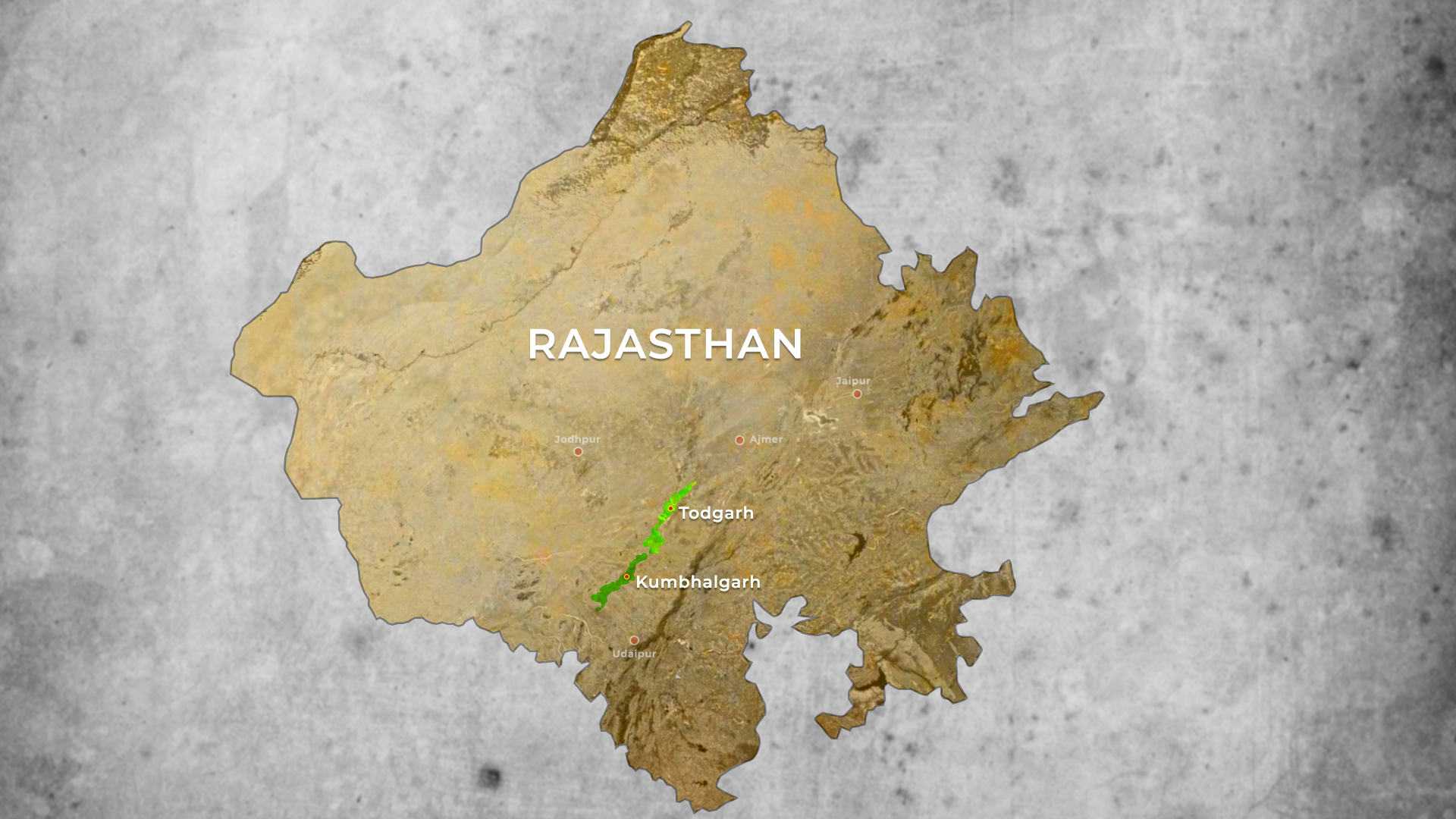
- The Ministry of Environment, Forest and Climate Change has notified the Kumbhalgarh Wildlife Sanctuary as an Eco-Sensitive Zone (ESZ) to strengthen conservation in the Aravalli Range.
Kumbhalgarh Wildlife Sanctuary:
- Kumbhalgarh Wildlife Sanctuary is a protected wildlife reserve known for its dry deciduous forest ecosystem and rich faunal diversity, surrounding the historic Kumbhalgarh Fort.
Located in:
- Rajasthan, spread across Rajsamand, Udaipur, and Pali districts.
- Part of the Aravalli hill system in western India.
- Total area: ~610.5 sq km, comprising a core and buffer zone.
Geological features:
- Lies at an elevation of 500–1,300 metres, covering four Aravalli ranges: Kumbhalgarh, Sadri, Desuri, and Bokhada.
- Dominated by ancient metamorphic (Archean) rocks with thin sandy-loam soils.
- Falls under the Khathiar–Gir dry deciduous forest ecoregion, supporting scrub forests, grasslands, and woodland species.
- Fauna: Leopard (apex predator), Indian wolf, sloth bear, striped hyena, jungle cat, golden jackal, sambhar, nilgai, chausingha, chinkara, Indian hare, Indian pangolin.
- Avifauna: Grey junglefowl, painted francolin, Indian eagle-owl.
- Herpetofauna & aquatic life: Indian cobra, rat snake, checkered keelback; fish like mahseer, rohu, katla.
Significance:
- Acts as a critical biodiversity corridor in the Aravalli landscape.
- ESZ status (0–1 km around the sanctuary) helps regulate harmful activities and reduce habitat fragmentation.
Small Language Models (SLMs) as future of Artificial Intelligence
- The Union Minister for Electronics and IT stated that the future of AI will be shaped by SLMs rather than extremely Large Language Models (LLMs).
What are SLMs?
- SLMs are compact AI systems built on simpler neural network architectures, designed to generate and understand natural language, as LLMs do.
- Parameters used by SLMs: several million to 30 billion parameters, whereas LLMs often possess hundreds of billions or even trillions parameters.
- At present, nearly 95% of AI work globally is currently handled by SLMs. E.g. Llama, Mistral, Gemma and Granite etc.
Advantages of SLMs over LLMs
- Cheaper: Smaller models typically require less computational power, reducing costs.
- Ideal for on-device deployment: As they are optimized for efficiency and performance on resource-constrained devices with limited connectivity, memory, and electricity.
- Democratization of AI: More organizations can participate in developing models with a more diverse range of perspectives and societal needs.
- Other: Streamlined monitoring and maintenance, Improved data privacy and security, Lower infrastructure, deeper expertise for domain-specific tasks, lower latency etc.
Limitations of SLMs
- Less accuracy: Larger models offer superior accuracy and versatility and are well-suited for more complex tasks.
- Narrow scope: SLMs are typically trained on smaller, specialized datasets, limiting their flexibility and general knowledge compared to larger models.
- Other: Less Creativity, Lesser data analysis etc.
Prevention of Corruption Act 1988
- The Supreme Court of India held that State investigative agencies (including State Anti-Corruption Bureaus and State police) are competent to register and investigate corruption cases under the Prevention of Corruption Act (PCA), 1988, even if the accused is a Central Government employee.
- The Court clarified that no prior permission of the Central Bureau of Investigation (CBI) is required before registering the case against the central government employee by the State police.
About PCA, 1988
- PCA 1988 act criminalises corrupt conduct like bribery, misappropriation, disproportionate assets etc.
- It aims to combat corruption in different government organisations and public sector entities.