MARCH 01, 2026 Current Affairs
Iran
- Reports claiming the death of Iran’s Supreme Leader Ayatollah Ali Khamenei during U.S.–Israel strikes have intensified global attention on Iran’s political future and regional stability.
About Iran:
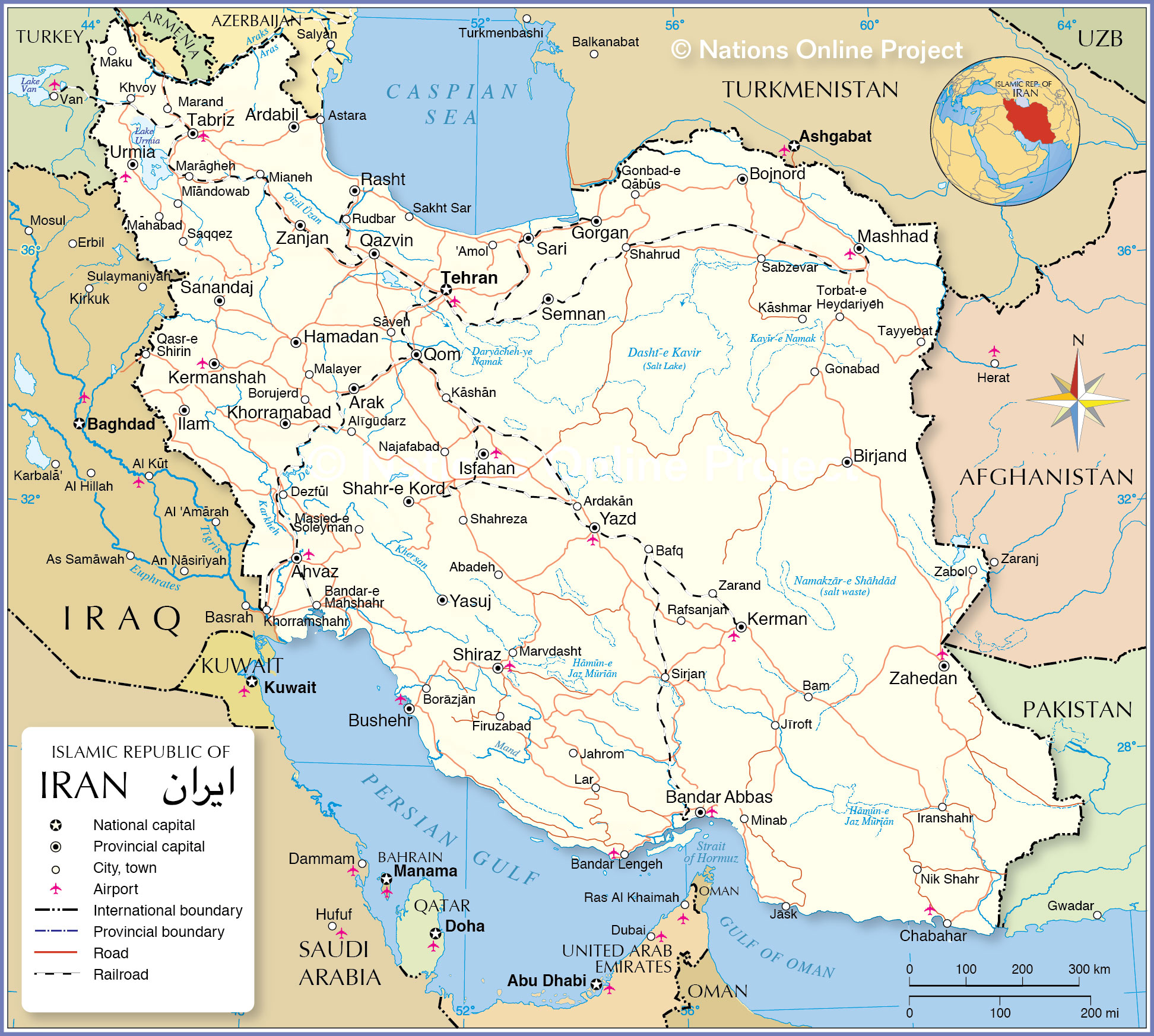
- Iran (officially the Islamic Republic of Iran) is a major West Asian country with a long civilizational history dating back to the ancient Persian Empire.
- Since the 1979 Islamic Revolution, it has functioned as an Islamic republic combining republican institutions with clerical authority, where the Supreme Leader holds ultimate power.
Location:
- Located in Southwestern Asia (West Asia / Middle East).
- Strategically positioned between Central Asia, South Asia, and the Middle East, overlooking key maritime routes in the Persian Gulf.
- Capital: Tehran
Bordering Nations:
- Azerbaijan, Armenia, Turkmenistan, Afghanistan, Pakistan, Turkey, and Iraq.
- It also has coastlines along: Caspian Sea, Persian Gulf and Gulf of Oman.
History:
- Ancient centre of the Persian (Achaemenid) Empire beginning around 550 BCE.
- Influenced by Arab conquest and the spread of Islam in the 7th century CE.
- Safavid dynasty (16th century) established Twelver Shi’ism as the state religion.
- Pahlavi monarchy (1925–1979) attempted modernization but was overthrown during the 1979 Islamic Revolution led by Ayatollah Khomeini.
- Since then, Iran has emerged as a major regional power with significant influence through the Islamic Revolutionary Guard Corps (IRGC) and its regional alliances.
Key Features:
- Dominated by a central arid plateau surrounded by mountain ranges.
- Zagros Mountains: Stretch northwest–southeast; major barrier and resource region.
- Alborz Mountains: Located near the Caspian Sea; includes Mount Damavand, Iran’s highest peak.
- Large deserts: Dasht-e Kavir and Dasht-e Lut.
- Highly seismic region with frequent earthquakes due to tectonic activity.
- Important water bodies include Lake Urmia and rivers like Karun and Sefid.
Significance:
- Controls access near the Strait of Hormuz, through which a major share of global oil trade passes.
- Possesses vast reserves of oil and natural gas, influencing global energy markets.
PM launches nationwide HPV vaccination drive for 14-year-old girls
- The national programme uses Gardasil-4, a quadrivalent single-dose Human Papillomavirus (HPV) vaccine, to prevent cervical cancer.
- A Gardasil-4 provides 93–100% effectiveness against the targeted HPV types.
- A quadrivalent vaccine works by stimulating an immune response against four different antigens, such as four different viruses or other microorganisms.
About Human Papillomavirus (HPV)
- HPV is the name of a group of 200 known viruses.
- It is a common sexually transmitted infection.
- They do not cause concerns in most people, but Persistent HPV infection with high-risk HPV types is the cause of cervical cancer.
- In 90% of people the body controls the infection by itself.
Cervical Cancer
- It is the fourth most common cancer in women globally.
- In India specifically, it is the second most common cancer among women.
- India accounts for 25% of global cervical cancer deaths and it ranks fourth globally in cervical cancer-related morbidity.
- It disproportionately affects younger women, 20% of children who lose their mother to cancer do so due to cervical cancer.
PM Garib Kalyan Anna Yojana
- Government of India launches Central Bank Digital Currency (CBDC)-based Digital Food Currency pilot for Direct Benefit Transfer (DBT) under Pradhan Mantri Garib Kalyan Anna Yojana (PMGKAY).
About PMGKAY
- Launch Year: 2020
- Core Objective: To provide free food grains to poor, migrant and vulnerable households to ensure food security during crisis periods.
- Eligible Beneficiaries: Antyodaya Anna Yojana (AAY) households and Priority Household (PHH) families under National Food Security Act, 2013
- Benefit: Free of cost 35 kg of food grains per month per AAY household, 5 kg of food grains per person per month for PHH
- Distribution Channel: Public Distribution System (PDS)
Central Drugs Standard Control Organisation (CDSCO) to fast-track Drug Testing Clearances
About CDSCO
- Functions Under: Directorate General of Health Services, Ministry of Health & Family Welfare
- Nature: National Regulatory Authority (NRA) for drugs and cosmetics.
- Function: Under Drugs & Cosmetics Act,1940, CDSCO is responsible for approval of Drugs; Conduct of Clinical Trials; laying down the standards for Drugs; control over the quality of imported Drugs.
- Headed by: Drugs Controller General of India (DCGI)
- It releases a Not of Standard Quality (NSQ) list monthly for assessing the quality and safety of drugs.
INS Anjadip
- The Indian Navy is set to commission INS Anjadip at the Chennai port.
- It is the third of 8 Anti-Submarine Warfare Shallow Water Craft.
- It derives its name from Anjadip Island located off the coast of Karwar, Karnataka.
About INS Anjadip
- It is a state-of-the-art vessel specifically designed to address the challenges of the littoral combat environment.
- Built by: Garden Reach Shipbuilders and Engineers (GRSE), Kolkata.
Key Features:
- Engineered to act as a ''Dolphin Hunter'', focused on detection, tracking, and neutralisation of enemy submarines.
- Has indigenous Anti-Submarine Warfare weapons and sensor package, including Hull Mounted Sonar Abhay.
- Features a high-speed Water-Jet Propulsion system.
State Innovation Mission (SIM)
- Atal Innovation Mission (AIM) launches the first State Innovation Mission (SIM) in Tripura.
About State Innovation Mission (SIM)
- It is part of approved AIM 2.0, under NITI Aayog’s State Support Mission (SSM) framework.
- AIM launched in 2016 under NITI Aayog, aims to promote innovation and entrepreneurship across India.
- Key Initiatives: Atal Tinkering Labs, Atal Incubation Centres, Atal Community Innovation Centres, etc.
- It is designed as a long-term institutional mechanism to support /UTs in building robust, inclusive, and context-specific innovation ecosystems aligned with national priorities and local strengths.
Paris Agreement Crediting Mechanism (Article 6.4)
- United Nations announced the approval of first carbon credits under global market involving a project in Myanmar coordinated with Republic of Korea.
About Paris Agreement Crediting Mechanism (Article 6.4)
- It is a carbon crediting mechanism under Article 6 of Paris Agreement.
- It encourages verifiable emission reductions; attracts funding and allows cooperation among countries.
- E.g., company in one country can reduce emission in that country and have those reductions credited to sell them to another company in another country.
- Apart from article 6.4, other two components of Article 6 are:
- Article 6.2: Provides accounting and reporting guidance for Parties
- Article 6.8: Provides opportunities for non-market-based cooperation.
Great Atlantic Sargassum Belt (GASB)
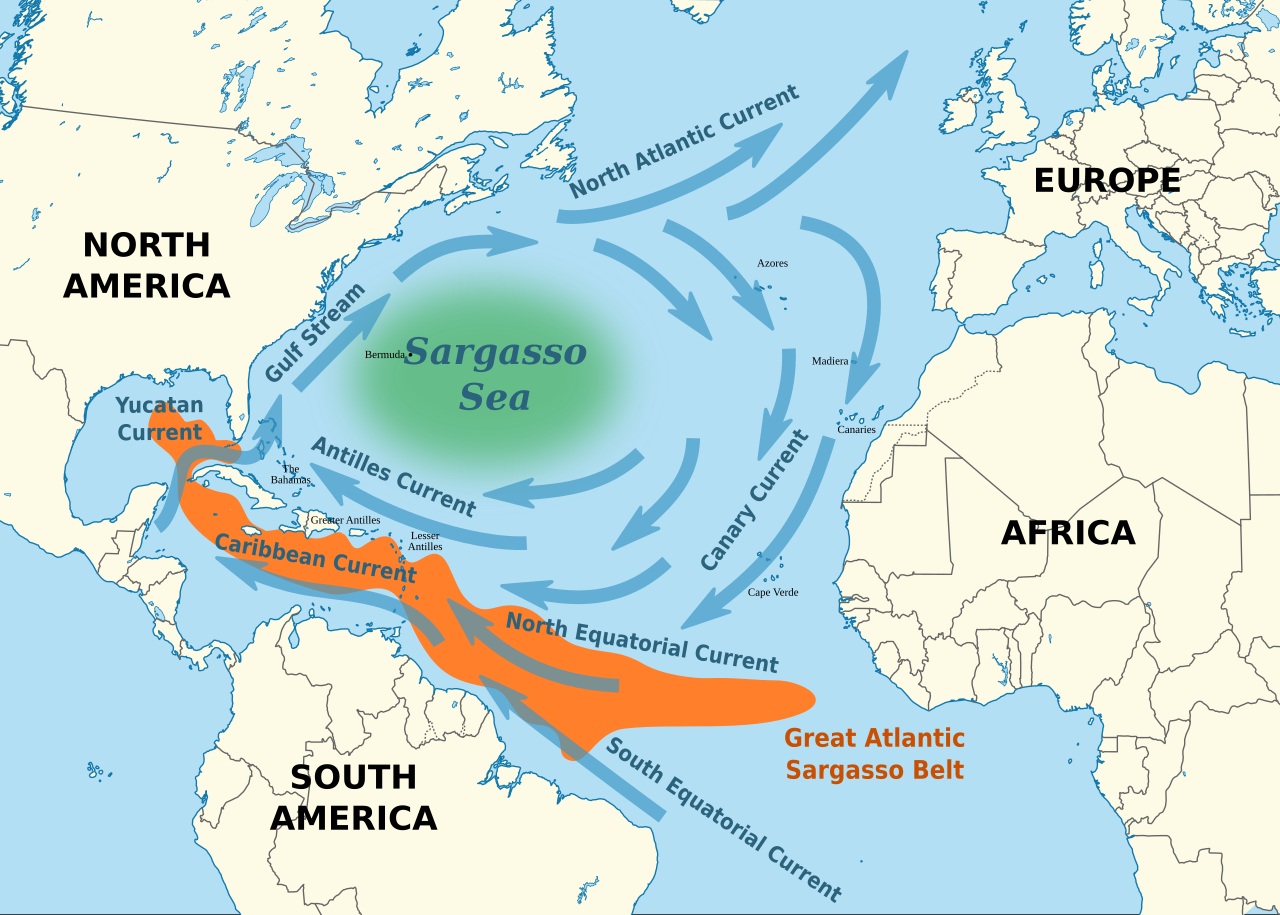
- Massive bloom of GASB across Atlantic, has raised concerns.
About GASB
- Floating brown alga (Sargassum) stretching thousands of kilometres across Atlantic with significant human and environmental impact.
- Sargassum provides food, refuge, and breeding ground for many marine animals and like other algae relies on sunlight and produces oxygen during photosynthesis.
- During Decomposition, it consumes oxygen from water column, creating “brown tides” associated with low (hypoxic) or no oxygen (anoxic) conditions.
- Sargassum Inundation Event: First occurred in 2011 in Tropical Atlantic Ocean, outside Sargasso Sea.
- Key Drivers: Nutrients Enrichment, Temperature (18-30°C) , Salinity, Wind and Ocean Circulation.
Red Teaming
- Increasing incidents/hazards with powerful AI systems has called for its rigorous testing, known as red teaming.
About Red Teaming
- Meaning: It involves testing AI models to protect against harmful behaviour, including leaks of sensitive data and generated content that is toxic, biased, or factually inaccurate.
- Origin: Initially popularised by US military during Cold War, the concept has expanded into cybersecurity and now encompasses AI safety.
- It involves provoking the model to say/do things it was not trained to and once problems are exposed, new instruction data is created to re-align the model and enhance its security.
Self-replicating RNA
- Researchers claims to have developed a self-replicating RNA molecule named of QT45.
- Self-replicating RNA has ability to copy both itself and the information encoded in its complementary strand, i.e. its template.
- It supports the “RNA World Hypothesis”, which proposes that early life was based on self-replicating RNA before DNA and proteins evolved.
About Ribonucleic Acid (RNA)
- RNA is a nucleic acid present in all living.
- Unlike DNA, RNA is most often single-stranded.
- Each sugar molecule is linked to one of four nitrogenous bases: adenine (A), uracil (U), cytosine (C), or guanine (G).
- Major types of RNA exist in cells: messenger RNA (mRNA), ribosomal RNA (rRNA), transfer RNA (tRNA), microRNA
Eligible Manufacturer Importers (EMI) Scheme
- Central Board of Indirect Taxes and Customs (CBIC) introduced deferred Customs Duty payment facility for eligible manufacturer importers under the EMI Scheme.
About EMI Scheme
- Launched by: CBIC (announced under Union Budget 2026–27).
- Duration: 1 April 2026 – 31 March 2028.
- Mechanism: Eligible Manufacturer Importers (EMIs) can clear imported goods without paying Customs duty at the time of clearance, instead paying it monthly as per the Deferred Payment of Import Duty Rules, 2016.
- Objective: Improving cash flow for manufacturers, promoting compliance, boosting domestic manufacturing, and enhancing Ease of Doing Business.
MAVEN Mission
- Researcher detected a lightning-like “whistler” radio signal, providing the first evidence of such electromagnetic activity in the Martian ionosphere with the help of data obtained by NASA’s Mars Atmosphere and Volatile EvolutioN (MAVEN).
About MAVEN Mission
- It is the first mission devoted to understanding the Martian upper atmosphere.
- It will determine how much of the Martian atmosphere has been lost over time.
- It will do so by measuring the current rate of escape to space and gathering enough information about the relevant processes to allow extrapolation backward in time.
Gitchak nakana
- Researchers have found a newblind aquifer-dwelling fish ‘Gitchak nakana’ in Northeast India.
About Gitchak nakana
- Type: Blind aquifer-dwelling (phreatobitic) freshwater loach.
- Unique Feature: Complete absence of skull roof; brain covered only by skin.
- Adaptation: Troglomorphic traits (eyeless), adapted to underground habitat.