|
Asian-Pacific Postal Union (APPU)
GS-II International Relations
Why in News?
Vinaya Prakash Singh, a 1988-batch Indian Postal Service officer, was re-elected Secretary-General of APPU for a second consecutive four-year term
What is APPU?
- Intergovernmental organisation of 32 Asia-Pacific countries.
- Headquarters : Bangkok, Thailand
- Established : 1981
India & APPU
- India is a member of APPU.
- India''s participation supports cooperation in postal services, technology, e-commerce and logistics.
|
Body
|
Role
|
|
Congress
|
Supreme organ of APPU
|
|
Executive Council
|
Meets annually; oversees Union''s work
|
|
APPU Bureau
|
Liaison, information, inquiry & training
|
Secretary-General
- Leads APPU activities.
- Also serves as Director of Asian-Pacific Postal College (APPC), Bangkok.
Significance
- E-Commerce: Supports reliable cross-border parcel delivery and digital commerce.
- Regional Logistics: Strengthens postal networks as part of the wider logistics ecosystem.
- Postal Diplomacy: Provides India with a platform to advance regional cooperation.
- UPU Framework: Acts as a regional mechanism supporting cooperation within the Universal Postal Union (UPU) system.
- Digital Transformation: Provides a platform for modernising traditional postal networks.
Universal Postal Union (UPU)
What is UPU?
- UPU is a United Nations specialised agency dealing with international postal cooperation. It provides a framework for international postal exchange and cooperation.
- Established : 1874
- Headquarters: Bern, Switzerland
Objectives
- Develop and coordinate international postal services.
- Facilitate the exchange of mail between countries.
- Promote cooperation in postal technology and standards.
- Improve the quality and efficiency of global postal services.
- Support the integration of national postal networks into a global postal network.
India & UPU
- India is a member of UPU.
- India participates in international postal cooperation through India Post.
|
Feature
|
UPU
|
APPU
|
|
Full form
|
Universal Postal Union
|
Asian-Pacific Postal Union
|
|
Coverage
|
Global
|
Asia-Pacific
|
|
Nature
|
UN specialised agency
|
Regional Restricted Union
|
|
Established
|
1874
|
1961
|
|
HQ
|
Bern, Switzerland
|
Bangkok, Thailand
|
|
India
|
Member
|
Member
|
|
|
Balancing Price Stability and Growth
GS Paper III – Indian Economy
Why in News?
India has completed a decade of the Flexible Inflation Targeting (FIT) framework, prompting a review of its effectiveness in maintaining price stability while supporting economic growth.
What is Flexible Inflation Targeting?
- Flexible Inflation Targeting (FIT) is a monetary policy framework where the RBI targets inflation while also considering economic growth.
- India formally adopted FIT in 2016 through amendments to the RBI Act, 1934.
- Target: CPI inflation at 4%
- Tolerance band: 2%–6%
- The framework is reviewed periodically by the Government.
Significance
- Purchasing Power: Helps protect household purchasing power from persistent inflation.
- Investment Climate: Supports long-term investment and economic planning.
- Policy Confidence: Enhances confidence in the RBI''s monetary-policy framework.
- Macroeconomic Stability: Contributes to greater external and currency stability.
Challenges
- Weak Output–Inflation Link: Inflation does not always respond strongly to domestic output conditions.
- Informal Economy: High informal employment can weaken the transmission of monetary policy.
- Food Inflation: Food has a significant weight in CPI, making inflation vulnerable to supply shocks.
- Expectations: Inflation expectations are not always firmly anchored.
- Supply Shocks: Interest-rate changes have limited ability to address supply-side inflation.
Way Forward
- Supply-Side Coordination: Better integrate supply-side considerations with monetary policy.
- Food Management: Strengthen food-supply chains and buffer-stock management.
- Climate Resilience: Promote climate-resilient agriculture and modern storage infrastructure.
- Expectations Management: Strengthen inflation-expectation surveys and communication.
- CPI Reforms: Periodically update the CPI basket to reflect changing consumption patterns.
|
|
Bhitarkanika National Park
GS Paper III – Environment & Biodiversity
Why in News?
Saltwater crocodile hatchlings have emerged from numerous nests in Bhitarkanika National Park, Odisha, highlighting the park''s importance as a breeding habitat for the species.
About Bhitarkanika
- Location: Kendrapara district, Odisha.
- Situated in the Brahmani–Baitarani river delta.
- Characterised by extensive mangrove forests, creeks, tidal waterways and mudflats.
- The Bhitarkanika Wildlife Sanctuary surrounds the National Park.
Key Biodiversity
- Saltwater crocodile — flagship species.
- Olive Ridley turtles occur in the wider coastal ecosystem.
Important habitat for:
- Waterbirds
- Migratory birds
- Reptiles
- Mangrove-associated fauna.
Ramsar Connection
- Bhitarkanika Mangroves are recognised as a Ramsar Site. (19 August 2002)
- Important for wetland biodiversity, coastal protection and carbon storage.
Saltwater Crocodile
- Scientific name: Crocodylus porosus
- Also called estuarine crocodile.
- It is the largest living reptile.
- Primarily found in coastal areas, estuaries, mangrove swamps, rivers and lagoons.
- Despite its name, it can inhabit both saltwater and freshwater environments.
Distribution in India
- Odisha – Bhitarkanika
- West Bengal – Sundarbans
- Andaman & Nicobar Islands
|
Parameter
|
Status
|
|
IUCN
|
Least Concern
|
|
CITES
|
Appendix I
|
|
Wildlife Protection Act, 1972
|
Schedule I
|
About the Species (Olive Ridley Turtle)
- Scientific name: Lepidochelys olivacea
- Named after its olive-green coloured carapace.
- One of the smallest and most abundant sea turtles.
- Primarily a marine turtle, coming ashore mainly for nesting.
Distribution in India
- Odisha coast – especially Gahirmatha, Rushikulya and Devi coast
- Andhra Pradesh
- Tamil Nadu
- Andaman & Nicobar Islands
Arribada
- Arribada = mass synchronized nesting of large numbers of Olive Ridley turtles.
- Particularly famous at Odisha''s Rushikulya and Gahirmatha coasts.
- Exact timing is influenced by environmental and oceanographic conditions.
|
Parameter
|
Status
|
|
IUCN
|
Vulnerable
|
|
CITES
|
Appendix I
|
|
Wildlife Protection Act, 1972
|
Schedule I
|
|
|
Bura Chapori Wildlife Sanctuary
GS-III – Environment & Biodiversity
Why in News?
A recent human–wildlife conflict incident near Bura Chapori Wildlife Sanctuary has highlighted conservation and community-safety concerns in Assam’s Brahmaputra floodplain ecosystem.
Location
- Located in Sonitpur district, Assam.
- Situated along the Brahmaputra River.
- Part of Assam''s important riverine grassland and wetland ecosystem.
Key Features
- Riverine Ecosystem : Characterised by riverine forests, grasslands, wetlands and sandbars. Seasonal flooding shapes the landscape.
- Wildlife : Important habitat for one-horned rhinoceros. Also supports wild buffalo, wild boar, deer and diverse bird species.
- Brahmaputra Connection : Its ecology is strongly influenced by the flooding and sediment deposition of the Brahmaputra.
One-Horned Rhinoceros
- Scientific Name : Rhinoceros unicornis
- Distribution : Found mainly in India and Nepal. In India, major populations occur in Assam, West Bengal and Uttar Pradesh.
- Habitat : Floodplain grasslands, Wetlands, Riverine forests
Major Indian Habitats
- Kaziranga National Park - Assam
- Pobitora Wildlife Sanctuary - Assam
- Orang National Park - Assam
- Bura Chapori Wildlife Sanctuary - Assam
- Jaldapara National Park - West Bengal
- Dudhwa National Park - Uttar Pradesh
Conservation Status
|
Category
|
Status
|
|
IUCN
|
Vulnerable
|
|
CITES
|
Appendix I
|
|
Wildlife Protection Act, India
|
Schedule I
|
|
|
Digital Privacy with Cybersecurity and National Security
GS Paper III – Science & Technology
Why in News?
Authorities in Doda district of Jammu and Kashmir imposed restrictions on VPN usage amid security concerns, highlighting the balance between digital security, privacy and national security.
What is VPN?
- A VPN creates an encrypted connection between a user''s device and a VPN server over the internet.
- It helps protect data from interception, particularly when using public Wi-Fi.
- It can mask the user''s IP address from websites by routing traffic through the VPN server.
What happens at each step?
User Device
- Your phone/computer generates the internet request.
Encrypted VPN Tunnel
- The request travels through an encrypted connection to the VPN server.
- This helps protect the data from interception during this segment.
VPN Server
- The VPN server receives and forwards the request to the internet.
- The destination website generally sees the VPN server''s IP address, rather than the user''s original IP.
Internet / Website
- The VPN server communicates with the destination website and returns the response through the VPN connection.
Challenges
- Security Misuse: VPNs may be misused to circumvent lawful restrictions.
- Privacy–Security Balance: Excessive restrictions may affect legitimate privacy and cybersecurity needs.
- Lawful Investigation: Strong encryption can create challenges for authorised investigations.
- Cyber Awareness: Limited cybersecurity awareness can lead to unsafe use of VPN services.
Way Forward
- Proportionate Regulation: Ensure restrictions are necessary, proportionate and legally backed.
- Due Process: Strengthen judicial and procedural safeguards.
- Cyber Standards: Establish robust cybersecurity and data-protection standards.
- Digital Literacy: Promote responsible and informed use of privacy-enhancing technologies.
|
|
Essential Micronutrient
GS-III – Science & Technology
Why in News?
Reports of increased cases associated with excessive Vitamin B6 exposure have highlighted the importance of safe micronutrient use.
What is Vitamin B6?
- Vitamin B6 is a water-soluble vitamin.
- It is a group of related compounds, including: Pyridoxine, Pyridoxal, Pyridoxamine
- Its biologically important coenzyme form is Pyridoxal-5′-phosphate (PLP).
- PLP participates in numerous enzymatic reactions, particularly those involving amino acids.
Major Functions
- Protein metabolism : Essential for amino-acid metabolism.Acts as a coenzyme in transamination and decarboxylation reactions.
- Haemoglobin synthesis : Required for heme synthesis.Deficiency may result in sideroblastic anaemia.
- Nervous system: Helps in the synthesis of neurotransmitters such as: Serotonin, Dopamine, GABA
- Homocysteine metabolism : Participates in pathways involved in the metabolism of homocysteine.
- Immune function : Supports normal immune-system functioning.
- Dietary Sources : Fish, Poultry and meat, Chickpeas and other legumes, Potatoes, Bananas, Fortified cereals, Nuts
Vitamin B6 Deficiency
- Deficiency can lead to: Sideroblastic anaemia, Dermatitis, Glossitis, Cracks around the mouth Neurological manifestations, Impaired immune function
Vitamin B6–Isoniazid
- Isoniazid, an important anti-tuberculosis drug, can interfere with Vitamin B6 metabolism.
- Isoniazid → B6 deficiency → increased risk of peripheral neuropathy
Excess Intake
- Although B6 is water-soluble, prolonged excessive supplementation can cause: Peripheral sensory neuropathy, Tingling/numbness, Sensory disturbances
|
|
India–Russia Engagement in the Far East
GS-II – International Relations
Why in News?
The Eastern Economic Forum (EEF) has gained attention as a platform for economic cooperation, investment and development of Russia’s Far East.
What is EEF?
- Eastern Economic Forum (EEF) is an international forum focused on the economic development of Russia’s Far East.
- Established: 2015.
- Held annually: Vladivostok, Russia.
- Hosted by: Russia.
- Venue: Far Eastern Federal University, Vladivostok.
- It brings together governments, businesses, investors and experts to promote investment and economic cooperation.
|
Factor
|
Significance
|
|
Geography
|
Russia''s gateway towards the Asia-Pacific
|
|
Natural resources
|
Oil, gas, coal, timber, minerals
|
|
Maritime access
|
Pacific Ocean connectivity
|
|
Arctic link
|
Important for Northern Sea Route
|
|
Asia-Pacific markets
|
Proximity to China, Japan and Korea
|
|
Strategic location
|
Connects Russia''s European and Asian dimensions
|
India & EEF
Key Areas of Cooperation
- Energy: Oil, gas and other energy resources.
- Mining: Cooperation in resource-rich regions.
- Transport connectivity: Development of alternative routes between India and Russia.
- Arctic cooperation: Increasing relevance of the Northern Sea Route.
- Defence: Complements wider India–Russia defence cooperation.
- Trade & investment: Diversification of bilateral economic relations.
|
Feature
|
EEF
|
SPIEF
|
|
Full form
|
Eastern Economic Forum
|
St. Petersburg International Economic Forum
|
|
Location
|
Vladivostok
|
St. Petersburg
|
|
Main focus
|
Russian Far East
|
Broader Russian & global economic issues
|
|
Established
|
2015
|
1997
|
|
Geographic orientation
|
Asia-Pacific / Far East
|
Europe + global
|
Challenges
- Geographical Remoteness: Large distances increase transportation and logistics costs.
- Harsh Climate: Extreme climatic conditions raise infrastructure and operational costs.
- Infrastructure Deficit: Limited transport, logistics and supporting infrastructure constrain development.
- Geopolitical Risks: Sanctions and geopolitical tensions can restrict investment and trade.
- Investment Risks: High capital requirements and uncertain returns may discourage private investment.
Way Forward
- Connectivity Corridors: Strengthen India–Russia transport and logistics connectivity.
- Energy Partnerships: Expand cooperation in energy and natural resources.
- Infrastructure Cooperation: Promote joint investment in ports, transport and logistics.
- Private Investment: Facilitate greater participation of Indian and Russian businesses.
- Sustainable Development: Ensure environmentally responsible and sustainable resource utilisation.
|
|
Jhiram Ghati : The Security–Development Challenge of Left-Wing Extremism
GS Paper III – Internal Security
Why in News?
A Special NIA Court convicted 10 accused in the 2013 Jhiram Ghati massacre, bringing renewed attention to Left-Wing Extremism (LWE) and India''s internal security challenges.
NIA Court (Special Court under the National Investigation Agency Act, 2008)
What is an NIA Court?
- Special Courts constituted under the National Investigation Agency (NIA) Act, 2008.
- Established for speedy trial of offences scheduled under the NIA Act.
- Deals primarily with terrorism and other offences having national-security implications.
Legal Basis
- Section 11, NIA Act, 2008 - Central Government may constitute Special Courts.
- Section 22 - State Government may also constitute Special Courts for offences under the Act.
- A Special Court is generally presided over by a Judge appointed by the Central/State Government, as applicable, in consultation with the High Court.
Impact
- Security Gaps: Exposed vulnerabilities in the security arrangements of political leaders.
- Intelligence: Highlighted the need for stronger intelligence gathering and sharing.
- Emergency Response: Strengthened focus on evacuation and crisis-response mechanisms.
- Integrated Strategy: Reinforced the need to combine security operations with development measures.
Significance
- Security–Development Nexus: Shows that internal security and development are closely interconnected.
- Democratic Institutions: Highlights the threat LWE poses to democratic processes and political leadership.
- Tribal Governance: Emphasises the importance of participatory and tribal-inclusive governance.
- Internal Security: Illustrates the need for a comprehensive approach to tackling LWE.
Challenges
- Difficult Terrain: Dense forests and hilly terrain complicate security operations.
- Intelligence Gaps: Local intelligence and inter-agency coordination may remain inadequate.
- Governance Deficit: Limited state presence and public services in remote areas.
- Tribal Alienation: Land, forest, livelihood and displacement concerns can fuel alienation.
- Security–Development Imbalance: Excessive focus on either security or development can undermine long-term peace.
Way Forward
- Intelligence Network: Strengthen human intelligence and inter-agency coordination.
- Connectivity: Improve roads, telecommunications and essential public services.
- Participatory Governance: Increase tribal participation in local decision-making.
- Rights-Based Security: Ensure accountable, proportionate and rights-respecting security operations.
|
|
Preserving Rajasthan’s Fresco Heritage
GS Paper I – Art & Culture
Why in News?
Several historic Shekhawati havelis have been included in the UNESCO Tentative List, highlighting the architectural and cultural significance of the Shekhawati region of Rajasthan.
Background
- Located mainly in northeastern Rajasthan, especially Jhunjhunu, Sikar and Churu districts.
- Flourished particularly during the 18th–20th centuries.
- Built largely by wealthy Marwari merchant families who accumulated wealth through long-distance trade.
- Havelis reflected the economic prosperity and social status of merchant communities.
- The region is renowned for its richly painted havelis, earning it the description “open-air art gallery of Rajasthan.”
|
Feature
|
Description
|
|
Haveli
|
Large traditional mansion, generally organised around courtyards
|
|
Chowk
|
Central courtyard providing light, ventilation and social space
|
|
Entrance
|
Elaborately decorated gateways
|
|
Jharokhas
|
Projecting enclosed/balcony windows
|
|
Chhatris
|
Domed/pavilion-like architectural elements
|
|
Frescoes
|
Painted murals covering exterior and interior walls
|
|
Climate adaptation
|
Courtyard-based design helps ventilation and thermal comfort
|
Themes include:
- Hindu deities and mythological stories
- Ramayana and Mahabharata
- Local legends and folk traditions
- Animals, birds and floral motifs
- Processions and scenes of everyday life
- Later, trains, automobiles, bicycles, aeroplanes and European figures
Cultural Significance
- Syncretic visual culture: Indian traditional themes coexist with influences introduced through colonial-era contact.
- Merchant patronage: Demonstrates how wealthy trading communities supported architecture and visual arts.
- Social history: Frescoes provide clues about dress, transport, occupations, festivals and changing lifestyles.
- Folk + elite culture: Combines local artistic traditions with the architectural aspirations of prosperous merchant families.

|
|
Recasting Global Governance through Global South Cooperation
GS Paper II – International Relations
Why in News?
China has proposed the ‘POWER’ framework ahead of the 18th BRICS Summit in New Delhi to deepen cooperation among BRICS countries and strengthen the voice of the Global South.
Aim
- Strengthen Global South cooperation.
- Promote reforms in global governance institutions.
- Expand economic, technological and financial cooperation.
- Build resilience of critical supply chains.
Five Pillars – POWER
- P – Principle Sovereign equality, UN Charter and peaceful settlement of disputes.
- O – Openness Open trade and strengthening of the multilateral trading system.
- W – Win-Win Development-oriented cooperation and greater use of local currencies.
- E – Engine Growth through AI, digital infrastructure and green technologies.
- R – Responsibility Greater Global South representation and reform of global institutions.
Impact
- Bargaining Power: Enhances the collective negotiating power of developing countries.
- Strategic Autonomy: Reduces dependence on Western-dominated financial and technological systems.
- Critical Sectors: Promotes cooperation in critical minerals, energy and AI.
- South-South Integration: Accelerates economic integration among developing countries.
Significance for India
- Strategic Autonomy: Strengthens India''s pursuit of strategic autonomy.
- Global Governance Reform: Supports India''s demand for UNSC and Bretton Woods reforms.
- Emerging Technologies: Creates opportunities in AI and digital public infrastructure.
- Critical Minerals: Facilitates cooperation for secure and diversified mineral supplies.
- Global South Leadership: Provides a platform for India to shape the Global South agenda.
Challenges
- Geopolitical Rivalry: India–China tensions can constrain cooperation.
- Bloc Perception: Risk of BRICS being viewed as an anti-Western bloc.
- Trade Imbalances: Unequal trade relations among member countries.
- Payment Mechanisms: Difficulties in establishing effective local-currency settlement systems.
- Divergent Interests: Different priorities among expanded BRICS members may hinder consensus.
Way Forward
- Issue-Based Cooperation: Focus on common developmental interests rather than bloc politics.
- Financial Integration: Strengthen NDB financing and cross-border payment interoperability.
- AI Governance: Develop transparent, inclusive and responsible AI governance frameworks.
- Supply-Chain Resilience: Diversify critical-mineral and energy supply chains.
- Institutional Reform: Build a common BRICS position on reforms of the UNSC, IMF and World Bank.
|
|
Safeguarding Kerala’s Freshwater Security
GS-III – Environment
Why in News?
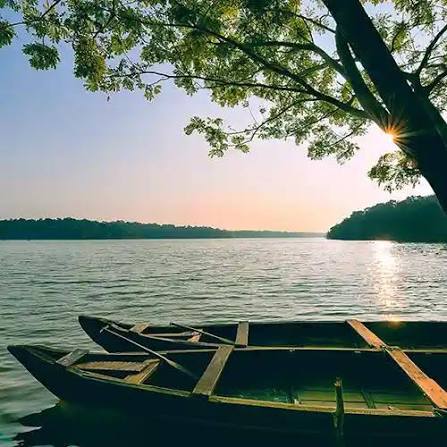
Sasthamcotta Lake has received attention for its ecological significance and importance as a freshwater resource in Kerala.
|
Feature
|
Details
|
|
Location
|
Kollam district, Kerala
|
|
Type
|
Freshwater lake
|
|
Status
|
Ramsar Site
|
|
Ramsar designation
|
2002
|
|
Importance
|
Major source of drinking water
|
|
Named after
|
Sastha temple at Sasthamcotta
|
|
Geographical setting
|
Part of Kerala''s lowland/wetland landscape
|
Why is it Important?
- Drinking Water : Provides drinking water to a large population in the surrounding region.
- Biodiversity : Supports aquatic organisms and wetland-associated biodiversity. Wetland ecosystems provide habitat, groundwater-related functions and ecological services.
Challenges
- Catchment Degradation: Deterioration of the lake’s catchment reduces water inflow and ecological health.
- Encroachment: Land-use pressures can shrink and fragment the wetland ecosystem.
- Pollution: Domestic and other pollutants threaten water quality.
- Water Stress: Reduced freshwater availability can affect the lake’s ecological functions.
- Land-Use Change: Unplanned development around the lake increases ecological pressure.
Way Forward
- Land-Use Regulation: Prevent encroachment and regulate development around the wetland.
- Pollution Control: Strengthen treatment and monitoring of wastewater and other pollutants.
- Water Monitoring: Regularly monitor water quality, inflows and seasonal water levels.
- Community Participation: Involve local communities in conservation and sustainable wetland management.
|
Wetland
|
Location
|
Broad character
|
|
Sasthamcotta Lake
|
Kollam
|
Freshwater lake
|
|
Vembanad-Kol Wetland
|
Kerala
|
Large wetland/backwater system
|
|
Ashtamudi Wetland
|
Kollam
|
Backwater/wetland ecosystem
|
|
|
Strengthening Consumer Protection in the Digital Marketplace
GS Paper II – Polity & Governance
Why in News?
The CCPA has intensified action against misleading consumer claims, including advertisements making absolute claims such as “100%” about products or services.
- CCPA: Established under the Consumer Protection Act, 2019.
- Head: Chief Commissioner.
- CCPA is different from: Consumer Commissions, which primarily adjudicate consumer disputes.
- CCPA can: Investigate unfair trade practices, regulate misleading advertisements and order recalls.
- Consumer Commissions: District, State and National levels.
Aim
- Consumer Protection: Protect collective consumer interests.
- Fair Markets: Prevent unfair trade practices.
- Advertising Regulation: Curb misleading advertisements and claims.
- Proactive Enforcement: Enforce consumer rights through suo motu regulatory action.
Constitutional & Legal Basis
- Consumer Protection Act, 2019: Establishes CCPA as a statutory regulatory authority.
- Ministry: Ministry of Consumer Affairs, Food & Public Distribution.
- Nature: Executive regulatory authority for consumer protection.
- Jurisdiction: Applies to goods and services across sectors.
Significance
- Information Asymmetry: Protects consumers who lack complete information about products.
- Market Transparency: Promotes greater transparency and fair competition.
- Digital Consumer Rights: Addresses emerging online practices such as dark patterns.
- Institutional Framework: Complements existing consumer dispute-redressal mechanisms.
Challenges
- Digital Advertising: Rapid expansion of online and influencer-based advertising.
- Marketing Techniques: Increasingly sophisticated methods of influencing consumers.
- Dark Patterns: Hidden charges, forced continuity and deceptive interface designs.
- Monitoring: Difficulty in continuously monitoring millions of online advertisements.
- Cross-Border Commerce: Enforcement becomes difficult when sellers or platforms operate across jurisdictions.
Way Forward
- Digital Surveillance: Strengthen monitoring of online marketplaces and advertisements.
- RegTech: Use AI and data analytics for automated detection of misleading claims.
- Claim Verification: Promote scientific and evidence-based verification of product claims.
- Consumer Awareness: Improve awareness about misleading advertisements and dark patterns.
- Regulatory Coordination: Strengthen coordination among CCPA, sectoral regulators and digital platforms.
|
|
The Rise of Long-Range Precision Warfare
GS Paper III – Defence & Security
Why in News?
Germany has conducted a test involving the Israeli LORA (Long-Range Artillery) missile in the North Atlantic, highlighting the growing role of long-range precision-strike systems in modern warfare.
|
Feature
|
Details
|
|
Origin
|
Israel
|
|
Developer
|
Israel Aerospace Industries (IAI)
|
|
Type
|
Ballistic missile
|
|
Role
|
Precision long-range strike
|
|
Launch platforms
|
Ground/mobile launchers and other platforms
|
|
Guidance
|
Advanced navigation/guidance system
|
|
Targeting
|
High-precision strike
|
Why Important for India?
Relevant to India''s growing focus on long-range precision-strike capabilities.
Strengthens understanding of stand-off weapons and modern missile warfare.
Highlights the importance of precision-guided weapons in contemporary conflicts.

|
|
Tracing Prehistoric Migration and Cultural Diffusion
GS Paper I – Ancient History & Culture
Why in News?
Archaeological discoveries in Poland have provided new insights into the Corded Ware Culture, its population movements and the social organisation of prehistoric European communities.
What is it?
- Corded Ware Culture (CWC) was a prehistoric archaeological culture of Central and Eastern Europe.
- Flourished broadly during the Late Neolithic–Early Bronze Age, roughly 2900–2350 BCE.
- Named after its characteristic cord-impressed pottery.
Geographical Spread
- Central Europe
- Eastern Europe
- Baltic region
- Parts of Scandinavia
|
Feature
|
Details
|
|
Period
|
c. 2900–2350 BCE
|
|
Pottery
|
Cord-impressed decoration
|
|
Economy
|
Farming + animal husbandry
|
|
Animals
|
Cattle, sheep/goats, pigs; increasing importance of horses in some regions
|
|
Burials
|
Often individual single-grave burials
|
|
Tools
|
Polished stone axes and other Neolithic tools
|
|
Metallurgy
|
Increasing interaction with early metal-using communities
|
|
|
Uncovering India’s Submerged Maritime Heritage
GS-I – Ancient History & Art & Culture
Why in News?
A new phase of underwater archaeological exploration is being undertaken off the coast of Poompuhar in Tamil Nadu to investigate submerged archaeological remains and reconstruct its ancient maritime history.
What is Poompuhar?
- Poompuhar, also known as Kaveripoompattinam, was an ancient port city on the Tamil Nadu coast.
- Located near the mouth of the River Kaveri, opening into the Bay of Bengal.
- It is closely associated with the Sangam Age and the early Cholas.
- Ancient literary sources portray it as an important centre of maritime trade and urban life.
Sangam Age
- Poompuhar has an important place in Tamil Sangam literature.
- It is particularly associated with: Pattinappalai, Silappadikaram, Manimekalai
Early Chola Maritime Activity
- Associated with the early Chola polity.
- llustrates the importance of maritime trade to the Chola economy and coastal urbanisation.
Bay of Bengal Connectivity
- Poompuhar represents the historical importance of the Bay of Bengal as a zone of interaction, connecting the Tamil coast with wider maritime networks.
Underwater archaeology can investigate the submerged portion, helping reconstruct:
- Submerged structures : Possible buildings, walls and other remains.
- Harbour features: Evidence of ancient port infrastructure and maritime activity.
- Pottery & artefacts : Clues about daily life and long-distance trade.
- Settlement patterns : Helps reconstruct the extent and organisation of the ancient city.
- Maritime trade evidence : Helps establish Poompuhar''s role in historical Bay of Bengal trade networks.
Technology Used in Underwater Archaeology
- Side-Scan and Multibeam Sonar: Sound waves create detailed visual acoustic maps of the seafloor to spot anomalies and shipwrecks.
- Marine Magnetometers: These devices detect subtle disturbances in the Earth''s magnetic field caused by iron and steel artifacts like anchors or cannons.
- Sub-bottom Profilers: Sound pulses penetrate beneath the sediment layer to map buried structures and stratigraphy.
Robotics and Drones
- Remotely Operated Vehicles (ROVs): Tethered underwater robots equipped with high-definition cameras and manipulator arms explore dangerous or deep sites.
- Autonomous Underwater Vehicles (AUVs): Programmed, free-swimming drones map large areas independently for days at millimeter-scale resolution.
Documentation and Excavation
- Photogrammetry: Software stitches overlapping underwater photographs into precise, measurable 3D models of entire wreck sites.
- Self-Contained Dredges: Modern untethered batterypowered devices clear sediment safely while preserving strict context controls.
|