|
India’s Higher Education Transformation
GS II – Governance, Education
Why in News?
The Ministry of Education released a decadal review of India’s higher education sector based on AISHE data, highlighting major expansion between 2014–15 and 2023–24.
What is the Significance of the Data?
India has moved from an elite-oriented higher education system towards mass higher education, with substantial improvement in access, gender participation and social inclusion.
Key Trends
|
Indicator
|
2014–15
|
2023–24
|
Significance
|
|
Universities
|
760
|
1,289
|
Expansion of institutional capacity
|
|
Colleges
|
38,498
|
48,246
|
Wider geographical access
|
|
Total Enrolment
|
3.42 crore
|
4.50 crore
|
Massification of higher education
|
|
GER
|
23.7%
|
30%
|
Improved access
|
|
PhD Enrolment
|
1.17 lakh
|
3.43 lakh
|
Greater research orientation
|
|
Female Enrolment
|
1.57 crore
|
2.24 crore
|
Greater gender inclusion
|
|
International Students
|
42,293
|
58,134
|
Growing internationalisation
|
Major Achievements
Expansion of access
- GER increased from 23.7% → 30%.
- This represents progress towards the NEP 2020 target of 50% GER by 2035.
Research expansion
- PhD enrolment increased by almost 193%.
- Indicates movement towards a knowledge and innovation economy.
Gender inclusion
- Female GER reached 31.2%, higher than male GER of 28.9%.
- GPI improved from 0.92 → 1.08.
Social inclusion
SC and ST participation increased.
- SC GER: 18.9% → 27.8%
- ST GER: 13.5% → 22.8%
Infrastructure expansion
- More than 98% of HEIs have library facilities.
- Over 94% have playgrounds.
- More than 85% have specialised laboratories.
Why has Higher Education Expanded?
NEP 2020
- Key reforms include:
- Multiple Entry–Exit → Academic Bank of Credits → Multidisciplinary Education → Flexible Curriculum → Research Orientation
Welfare interventions
- Scholarships
- Fee waivers
- Post-matric assistance
- Reservation
- Targeted inclusion programmes
Digitalisation
- Digital infrastructure has widened access to educational resources beyond conventional campuses.
Institutional expansion
- New universities, colleges and standalone institutions have increased geographical availability.
Persistent Challenges
Quantity vs Quality
- The expansion of enrolment has not automatically translated into quality learning outcomes or employability.
- Core issue: India has expanded the number of students faster than the quality of human capital.
Graduate Employability
A large graduate out-turn coexists with:
- Skill mismatch
- Industry–academia disconnect
- Limited practical exposure
- Weak vocational integration
Faculty Shortages
- Vacancies in sanctioned posts remain significant.
- Particularly problematic in state universities and rural colleges.
Unequal Research Ecosystem
- Research funding and advanced infrastructure remain concentrated in premier institutions.
- This creates: IITs/IISc → strong R&D ecosystem versus State universities/colleges → weaker research capacity
Disability and Gender Gap
Persons with Benchmark Disabilities, particularly women, continue to face:
- Accessibility barriers
- Financial constraints
- Transport limitations
- Assistive-technology deficits
Global Competitiveness
Indian institutions continue to face challenges related to:
- International faculty
- Research citations
- Global collaborations
- Research funding
- Academic autonomy
Way Forward
- Shift from Input → Outcome: Focus on learning outcomes, employability, research quality and innovation rather than merely expanding infrastructure.
- Strengthen State Universities: Provide dedicated research, infrastructure and capacity-building support to state institutions through mechanisms such as ANRF.
- Faculty Reform: Ensure time-bound recruitment, continuous faculty development, research incentives and greater academic autonomy.
- Inclusive Digital Infrastructure: Bridge the digital divide through assistive technologies, accessible campuses and affordable digital learning facilities.
- Targeted Scholarships: Provide need-based and targeted financial support to disadvantaged students to improve access, retention and completion.
|
|
Mission Zero – Depalpur
GS II Governance
Why in News?
- Depalpur, Madhya Pradesh, has become the first city under the Swachh Shehar Jodi initiative to achieve Zero Legacy Waste. Around 1,250 tonnes of legacy waste accumulated over five years was remediated.
- The initiative demonstrates the mentor–mentee approach to replicating successful urban waste-management practices.
What is Swachh Shehar Jodi?
It is based on an “Each One Teach One” / Mentor–Mentee model, under which experienced cities mentor smaller or developing cities by sharing proven practices, technologies and institutional approaches.
- Indore → Mentor City
- Depalpur → Mentee City
|
Component
|
Depalpur Model
|
|
Source Segregation
|
Four-bin waste segregation
|
|
Resource Recovery
|
Plastic, metal and glass recovered and sent to authorised recyclers
|
|
RDF Utilisation
|
About 50–60 tonnes of Refuse Derived Fuel (RDF) sent for co-processing in cement factories
|
|
Community Participation
|
Over 500 waste pickers/ragpickers from Indore participated
|
|
Dumpsite Redevelopment
|
Remediated site being converted into a green public space
|
Why is it Important?
Circular Economy
Waste → Resource Recovery → Recycling/RDF → Economic Value
Environmental Benefits
- Reduces dependence on landfills.
- Minimises pollution from legacy dumpsites.
- Conserves raw materials through recycling.
- Improves urban environmental quality.
Governance Innovation
- Promotes peer-to-peer learning among cities.
- Allows successful urban models to be replicated rather than depending solely on top-down interventions.
Social Inclusion
- Integrates waste pickers into the formal waste-management ecosystem.
- Combines livelihood generation with improved sanitation.
Way Forward
- Scale the mentor–mentee model to other cities with legacy dumpsites.
- Strengthen source segregation and decentralised waste processing.
- Integrate informal waste workers into formal systems with social protection.
- Promote RDF co-processing, recycling and material recovery.
- Ensure post-remediation monitoring so that legacy waste does not re-accumulate.
|
|
Permanent Court of Arbitration (PCA)
GS II – International Relations
Why in News?
The Permanent Court of Arbitration (PCA) issued a decision concerning issues related to the Indus Waters Treaty (IWT) and the Ratle Hydroelectric Project. India rejected the proceedings, maintaining that the arbitral process was not valid in the circumstances.
What is the PCA?
The Permanent Court of Arbitration (PCA) is an intergovernmental organisation that facilitates arbitration and other forms of dispute resolution between states and other entities.
|
Feature
|
Details
|
|
Established
|
1899
|
|
Legal Basis
|
1899 Hague Convention for the Pacific Settlement of International Disputes
|
|
Revised
|
1907 Hague Convention
|
|
Headquarters
|
Peace Palace, The Hague, Netherlands
|
|
Nature
|
Intergovernmental organisation
|
|
Function
|
Provides administrative support and facilities for arbitral proceedings
|
|
Nature of Tribunals
|
Generally case-specific/ad hoc, rather than a permanent bench of judges
|
Important Clarification
- Despite its name, the PCA is not a conventional permanent court like the ICJ.
- It does not have a fixed panel of judges that permanently hears every case. Instead, it facilitates proceedings before arbitral tribunals constituted for particular disputes.
PCA vs ICJ
|
Feature
|
PCA
|
ICJ
|
|
Full Name
|
Permanent Court of Arbitration
|
International Court of Justice
|
|
Established
|
1899
|
1945
|
|
Legal Basis
|
Hague Conventions
|
UN Charter + ICJ Statute
|
|
Nature
|
Arbitration/dispute-resolution framework
|
Principal judicial organ of the UN
|
|
Judges
|
No permanent bench for every case
|
15 permanent judges
|
|
Proceedings
|
Usually case-specific tribunals
|
Permanent court
|
|
Parties
|
States and, depending on applicable rules, other entities
|
Primarily States
|
|
Headquarters
|
Peace Palace, The Hague
|
Peace Palace, The Hague
|
|
|
Mission Rangeen Machhli 2031
GS III – Agriculture, Blue Economy, Fisheries
Why in News?
Mission Rangeen Machhli 2031 aims to transform India’s ornamental fisheries sector into an organised, sustainable and globally competitive industry.
Aim
To promote the scientific development, formalisation and global competitiveness of India’s ornamental fish sector while creating livelihood opportunities.
Key Focus Areas
- Captive breeding – Reduce pressure on wild ornamental fish populations.
- Biosecurity – Prevent introduction and spread of fish diseases.
- Fish health – Improve survival and quality of ornamental fish.
- Traceability – Track fish from production to market/export.
- Certification – Improve quality assurance and market access.
- Live-fish transportation – Develop efficient and safe transport systems.
- Export promotion – Increase India’s share in the global ornamental fish market.
- Women & youth livelihoods – Promote entrepreneurship and employment opportunities.
Lakshadweep has significant potential because of its:
- Coral reefs, Lagoons, Marine biodiversity → Ornamental fisheries - Blue Economy
- Its rich marine biodiversity can support sustainable ornamental fish production and related livelihood activities, provided that reef ecosystems and wild fish populations are protected.
Why is it Important?
Blue Economy
- Converts marine biodiversity into sustainable economic opportunities.
- Can generate income for coastal and island communities.
Sustainable Fisheries
- Captive breeding can reduce dependence on collection of ornamental fish from the wild.
Export Potential
- Better certification, traceability and transportation can improve India''s access to international markets.
Livelihood Generation
- Creates opportunities for women, youth, small entrepreneurs and coastal communities.
|
|
Exercise Super Garuda Shield
GS II – International Relations + GS III – Defence & Security
Why in News?
Exercise Super Garuda Shield is a major multilateral military exercise led by Indonesia and the United States, aimed at enhancing interoperability and cooperation among participating armed forces.
Origin
- Began as Exercise Garuda Shield in 2006.
- It subsequently evolved into Super Garuda Shield, with broader participation and a wider range of operational domains.
- Participants :Indonesia. United States
Key Focus Areas
- Joint interoperability – Coordinated operations among participating forces.
- Land warfare – Joint ground combat and tactical exercises.
- Air operations – Coordination of air assets and operations.
- Maritime operations – Enhancing cooperation in the maritime domain.
- Cyber defence – Strengthening responses to cyber threats.
- Special operations – Cooperation among specialised military units.
- HADR – Humanitarian Assistance and Disaster Relief capabilities.
Strategic Significance
Indo-Pacific Security
- Strengthens defence cooperation in the Indo-Pacific.
- Supports regional security and stability.
Military Interoperability
- Enables participating forces to practise joint planning, communication and coordinated operations.
Maritime Security
- Important for cooperation in a region where sea lanes and maritime security are strategically significant.
Wider Defence Partnerships
- Reflects Indonesia''s role in expanding multilateral defence engagement in the Indo-Pacific.
|
|
Ghepan Lake
GS Paper III – Environment & Disaster Management
Why in News?
Ghepan Lake, located in the Lahaul region of Himachal Pradesh, has attracted attention due to its expansion associated with glacier melt, increasing concerns about the potential risk of a Glacial Lake Outburst Flood (GLOF).
About Ghepan Lake
- Ghepan Lake is a high-altitude glacial lake located in the Lahaul region of Himachal Pradesh.
- It lies at an elevation of approximately 4,070 metres above sea level.
- The lake is notable for its turquoise-coloured waters and is surrounded by the Himalayan mountain landscape.
- It is fed by glaciers, including hanging glaciers in the surrounding terrain.
- Glacier retreat and melting can increase the volume and size of such glacial lakes.
- The expansion of Ghepan Lake has therefore raised concerns about its potential vulnerability to a Glacial Lake Outburst Flood (GLOF).
- A GLOF occurs when a glacial lake suddenly releases a large volume of water, potentially causing flooding downstream.
|
|
Rotenone
GS Paper III – Environment, Biodiversity
Why in News?
Rotenone has been in the news in the context of its use as a fish toxicant for controlling invasive or unwanted fish populations and its environmental implications.
What is Rotenone?
- Rotenone is a naturally occurring isoflavonoid compound.
It is obtained mainly from the roots of plants belonging to genera such as:
- Derris
- Lonchocarpus
- Tephrosia
It has historically been used as abotanical insecticide/pesticide.
It can also be used infisheries management to remove unwanted or invasive fish populations.
How does it Work?
- Rotenone interferes withcellular respiration by disrupting the mitochondrial process involved in energy production.
- Rotenone → Mitochondrial respiration disrupted → Reduced cellular energy production
Environmental Significance
- Can be useful forinvasive fish control in selected fisheries-management operations.
- However, because it istoxic to fish and other aquatic organisms, its use requires careful regulation and environmental assessment.
- Its application should be targeted to minimise impacts onnon-target species and aquatic ecosystems.
|
|
Attunli Hydroelectric Project
GS Paper III – Infrastructure, Energy & Environment
why in News?
The Attunli Hydroelectric Project in Arunachal Pradesh is significant as a major hydropower project planned in the Dibang Valley region, contributing to the state’s large hydropower potential.
Key Facts
- Location: Dibang Valley, Arunachal Pradesh
- Installed Capacity: 680 MW
- Type: Run-of-river hydroelectric project
- River: Tangon/Talo River
- Turbines: 4 × 170 MW Francis turbines
- Expected annual generation: ~2,728 million units (MU)
Significance
Renewable Energy
- Adds substantial hydropower capacity to India''s electricity system.
- Supports the transition towards low-carbon energy.
Arunachal Pradesh''s Hydropower Potential
- Arunachal Pradesh has substantial riverine and hydropower resources because of its mountainous terrain and high-gradient rivers.
Grid & Regional Development
- Can strengthen electricity availability and contribute to regional infrastructure development.
|
|
Liocheles gracilipalpus
GS III – Environment & Biodiversity
Why in News?
A new species of scorpion, Liocheles gracilipalpus, has been reported from the Shivalik Hills in Reasi district of Jammu & Kashmir, highlighting the region’s rich and still-underexplored biodiversity.
About the Species
- Scientific name: Liocheles gracilipalpus
- Common group: Scorpion
- Family: Hormuridae
- Location: Shivalik Hills, Reasi district, Jammu & Kashmir
- Elevation: Around 1,655 m
- Distinctive feature: Long and slender pedipalps (pincer-bearing appendages)
- Significance: Adds to the known scorpion diversity of the Himalayan–Shivalik region.
Why is it Important?
Biodiversity Discovery
- The discovery demonstrates the presence of previously undocumented species in the Shivalik landscape.
- Highlights the importance of taxonomic research and biodiversity documentation.
Conservation Significance
- New species records can help identify areas requiring greater ecological monitoring and habitat protection.
|
|
Sharp-tailed Sandpiper — Calidris acuminate
GS Paper III – Environment & Biodiversity
Why in News?
The Sharp-tailed Sandpiper (Calidris acuminata) is significant in the context of migratory bird conservation, as it is a long-distance migratory wader that uses wetlands and coastal habitats along its migration route.
About the Species
- Scientific name: Calidris acuminate
- Type: Wader / migratory shorebird
- Breeding range: Northern Siberia
- Wintering grounds: Mainly Australia and New Zealand
- Migration: Undertakes long-distance migration between its breeding and non-breeding grounds.
- Habitat: Wetlands, Marshes, Coastal mudflats
- IUCN Red List: Vulnerable (VU)
Indian Context
- It is a rare visitor to India.
- Indian wetlands and coastal mudflats can provide important stopover and feeding habitats for migratory waders.
- Its occurrence highlights the importance of conserving wetland ecosystems along the Central Asian Flyway.
Why is it Important?
Migratory Bird Conservation
- Depends on a chain of suitable habitats across different countries.
- Loss or degradation of wetlands can affect its migration and survival.
Wetland Importance
- Mudflats and wetlands provide feeding grounds for migratory shorebirds.
International Conservation
- Conservation requires cooperation across its Siberian breeding grounds and Australasian wintering grounds.
|
|
Ramon Magsaysay Award 2026
GS Paper I – Indian/World personalities & society
Why in News?
TheRamon Magsaysay Award 2026 has announced its laureates, recognising individuals who have made outstanding contributions topublic service, community development, humanitarian work and social change in Asia.
2026 Laureates
|
Laureate
|
Country
|
Contribution
|
|
Tommy Koh
|
Singapore
|
International law & diplomacy
|
|
Runa Khan
|
Bangladesh
|
Community development
|
|
Bo Kyi
|
Myanmar
|
Advocacy for political prisoners
|
What is the Ramon Magsaysay Award?
- Established:1957
- Named after:Ramon Magsaysay, former President of thePhilippines.
- Award ceremony:Manila, Philippines
- Recognises individuals and organisations demonstratingselfless service and transformative leadership in Asia.
- Often described as“Asia''s Nobel Prize”.
Indian Awardees
Notable Indian recipients include:
- Vinoba Bhave — 1958
- Mother Teresa — 1962
- R. Ravi Kannan — 2023
- Educate Girls — 2024
|
|
Northern Sea Route (NSR)
GS Paper I – Geography
Why in News?
The Northern Sea Route (NSR) is gaining strategic and commercial importance as a potential alternative maritime corridor between Europe and Asia, particularly amid declining Arctic sea ice and growing interest in Arctic shipping.
What is the Northern Sea Route?
- The NSR is a maritime route along the Russian Arctic coast, connecting the Atlantic and Pacific Oceans.
- Kara Gate → Russian Arctic coast → Bering Strait
- Approximate length: ~5,600 km
- Passes through the Arctic waters along Russia''s northern coast.
- The Bering Strait provides the connection towards the Pacific Ocean.
Why is it Important?
- Europe–Asia Connectivity : Provides a potentially shorter maritime route between European and Asian ports compared with the traditional Suez Canal route.
- Reduced Transit Time : The shorter distance can potentially reduce voyage time and fuel consumption, subject to ice and weather conditions.
- Climate Change & Navigability: Arctic sea-ice decline has increased the seasonal accessibility of parts of the route.
- Strategic Importance for Russia: Runs largely along Russia''s Arctic coastline.Important for Russia''s Arctic economic development, energy exports and strategic presence.
- Arctic Geopolitics : Increasing maritime activity has implications for Russia, China, European countries and other Arctic stakeholders.
|
Challenge
|
Implication
|
|
Extreme weather
|
Risks to ships and crews
|
|
Sea ice
|
Seasonal navigation constraints
|
|
High insurance costs
|
Raises shipping costs
|
|
Limited infrastructure
|
Need for ports, search & rescue and icebreakers
|
|
Environmental risks
|
Arctic ecosystem is highly fragile
|
|
Geopolitical contestation
|
Questions over access, regulation and strategic control
|
NSR vs Suez Route
|
Feature
|
Northern Sea Route
|
Suez Canal Route
|
|
Geography
|
Russian Arctic coast
|
Mediterranean–Red Sea
|
|
Connecting waters
|
Atlantic–Pacific
|
Atlantic–Indian/Pacific
|
|
Key advantage
|
Shorter Europe–Asia distance
|
Established global shipping corridor
|
|
Major constraint
|
Ice & extreme Arctic conditions
|
Congestion, geopolitical risks and canal dependence
|
|
|
Sone River Water-Sharing Agreement
GS Paper II – Federalism, Inter-State Relations
Why in News?
Bihar and Jharkhand have signed an MoU to resolve a 25-year-old dispute over the sharing of Sone River waters.
Water Allocation
|
State
|
Allocation
|
|
Bihar
|
5.75 MAF
|
|
Jharkhand
|
2 MAF
|
|
Total
|
7.75 MAF
|
About Sone River
- Sone (Son) River is a major right-bank tributary of the Ganga.
- Origin: Amarkantak Plateau / Maikal Range region, Madhya Pradesh.
- Flows through Madhya Pradesh → Uttar Pradesh → Jharkhand → Bihar.
- Finally joins the Ganga near Maner in Bihar.
Major Projects
- Bansagar Dam – on the Sone River, Madhya Pradesh.
- Rihand Dam – on the Rihand River, a tributary of the Sone.
- Indrapuri Barrage – on the Sone River in Bihar.
Why is the Agreement Important?
- Interstate Water Cooperation : Resolves a long-standing dispute between Bihar and Jharkhand.
- Agricultural Security : Predictable water availability can support irrigation and agricultural planning.
- Federal Water Governance : Demonstrates the importance of inter-state negotiation and cooperative federalism in resolving river-water disputes.
|
|
Fiscal Deficit
GS II – Federalism, Inter-State Relations
Why in News?
The Centre’s fiscal deficit reached around 26.8% of the full-year target for FY 2026–27 by July 2026, indicating the pace of fiscal deficit accumulation during the early part of the financial year.
Fiscal Deficit -Meaning
- Fiscal Deficit = Total Expenditure − Total Receipts excluding Borrowings
- It represents the amount the government needs to borrow to finance its expenditure when its non-borrowing receipts are insufficient.
- Target - Fiscal deficit target for FY 2026–27: 4.3% of GDP
|
Feature
|
Fiscal Deficit
|
Primary Deficit
|
|
Meaning
|
Overall borrowing requirement
|
Borrowing requirement excluding interest payments
|
|
Formula
|
Total Expenditure − Total Receipts excluding borrowings
|
Fiscal Deficit − Interest Payments
|
|
Indicates
|
Overall fiscal gap
|
Current fiscal burden excluding interest on past debt
|
Significance
Counter-cyclical fiscal policy
- A moderate fiscal deficit allows the government to increase spending during economic slowdowns.
- Supports aggregate demand, employment and economic recovery.
Infrastructure creation
- Borrowing can finance productive capital expenditure such as roads, railways, ports and energy infrastructure.
- Creates a multiplier effect on private investment and long-term growth.
Social welfare
- Provides fiscal space for expenditure on health, education, food security and social protection.
Macroeconomic stability
- Fiscal consolidation helps maintain investor confidence and sovereign credibility.A sustainable deficit supports India''s long-term growth ambitions.
Positive impacts — if productive
- Higher public investment
- Demand stimulation
- Employment generation
- Infrastructure development
- Crowding-in of private investment
Negative impacts — if excessive
- Higher public debt
- Rising interest burden
- Possible crowding out of private investment
- Inflationary pressures when demand exceeds productive capacity
- Reduced fiscal space for future crises
- Potential pressure on external confidence and borrowing costs
|
Stakeholder
|
Impact
|
|
Government
|
Higher debt-servicing burden
|
|
Private sector
|
Possible crowding out if government borrowing raises interest rates
|
|
Households
|
Potential inflation and interest-rate effects
|
|
Future generations
|
Debt burden may be transferred forward
|
|
Economy
|
Productive borrowing can increase long-term growth
|
Way Forward
- Quality of Expenditure : Shift from consumption-oriented expenditure towards productive capital expenditure.
- Fiscal Consolidation : Reduce the deficit through a gradual and credible consolidation path, rather than abrupt expenditure cuts.
- Improve Revenue Mobilisation : Broaden the tax base, Improve tax compliance, Rationalise exemptions, Strengthen non-tax revenue.
- Reduce Inefficient Subsidies : Move towards targeted and technology-enabled subsidies while protecting vulnerable groups.
- Asset Monetisation & Disinvestment : Mobilise resources without relying excessively on additional borrowing.
|
|
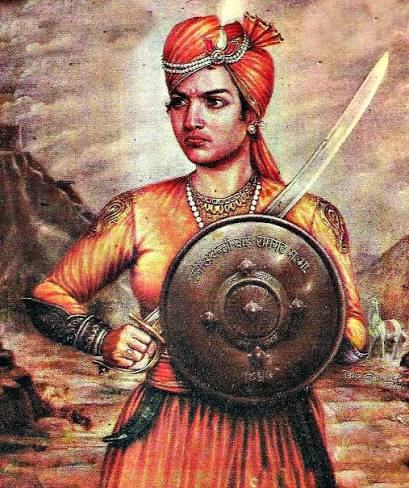
Rani Avantibai Lodhi
Modern India | 1857 Revolt
Why in news ?
Defence Minister Rajnath Singh unveiled Rani Avantibai Lodhi’s statue in Lucknow, recalling her role in the 1857 Revolt and her legacy of women’s courage and patriotism.
Significance
- Rani Avantibai Lodhi was a prominent woman leader of the Revolt of 1857.
- She emerged as an important symbol of resistance against British rule in Central India.
- Ramgarh Estate → present-day Mandla region, Madhya Pradesh
Key Contribution
- Led an armed resistance against the British during the Revolt of 1857.
- Mobilised local forces and challenged British authority in the Narmada region.
- Her resistance represented the participation of regional rulers and local communities in the 1857 uprising.
|