



 Latest News
India–New Zealand FTA
- India and New Zealand have concluded talks on a free trade agreement, granting India tariff-free access to New Zealand’s market, attracting $20 billion in investment over 15 years, and aiming to double bilateral trade to $5 billion within five years.
- The FTA will be formally signed in the first half of 2026.
India–New Zealand Bilateral Relations
- India and New Zealand established diplomatic relations in 1952 and share enduring ties rooted in Commonwealth membership, common law traditions, and democratic governance.
- Sporting links—especially cricket, hockey, and mountaineering—and tourism have long fostered goodwill between the two societies.
- Strategic Vision and Policy Frameworks
- New Zealand has identified India as a priority partner through initiatives such as “Opening Doors to India” (2011) and the NZ Inc. India Strategy.
- This was further deepened by the “India–NZ 2025: Investing in the Relationship” strategy, envisioning a more enduring strategic partnership across political, economic, and people-centric domains.
- Trade and Economic Ties
- New Zealand is India’s 11th largest two-way trading partner.
- India-New Zealand total trade in 2023-24 was valued at US$ 1.75 billion.
- Key trade sectors: Education, tourism, dairy, food processing, pharmaceuticals, renewable energy, and critical minerals.
- Indian exports to NZ: Pharmaceuticals, precious metals & gems, textiles, motor vehicles, and non-knitted apparel.
- Indian imports from NZ: Logs, forestry products, wool, edible fruit & nuts.
- Defence and Maritime Cooperation
Defence ties are expanding steadily:
- Regular naval visits and port calls by Indian Navy ships.
- High-level naval leadership exchanges.
- Cooperation under Combined Task Force-150, with Indian Navy personnel contributing while NZ leads the task force.
- These engagements support maritime security and Indo-Pacific stability.
- Education and Knowledge Partnerships
- India is the second-largest source of international students in NZ (≈8,000 students).
- Collaboration through:
- NZ Centre at IIT Delhi
- Joint research projects in cancer, robotics, cybersecurity, waste management, and medical technology
- Education cooperation agreements with GIFT City and IIM Ahmedabad
5. People-to-People and Cultural Ties
- Indian-origin population in NZ: ~292,000, with Hindi as the fifth most spoken language.
- Vibrant celebration of Indian festivals and strong presence of Indian cultural institutions.
- Deep sporting connections, including shared mountaineering heritage linked to Sir Edmund Hillary.
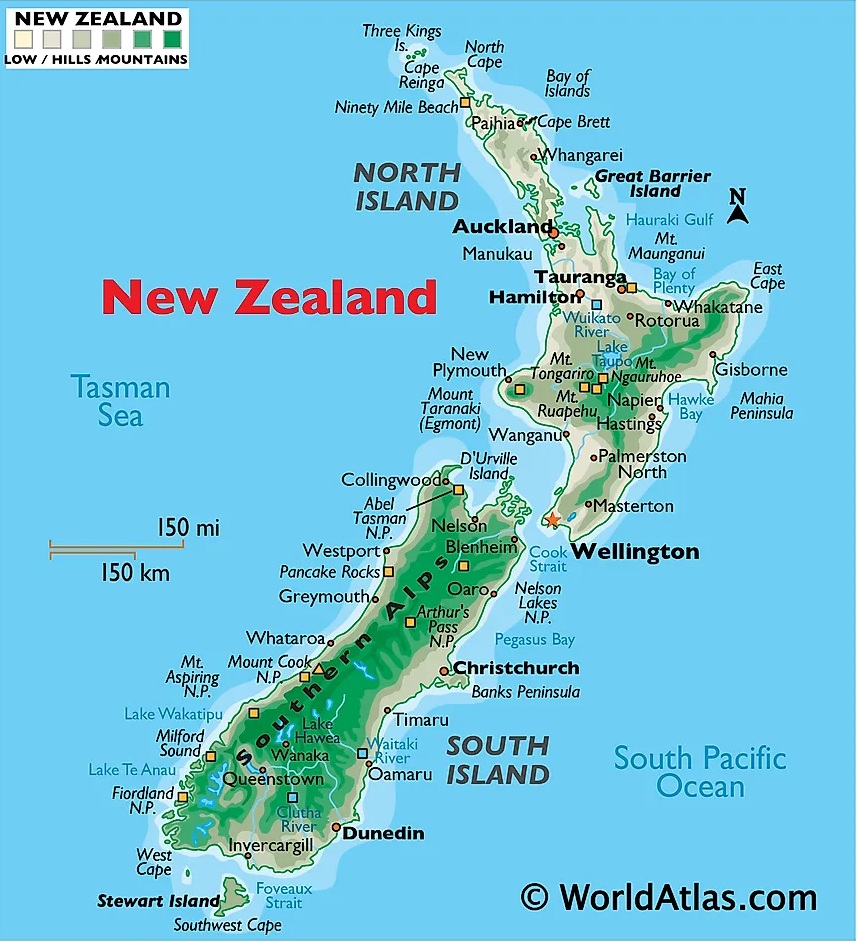
India–New Zealand Free Trade Agreement: A New Phase in Bilateral Ties
- India and New Zealand have concluded a Free Trade Agreement (FTA), ending negotiations that began in March 2025.
- FTA talks were launched during Luxon’s visit to India, and the deal was finalised in a record nine months, reflecting strong political commitment and a shared goal of deepening bilateral relations.
Key Trade & Investment Highlights
The FTA is expected to double bilateral trade within five years, deepen economic engagement, and strengthen cooperation beyond trade—covering defence, education, sports, innovation, and people-to-people ties.
- Zero-Duty Market Access: New Zealand will grant 100% duty-free access (across 8,284 tariff lines) for Indian exports from the date the agreement enters into force.
- India’s Tariff Liberalization: India will liberalize duties on approximately 70% of its tariff lines, covering about 95% of bilateral trade by value.
- Investment Commitment: New Zealand has committed to facilitating $20 billion in investment into India over the next 15 years, targeting manufacturing, infrastructure, and innovation.
- Trade Growth Target: The agreement aims to double bilateral trade from the current ~$2.4 billion to nearly $5 billion within five years.
- 5,000 temporary employment visas annually for Indian professionals, valid up to three years.
- India gains market access across 118 services sectors and MFN status in 139 sectors, expanding opportunities for Indian professionals.
- Most Favoured Nation (MFN) status is a key WTO principle that requires countries to treat all WTO members equally in trade.
- Coverage includes IT, engineering, healthcare, education, construction, and niche roles like AYUSH practitioners, yoga instructors, chefs, and music teachers—strengthening services trade and workforce mobility
Sensitive Sector Safeguards
- Dairy Protection: India successfully excluded the dairy sector (milk, cream, cheese, etc.) from tariff concessions to protect domestic farmers.
- Agricultural Exclusions: Other sensitive products kept in exclusion include sugar, onions, almonds, and several vegetable products.
- Tariff-Rate Quotas (TRQs): For some agricultural products like apples, kiwifruit, and honey, India will allow managed access through a TRQ system linked to productivity-enhancing "Action Plans".
Conclusion of the Agreement
- The agreement serves as a strategic milestone in India’s engagement with the Indo-Pacific, marking its third major trade deal in 2025 following pacts with the UK and Oman. By finalizing this agreement, both nations have signaled a reset in their economic relationship, moving toward a future-ready partnership focused on high-skill mobility, integrated supply chains, and investment-led growth.
- Next Phase: The agreement is expected to be formally signed in early 2026, with implementation anticipated to begin later that year after parliamentary ratification.
POSTED ON 23-12-2025 BY ADMIN
Next previous  General Studies
Political Science and International Relations
Some Reference Essays
List of previous year essay topics (1997-2019)

IAS GOOGLE is googled by the team of Raja Sir’s Cracking IAS Academy. Sources include The Hindu, Indian Express, pib.nic.in, Down To Earth, Economic Times, Vigyan Prasar, AIR and the like. IAS GOOGLE has been prepared in pace with emerging UPSC Trends.