DECEMBER 25, 2025
PESA Mahotsav 2025
- PESA Mahotsav (23–24 Dec 2025) was held in Visakhapatnam, marking the anniversary of the Panchayats (Extension to Scheduled Areas) Act, 1996.
About PESA Act
- Origin: Enacted in 1996 following the Bhuria Committee (1995), which recommended tribal self-rule to correct the historical exclusion of Scheduled Areas from mainstream decentralisation.
- Constitutional Gap: PESA was designed to cover Fifth Schedule Areas left outside the 73rd Constitutional Amendment (Part IX of the Constitution), ensuring self-governance.
- State Legislature Role: State legislatures are expected to play a facilitative and advisory role.
- Institutional Responsibility: Ministry of Panchayati Raj (MoPR) acts as the nodal ministry.
- Spatial Reach: Operates across 10 Fifth Schedule states, spanning ~77,500 villages and ~22,000 Panchayats, giving PESA national-scale relevance.
Significance of the PESA Act
- Demographic Empowerment: Covers 8.6% of India’s population belonging to Scheduled Tribes, addressing governance in some of the most marginalised regions.
- Gram Sabha Supremacy: Gram Sabha is the core institution of self-governance in Scheduled Areas, with authority over social, economic and cultural matters affecting the community.
- Land Protection: Mandatory consultation and consent of Gram Sabha before land acquisition, resettlement or rehabilitation in Scheduled Areas, preventing arbitrary land alienation.
- Forest Rights Control: Gram Sabhas have ownership and management rights over minor forest produce, strengthening livelihood security for tribal households.
- Mining Regulation: Recommendation of Gram Sabha is required for granting leases for minor minerals.
- Customary Law Recognition: Traditional customs, dispute resolution mechanisms and cultural practices of tribal communities are legally recognised and protected.
- Social Regulation: Gram Sabhas are empowered to prevent intoxicant abuse and regulate money-lending practices to protect vulnerable households.
Key Issues in PESA Implementation
- Uneven Rule Adoption: Only 8 out of 10 Fifth Schedule states have notified PESA Rules, creating legal uncertainty in Odisha and Jharkhand.
- Diluted Authority: In the Hasdeo Arand coal blocks (Chhattisgarh), forest and mining clearances proceeded despite multiple Gram Sabha resolutions opposing mining.
- Capacity Constraints: During MoPR-led assessments, it was found that over 40% of elected representatives in PESA Panchayats were unable to explain the concept of Gram Sabha clearly.
- Monitoring Gaps: Absence of a unified monitoring framework across ~63 Fifth Schedule districts weakens accountability and enforcement.
- Administrative Resistance: In the Polavaram irrigation project (Andhra Pradesh), displacement continued under sectoral project laws even as PESA-mandated Gram Sabha consent was contested.
Government Initiatives for PESA Act Implementation
- Dedicated PESA Cell: Established in MoPR for focused coordination, monitoring and inter-state support.
- Capacity Building: Two rounds of master-trainer programmes trained 1 lakh+ representatives.
- Digital Enablement: PESA–Gram Panchayat Development Plan Portal for fund tracking.
- Language Access: Translation of PESA manuals into tribal languages to improve comprehension.
- Academic Support: Centres of Excellence set up in universities to document customs and best practices.
- Knowledge Sharing: Publication of 40 PESA success stories to enable cross-state learning.
Way Forward
- Law Convergence: Integrate PESA with the Forest Rights Act (2006) and Land Acquisition Act (2013) so Gram Sabha consent becomes a single, binding clearance.
- Clear Role Allocation: Clearly demarcate responsibilities between MoPR and Ministry of Tribal Affairs; E.g., MoPR to handle governance processes, MoTA to safeguard land, forest and livelihood rights.
- Uniform Rule Design: Develop model PESA Rules for adoption by all states; E.g., central templates with limited state flexibility to prevent dilution.
- Continuous Capacity Support: Shift from one-time training to ongoing handholding; E.g., community paralegal and barefoot governance facilitator pilots.
- Incentive Alignment: Link effective PESA compliance to funding incentives; E.g., higher untied grants for Panchayats demonstrating strong Gram Sabha-led governance.
Comprehensive Guidelines on Building Road Tunnels
- The Ministry of Road Transport and Highways (MoRTH) released guidelines for building road tunnels to prevent and mitigate tunnel collapse risks.
Key Provisions of the Guideline
- Risk Ownership: Contracts must assign every identified project risk to the party best equipped to manage it.
- Stakeholder Coordination: Planning requires early consultation with Forest, PWD, Railways, and Disaster Management departments.
- DPR Mandate: Every Detailed Project Report (DPR) includes a Geotechnical Baseline Report (GBR) and a live Risk Register.
- Geotechnical Baseline Report: Contractual reference for expected ground conditions.
- Risk Register: Lists identified hazards with site-specific mitigation measures.
- Portal Siting: Alignment planning must use the Landslide Susceptibility Maps by the GSI to avoid portals in unstable zones.
- Rescue Pipe: High-risk collapse zones require installation of a 0.9-metre NP-4 escape pipe in the tunnel invert (floor).
- Rescue Staging: One mobile rescue container for 12 workers must be placed 150-300 metres behind the tunnel face (active excavation point).
- Survival Support: Rescue containers will provide at least 24 hours of oxygen, water, and communication facilities.
- ERP Discipline: Emergency Response Plans undergo weekly updates and bi-weekly verification by an authorised safety officer.
- Evacuation Gaps: Pedestrian cross-passages are provided at 300-metre intervals for emergency escape.
- Early Oversight: Tunnels above 1.5 kilometres require intimation to the Ministry of Road Transport and Highways (MoRTH) Tunnel Zone.
- Quality Assurance: An independent expert panel will review the DPR and construction methodology before execution.
Road Tunnels Landscape in India
- Completed Works: 42 road tunnels covering 60.37 km have been completed across 27 National Highway (NH) projects.
- Ongoing Projects: 57 tunnels spanning 93.96 km are under construction across 37 NH projects.
- Network Target: India aims to develop an aggregate road tunnel network of 331 km by 2026-27.
- Construction Methods: Over 80% of Himalayan tunnels use NATM (New Austrian Tunnelling Method), while urban coastal projects rely mainly on TBMs (Tunnel Boring Machines).
Important Road Tunnels in India
- Dr. Syama Prasad Mookerjee Tunnel: India’s longest operational road tunnel (9.28 km) on NH-44 between Chenani and Nashri in Jammu and Kashmir.
- Atal Tunnel: World’s longest (9.02 km) highway tunnel above 10,000 ft beneath Rohtang Pass at the Eastern Pir Panjal range in Himachal Pradesh.
- Sela Tunnel: World’s longest (2.5 km) twin-lane tunnel above 13,000 ft, connecting Tezpur in Assam with Tawang in Arunachal Pradesh below Sela Pass.
|
Under-Construction Important Road Tunnels
|
Unrest in Assam’s Karbi Anglong
- The Karbi Anglong and West Karbi Anglong districts of Assam witnessed escalating civil unrest, causing civilian deaths and internet shutdowns.
- Current instability began with a hunger strike by indigenous tribal activists demanding eviction of long-settled non-tribal communities.
- Protesters argue the Sixth Schedule vests land rights with indigenous tribes, barring non-tribal settlement in protected grazing lands.
About Karbi Anglong
- Karbi Anglong is the largest district of Assam, forming part of the Karbi Plateau, an extension of the Indian Peninsular Block.
- It is divided into East Karbi Anglong (headquartered in Diphu) and West Karbi Anglong (headquartered in Hamren); the Kopili River and parts of Nagaon district separate the two districts.
- The region is governed by the Karbi Anglong Autonomous Council (KAAC) under the Sixth Schedule.
- Tribal Composition: Karbis, historically called Mikirs, form the largest indigenous community; other STs include Dimasas, Bodos, Kukis, Hmars, Tiwas, Garos, Tai groups, and Rengma Nagas.
- Non-Tribal Groups: Include Gorkhas, Bengalis, and Hindi-speaking communities.
- Peace Accord: Karbi Anglong Peace Accord, 2021, a tripartite agreement between the Centre, Assam Government, and five insurgent groups, was signed to end decades of insurgency.
- It promised enhanced legislative, executive, and administrative powers to the KAAC while keeping it within the framework of the Sixth Schedule.
- Major Demand: There has been a long-standing demand to implement Article 244(A), which allows for the creation of an “Autonomous State” within Assam for certain tribal areas.
Digital Residue Reshaping Policing in India
- Indian policing is increasingly relying on digital residue, shifting from traditional investigative methods based on physical evidence.
- Digital Residue is the electronic trail generated by everyday actions such as online payments, authentication systems, and digital platform use.
Digital Residue as Evidence
- Device Attribution: One-time passwords (OTPs) and shopping logs link transactions to verified mobile numbers and specific device identifiers.
- Spatial Reconstruction: FASTag toll alerts combined with delivery logs reconstruct inter-state movement despite discarded primary phones.
- Intent Proof: Search histories, AI chatbot queries, and deleted cloud backups can reveal premeditation.
- Temporal Proof: In bank or Tax fraud, OTP timestamps establish device activity at a specific time.
Legal Basis and Frameworks in India
- BSA, 2023: Bharatiya Sakshya Adhiniyam recognises electronic records as primary evidence, enabling server logs and location data in trials.
- BHARATPOL: Launched in early 2025, this centralised digital intelligence system by the CBI uses Big Data Analytics and AI for real-time threat analysis and fugitive tracking.
- TIUE Norms: Apps using mobile numbers for account creation are classified as Telecommunication Identifier User Entities, mandating strict SIM-user binding.
- Procedural Safeguards: Bharatiya Nagrik Suraksha Sanhita (BNSS) and Digital Personal Data Protection (DPDP) Rules, 2025, balance data privacy with lawful access to digital evidence.
Thanjavur Paintings
- Context (PIB): A priceless Thanjavur-style painting (Tanjore) of Shri Ram was transported from Bengaluru to the Ram Mandir, Ayodhya.
- The art form originated in the 16th century under the Nayakas of Thanjavur, who were the feudatories of the Vijayanagara rulers.
- It reached its zenith in the 18th century under Maratha rulers, especially Raja Serfoji II.
- Thanjavur painting received the Geographical Indication (GI) tag in 2007–08.
- Key Features: The paintings are executed on solid wooden planks called Palagai Padam; they use genuine 22-karat gold foil, and semi-precious stone inlay and provide a 3D effect.
- Themes: The paintings mainly depict Hindu deities, especially Bala Krishna, Shri Ram, and Puranic scenes.
Jat Panchayat bans smartphone use by married women
- A caste panchayat of the Jat community in Rajasthan’s Jalore district has issued a diktat banning smartphone use by married women from Republic Day 2026.
What's the issue?
- A social decree issued by a caste panchayat (Sundhamata Patti panchayat) prohibiting married women and daughters-in-law from using camera-enabled smartphones in public and social spaces.
- Women from 15 villages are allowed only basic keypad phones, with limited exceptions for girls using smartphones at home strictly for educational purposes.
Causes
- Patriarchal social control: Deep-rooted norms seek to regulate women’s mobility, communication, and autonomy in the name of tradition and social order.
- Moral policing and honour concerns: Fear of surveillance loss, misuse of social media, and perceived threats to family honour often drive such diktats.
- Digital anxiety: Panchayat cited mobile addiction and children’s eyesight, though restrictions selectively target women, not men.
Implications
- Violation of fundamental rights: Restricts Article 14 (Equality), Article 19 (Freedom of expression), and Article 21 (Right to life and personal liberty).
- Gender discrimination: Reinforces unequal digital access and deepens the gender digital divide.
- Threat to constitutional morality: Challenges Supreme Court emphasis on individual dignity over community diktats (e.g., Shakti Vahini case on khap panchayats).
Pollution Control Vessel ‘Samudra Pratap’
- The Indian Coast Guard (ICG) has inducted its first indigenously designed and built Pollution Control Vessel (PCV), Samudra Pratap, marking a major milestone in maritime environmental protection.
Samudra Pratap
- Samudra Pratap is a specialised Pollution Control Vessel (PCV) commissioned into the Indian Coast Guard for marine environmental protection, oil-spill response, and firefighting operations.
- It is the largest vessel in the ICG fleet and the first PCV to be indigenously designed and constructed in India.
- Built by: Goa Shipyard Limited (GSL) under the two-ship Pollution Control Vessel project for the Indian Coast Guard.
Key features
- Size & capacity: 114.5 m length, 16.5 m breadth, displacement of 4,170 tonnes, enabling long endurance and high-seas operations.
- Advanced navigation & control: First ICG ship with Dynamic Positioning (DP-1) capability for precise station-keeping during pollution response.
- Pollution response systems: Equipped with oil fingerprinting machine, oil spill detection systems, viscous oil recovery equipment, and onboard pollution control laboratory.
- Firefighting capability: Holds FiFi-2/FFV-2 notation with a high-capacity external firefighting system for ship and offshore fire emergencies.
- Combat & support systems: Armed with 30 mm CRN-91 gun and two 12.7 mm remote-controlled guns, integrated with modern fire-control systems.
- Indigenous systems: Features Integrated Bridge System, Integrated Platform Management System, and Automated Power Management System.
Significance
- Enhances India’s capability to respond to oil spills, chemical pollution, and maritime accidents within the EEZ and beyond.
- Demonstrates India’s ability to design and build complex, mission-specific vessels domestically.
- Strengthens preparedness for maritime ecological disasters and offshore industrial accidents.
Quality Council of India
- The Quality Council of India (QCI) announced next-generation quality reforms on the eve of Sushasan Divas 2025 to strengthen India’s quality ecosystem.
About Quality Council of India (QCI):
- The Quality Council of India (QCI) is an autonomous, non-profit national accreditation body that promotes, adopts, and institutionalises quality standards across sectors in India.
- It operates as a public–private partnership (PPP) model, independent of direct government control, while supporting national quality objectives.
Established in:
- 1996, following Cabinet approval, under the Societies Registration Act, 1860.
- Set up on the recommendations of a multi-stakeholder committee coordinated by the then Department of Industrial Policy and Promotion (now DPIIT).
Aim:
- To build a robust national quality infrastructure aligned with international standards.
- To enhance global competitiveness of Indian goods and services, protect consumer interests, and improve quality of life.
Key functions
- National accreditation programmes: Accredits laboratories, certification bodies, inspection agencies, medical labs, and testing facilities as per global norms.
- Service-sector quality assurance: Develops accreditation frameworks for education, healthcare, governance, environment, infrastructure, and vocational training.
- Trade facilitation: Helps overcome TBT/SPS barriers under WTO by ensuring internationally acceptable conformity assessment.
- Capacity building: Strengthens quality systems in governments, institutions, MSMEs, and enterprises through training and benchmarking.
- International engagement: Maintains linkages with ILAC, IAF, OECD, ISQua, APLAC, PAC, enabling mutual recognition and global acceptance.
- Quality awareness: Leads the National Quality Campaign to empower citizens to demand quality goods and services.
Significance
- Recent initiatives like Q Mark – Desh ka Haq and Quality Setu shift the system from inspection-heavy regulation to trust-based governance.
- Improves export credibility, especially for MSMEs, by aligning Indian standards with global benchmarks.
Archaeologists find 2,000-year-old labyrinth revealing India’s role in ancient global trade
- Archaeologists have uncovered a 2,000-year-old circular stone labyrinth in Maharashtra’s Solapur district, the largest of its kind in India.
What it is?
- The find is a massive circular stone labyrinth constructed using carefully laid concentric stone circuits.
- It is dated to nearly 2,000 years ago and linked to the Satavahana dynasty (1st–3rd century CE).
Discovered at:
- Located in the Boramani grasslands, Solapur district, Maharashtra.
- The semi-arid grassland ecosystem limited excavation, aiding long-term preservation of the structure.
Key features
- Size: Approximately 50 feet × 50 feet, making it the largest circular labyrinth in India.
- Design: Comprises 15 concentric stone circuits, the highest number recorded so far in Indian circular labyrinths.
- Form: Circular layout, distinct from the larger but square labyrinth found at Gedimedu, Tamil Nadu.
- Setting: Situated in open grasslands, not within settlements, temples, or forts.
Connections within India
- Similar, smaller labyrinths have been found in Sangli, Satara, and Kolhapur, indicating a regional network across western Maharashtra.
- Their alignment suggests links between inland Deccan routes and western coastal ports such as those used in Roman trade.
- Maharashtra’s location made it a trade conduit between interior production centres and Arabian Sea ports.
Significance
- The circular motif resembles labyrinth designs on ancient Roman coins from Crete, many of which have been found in Indian trade hubs.
- Likely served as navigational or symbolic signposts for merchants transporting spices, textiles, and precious stones.
- Reinforces Maharashtra’s role as a key crossroads in ancient global commerce.
AILA (Artificially Intelligent Lab Assistant)
- Researchers at IIT Delhi have developed AILA, an AI system capable of autonomously conducting real scientific experiments, a first of its kind in India.
What AILA (Artificially Intelligent Lab Assistant) is?
- AILA is an autonomous AI-powered laboratory assistant that can design, run, and interpret real-world scientific experiments without continuous human intervention.
- Unlike conventional AI tools that only analyse data, AILA directly controls laboratory instruments and adapts decisions in real time.
- Developed by: Indian Institute of Technology (IIT) Delhi, in collaboration with research teams from Denmark and Germany.
Aim:
- To automate complex laboratory experiments, reduce human effort and time, and accelerate discoveries in materials science and experimental physics.
- To enable AI to move beyond analysis into active scientific reasoning and experimentation.
Key features:
- Autonomous experiment execution: Independently operates the Atomic Force Microscope (AFM), a critical tool in nanoscale materials research.
- Real-time decision-making: Adjusts experimental parameters dynamically based on ongoing observations.
- End-to-end workflow: Designs experiments, controls instruments, analyses data, and generates results without manual intervention.
- Time efficiency: Reduces tasks that took an entire day to 7–10 minutes, significantly boosting research productivity.
- Adaptive intelligence: Learns from experimental outcomes to refine subsequent actions.
Significance
- Marks a transition from AI as a support tool to AI as an active scientific agent.
- Enables wider access to advanced instruments by lowering skill and time barriers.
- Aligns with India’s AI for Science initiative and ANRF-backed research funding.
Earthquake struck Taiwan
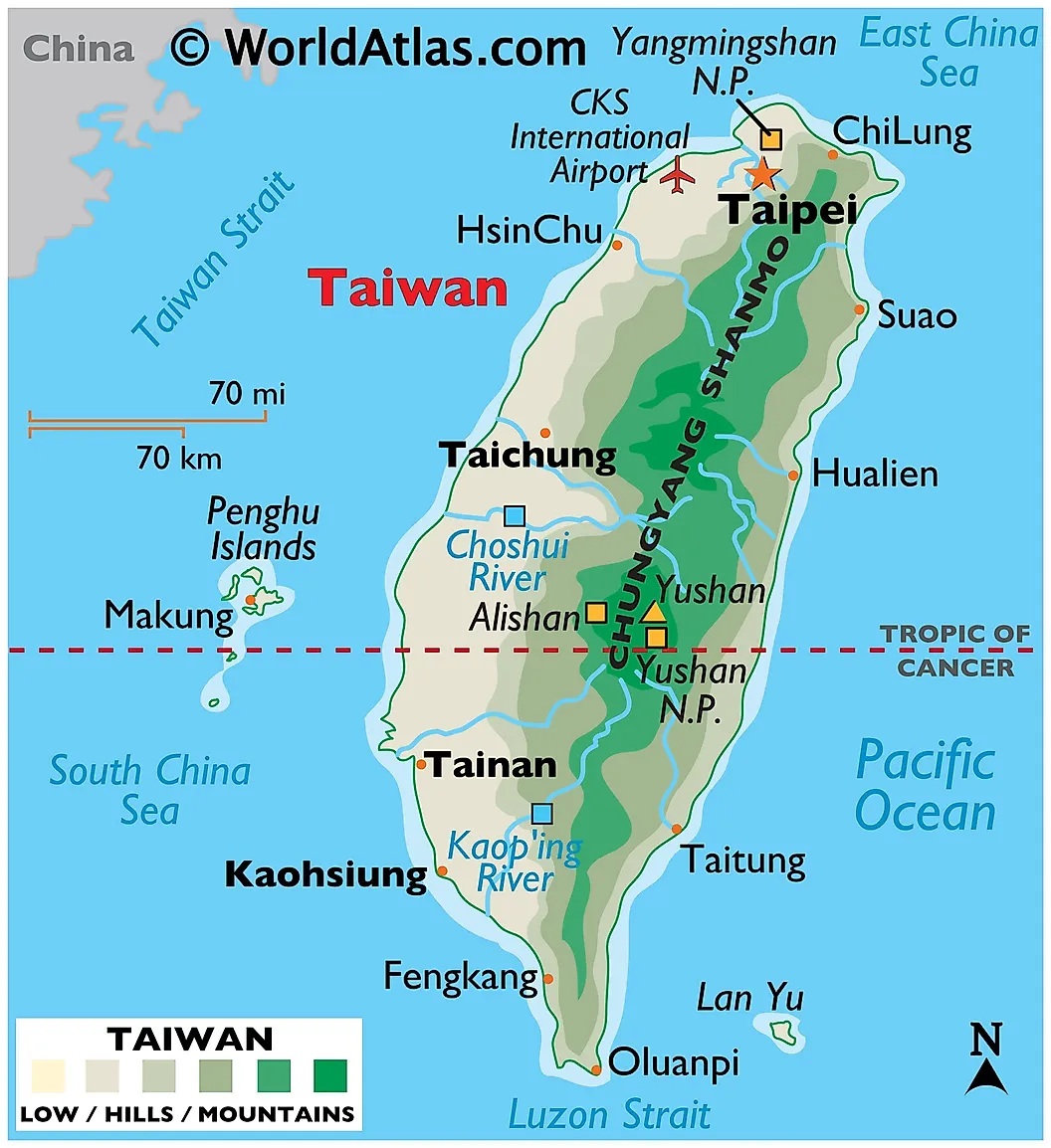
- A magnitude 6.1 earthquake struck Taiwan shaking buildings in Taipei and other cities, though no major damage was reported.
Taiwan:
- Taiwan is an island in the western Pacific Ocean, officially governed as the Republic of China (ROC), with its own elected government, economy, and armed forces.
- It functions as a self-administered polity, though its sovereignty status remains contested internationally.
Location:
- Situated about 160 km off the southeastern coast of China, separated by the Taiwan (Formosa) Strait.
- Lies between the East China Sea (north) and the South China Sea (south), facing the Pacific Ocean to the east.
- Capital: Taipei.
Neighbouring countries:
- China to the west (across the Taiwan Strait).
- Japan (Ryukyu Islands) to the northeast.
- Philippines to the south, across the Bashi Channel.
- Surrounded by strategically contested waters in the East and South China Seas.
Brief history:
- Prior to the 17th century, Taiwan had indigenous self-governing communities with no central authority.
- Colonised by the Dutch (17th century), later ruled by Qing China for nearly two centuries.
- Became a Japanese colony (1895–1945) after the First Sino-Japanese War.
- In 1949, after the Chinese Civil War, the Nationalist government (Kuomintang) retreated to Taiwan following defeat by the Communists on the mainland.
- Since then, Taiwan has remained politically separate from the People’s Republic of China, which claims it under the One-China policy.
Geological features:
- Lies at the convergence of the Philippine Sea Plate and Eurasian Plate, making it one of the world’s most earthquake-prone regions.
- Part of the Pacific Ring of Fire, the most seismically active zone globally.
- Dominated by the Central Mountain Range, with over two-thirds of the island being mountainous.
- Home to Yu (Jade) Mountain, the highest peak in East Asia (3,997 m).