
- India is facing a significant energy crisis as the West Asia war has disrupted 54% of its LPG and 30% of its LNG supplies through the Strait of Hormuz.
What is LPG?
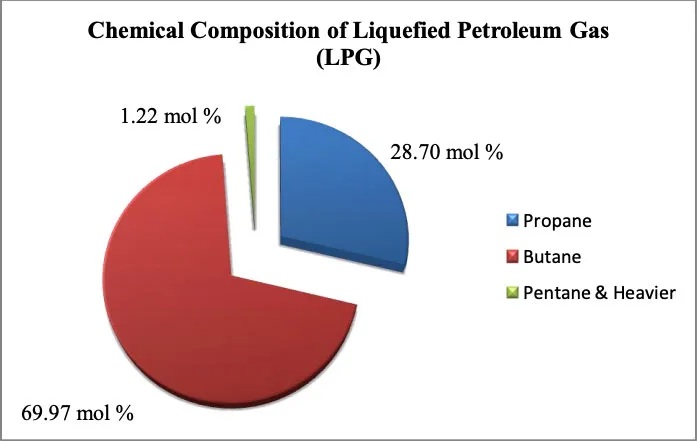
- Liquefied Petroleum Gas (LPG) is a flammable mixture of hydrocarbon gases, primarily propane and butane. It is produced as a byproduct of crude oil refining and natural gas processing. It turns into a liquid under moderate pressure, making it highly portable in cylinders.
What is LNG?
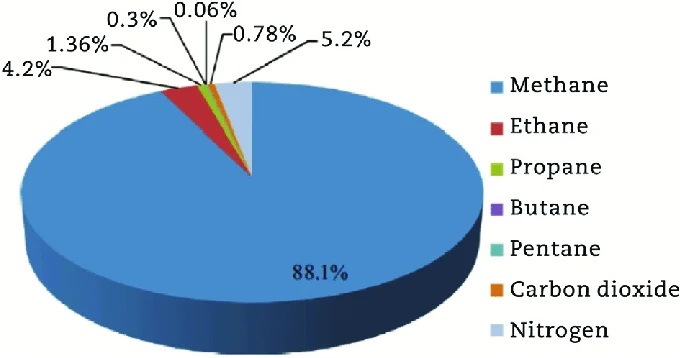
- Liquefied Natural Gas (LNG) is primarily methane that has been cooled to extremely low temperatures (below -160°C) through a cryogenic process. It is liquefied mainly for long-distance transport across oceans where pipelines are not feasible, as its liquid volume is 600 times smaller than its gaseous form.
Difference Between LPG and LNG:
|
Feature |
LPG (Liquefied Petroleum Gas) |
LNG (Liquefied Natural Gas) |
|
Composition |
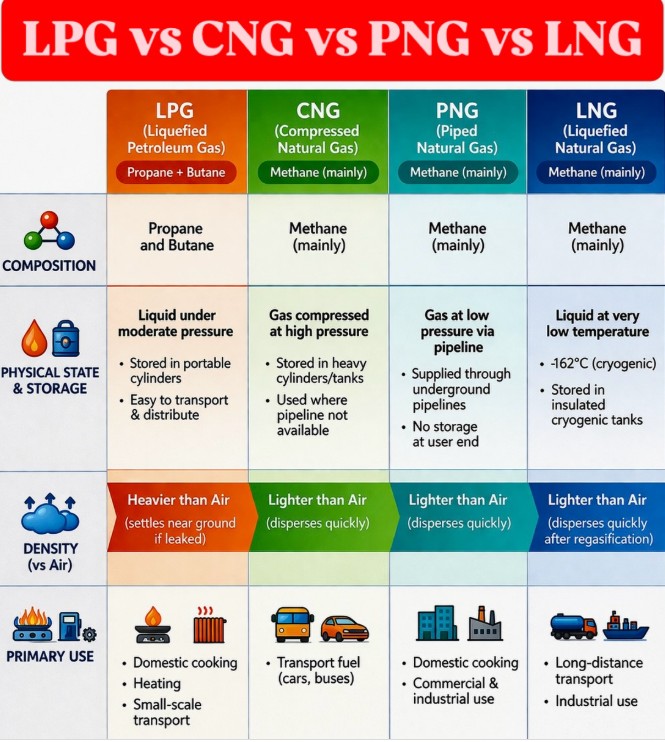
Primarily Propane and Butane |
Primarily Methane |
|
Production |
Derived from oil refining & gas stripping |
Purified natural gas cooled cryogenically |
|
Storage |
Stored in pressurized cylinders at room temp |
Stored in specialized cryogenic tanks |
|
Density |
Heavier than air (sinks to the ground) |
Lighter than air (disperses quickly) |
|
Transport |
Mostly by road/trucks in cylinders/tankers |
Mostly by specialized cryogenic ships |
|
Safety |
Higher risk of fire if leaked (accumulates) |
Generally safer (evaporates into the air) |
Key Aspects of LPG Production in India:
- As of March 2026, India produces 50–60% of its domestic Liquefied Petroleum Gas (LPG) needs, with output reaching 50 thousand metric tonnes (TMT) daily, following a 40% hike in refinery production. While domestic production covers over half the demand, India imports the rest, primarily from West Asia, the US, and Russia to meet rising demand.
-
India has over 332 million (33.2 crore) active domestic LPG consumers, a significant increase from 145 million in 2014. The widespread adoption is largely driven by the Pradhan Mantri Ujjwala Yojana (PMUY), which has provided over 10.33 million deposit-free connections to low-income households as of March 2025, elevating national coverage to nearly 100%.
- Production Capacity: Daily production has increased to 50 TMT, enabling domestic refineries to supply over 60% of daily demand.
- Production Source: LPG is primarily produced during the refining of crude oil in domestic refineries.
- Production Boost: Following a 2026 LPG Control Order, refineries increased output significantly to meet high, demand-driven requirements.
- Dependency on Imports: Despite increased output, India relies on imports to bridge the gap, with 800 TMT of cargo frequently arriving from international sources to ensure supply.
- Daily Consumption: Daily demand was recently reported around 80 TMT, with the government ensuring adequate supply for over 33 crore households.
Applications of LPG
- Domestic: Used extensively as cooking fuel in households (cylinders).
- Heating: Used for space heating and water heating in areas without gas grids.
- Industrial: Used for high-heat processes like metal cutting, welding, and food processing.
- Autogas: Used as a cleaner alternative to petrol/diesel in specially converted vehicles.
Key Aspects of LNG Consumption in India:
- India is one of the world's largest Liquefied Natural Gas (LNG) importers, relying on imports for roughly 50% of its natural gas demand, importing around 24–27 million tonnes in 2024–25. While domestic production remains, India is expanding its regasification infrastructure, with 8 operational terminals (e.g., Dahej, Hazira) aiming to raise natural gas to 15% of the energy mix by 2030.
- Consumption Growth: Natural gas consumption is expected to reach 290–300 MMSCMD by 2030, with a long-term projection of over 490 MMSCMD by 2040.
- Sectoral Demand: The City Gas Distribution (CGD) sector, including Compressed Natural Gas (CNG) for vehicles and piped gas for households, is the primary driver of demand. Industrial users (fertilizer, steel, refineries) are also major consumers.
- Import Reliance: India imports a significant portion of its natural gas requirement, with LNG imports increasing as local production remains relatively stagnant.
- Key Suppliers: Long-term contracts, largely with Qatar, cover the majority of India's imports, with significant imports also sourced through spot/short-term markets.
- Infrastructure: Major importers like Petronet LNG Limited and Shell operate terminals along the western coast to handle growing imports.
- The government aims to raise the share of natural gas in the energy mix from 7% to 15% by 2030, directly driving the surge in LNG imports and consumption.
Applications of LNG:
- Energy Transport: The primary bridge to move natural gas from producing countries to consuming countries.
- Power Generation: Once regasified, it fuels gas-based power plants.
- Industrial Feedstock: Used in manufacturing fertilizers, petrochemicals, and steel.
- Heavy Transport: Emerging as a fuel for long-haul trucks, ships (as bunker fuel), and locomotives.
- City Gas: Converted back to gas for PNG (households) and CNG (transport).
|
LNG VS PNG
Key Differences Between LNG and PNG in India
Primary Usage:
|
Key aspects of PNG in India :
- India's Piped Natural Gas (PNG) sector is rapidly expanding, with over 1.59 crore households and thousands of commercial/industrial units connected via a 3.03 lakh km network. Domestic production meets about 50% of demand (approx. 97 MMSCMD), while the rest is imported, with the government mandating a shift from LPG to PNG to strengthen energy security.
- Production and Supply: Domestic natural gas production is around 90-97 Million Metric Standard Cubic Meter per Day (MMSCMD). Key producers include ONGC and OIL.
- Infrastructure Growth: The City Gas Distribution (CGD) network covers 307 geographical areas, with over 3.03 lakh kilometers of pipelines laid.
- Rapid Adoption: Over 1.59 crore households are using PNG, alongside 47,765 commercial and 21,250 industrial connections.
- Government Mandate: The government is pushing for a mandatory shift to PNG in areas where the infrastructure exists, with potential cuts to LPG supply if households refuse to connect, to reduce reliance on imported fuel.
- Key Players: Major suppliers include Indraprastha Gas Limited (IGL), Mahanagar Gas Limited (MGL), Gujarat Gas, and Adani Total Gas.
- Advantages: It is promoted as a safer, uninterrupted, and cleaner energy source, reducing the nation's import bill and increasing safety over LPG cylinders.
Key Differences Between LPG and PNG
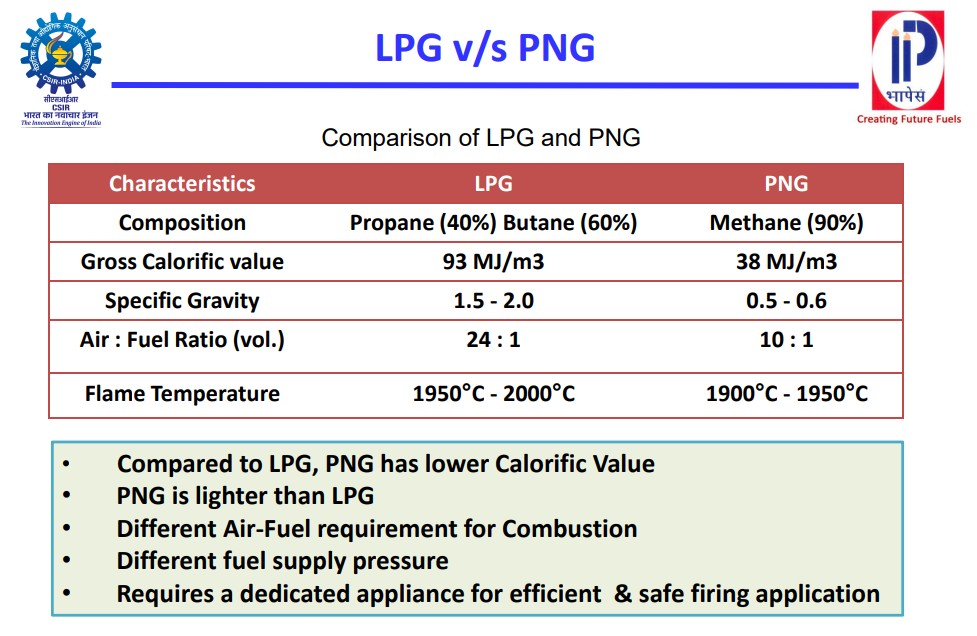
- The assessment of cost safety and operational efficiency and the environmental effects of LPG and PNG requires knowledge of their fundamental distinctions. LPG distribution occurs through cylinder delivery throughout India while PNG distribution utilizes pipelines to provide uninterrupted service and produce cleaner burning fuel. Fuel comparison enables households to select the best option while showing the government’s efforts to promote natural gas piped systems.
- Cost Efficiency
- PNG provides major savings through its monthly costs which are less than those of LPG. The price of a 14.2 kg LPG cylinder in Mumbai reaches ₹912 while Delhi customers pay ₹913 instead. PNG users generally pay ₹700–800 per month depending on their actual consumption.
- Convenience and Reliability
- The delivery of LPG products depends on both distribution networks and logistical operations which can experience delays. The continuous supply of PNG without any operational issues strengthens the energy supply security for homes.
- Safety
- PNG contains methane which is a gas that becomes lighter than air and rapidly disappears from its point of leakage thus creating less explosion danger. LPG gas exists as a heavier substance which creates dangerous situations when it collects close to the ground.
- Environmental Impact
- PNG produces fewer pollutants through its cleaner burning process compared to LPG. India implements PNG technology to achieve its international obligations which require reduction of greenhouse gas emissions according to the Paris Agreement.
- Policy and Upfront Cost
- The total cost for installing PNG system installation includes a refundable security deposit which ranges from ₹5000 to ₹7000 but this expense gets balanced out through future cost reductions. The Natural Gas (Supply Regulation) Order 2026 establishes government regulations which require residential natural gas distribution to take precedence over industrial gas distribution.
Why the Indian Government is Promoting PNG?
- The Indian government promotes Piped Natural Gas (PNG) development because it strengthens energy security and decreases international LPG dependency while advancing initiatives for clean energy solutions. The “One Nation One Grid” program seeks to expand pipeline infrastructure through which residential LPG conversion increases cost efficiency and environmental sustainability while creating better access to energy solutions which helps India achieve its energy transition and sustainable development objectives.
- Energy security: The country reduces its LPG import requirements through this initiative which provides stability for domestic fuel distribution.
- Expansion of gas infrastructure: The gas expansion project “One Nation, One Grid” has created 25400 kilometers of gas pipelines in India which includes 10400 kilometers that are currently being constructed.
- Clean energy promotion: India’s energy transition efforts receive active support through this initiative which also helps to decrease carbon emissions.
- Economic efficiency: The program enables families to spend less money on their cooking fuel requirements.
- Increased accessibility: The data from the last 25 days indicates that 220000 households switched from using LPG to PNG.
Conclusion
- The move from using LPG (Liquefied Petroleum Gas) by Thirty three crore (33.2 Cr. approx. ) connections is not just an occurrence; it represents a change in how the consumer is using power and how power is delivered in India. Consumers are no longer looking for gas cooking solutions based on cylinder-based fuel supplies, but rather are searching for solutions that address the reliability, safety and convenience aspects of their gas use within their homes. Additionally, with concerns regarding LPG supply interruptions and price fluctuations continuing to increase, many consumers are more informed and open to taking advantage of long-term solutions rather than short-term convenience solutions. While it is expected that LPG will have a continuing presence in India as a cooking fuel for consumers, it appears likely that alternatives will emerge as the preferred cooking fuel in modern households. As Geopolitical turmoil influences the fuel availability for food, PNG, LNG and CNG is poised to become the preferred choice for millions of households across the country, redefining how India cooks, consumes, and conserves energy.