|
China Tightens Administrative Control in South China Sea Region
(GS Paper II: International Relations, India & Neighbourhood | GS Paper I: Mapping/Geography)
Why in News?
· China issued management measures for the Huangyan Dao National Nature Reserve, established around Scarborough Shoal, instituting routine patrols and strict enforcement against unauthorized fishing/resource extraction — alongside conducting military drills near the disputed shoal, escalating regional tensions.
South China Sea
- A marginal sea of the Western Pacific Ocean
- Bordering states: Brunei, Cambodia, China, Indonesia, Malaysia, Philippines, Singapore, Taiwan, Vietnam
- Connects Pacific and Indian Oceans via the Strait of Malacca
Nine-Dash Line
- China's claim (originating 1947) covers ~90% of the South China Sea
- Declared legally invalid by the 2016 PCA (Permanent Court of Arbitration) ruling under UNCLOS
- China rejected the ruling — does not recognize its validity
Disputed Territories
|
Territory
|
Details
|
|
Paracel Islands
|
~130 islands/reefs; controlled by China since 1974; also claimed by Vietnam & Taiwan
|
|
Spratly Islands
|
Claimed by China, Vietnam, Taiwan, Philippines, Malaysia, Brunei; includes Second Thomas Shoal
|
|
Scarborough Shoal (Huangyan Island)
|
Lies within Philippines' EEZ; claimed by China on historical grounds
|
Significance
- Tests the durability of the 2016 PCA ruling, which China has never implemented despite its binding nature under UNCLOS
- Signals sustained friction in a sea route carrying a significant share of global trade, with the Strait of Malacca as a critical chokepoint
Impact
- Regional security: Heightens tensions with the Philippines, risking naval standoffs and escalation
- International law: Undermines the credibility of UNCLOS dispute-resolution mechanisms when major powers disregard rulings
- Freedom of navigation: Raises concerns for all states dependent on South China Sea shipping lanes, including India
- Strategic: Reinforces China's broader assertiveness pattern, relevant to India's own maritime and border concerns (String of Pearls, Indo-Pacific strategy)
India's Stake
- India supports freedom of navigation and overflight in international waters, and adherence to UNCLOS
- Has energy exploration interests (ONGC Videsh) in Vietnam's contested EEZ blocks — direct stake in SCS stability
- Aligns with Quad and Indo-Pacific partners in advocating a rules-based maritime order
Way Forward
- Support ASEAN-led Code of Conduct (CoC) negotiations for the South China Sea to institutionalize de-escalation mechanisms
- Deepen Quad and Indo-Pacific coalition coordination on freedom of navigation operations
- India should continue balancing strategic autonomy with support for a rules-based maritime order, given its own maritime boundary sensitivities
|
|
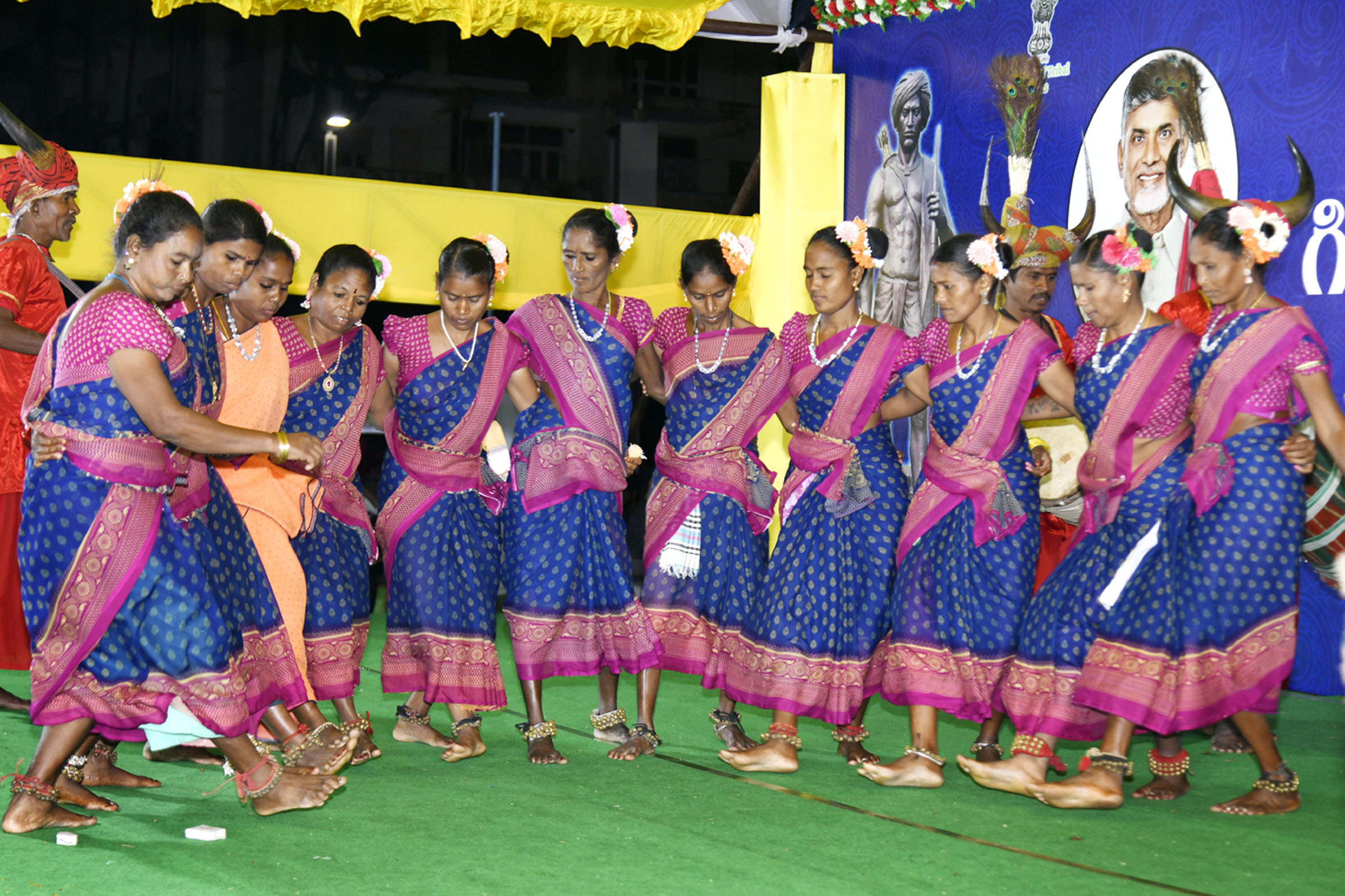
Dhimsa Dance — Guinness World Record
GS I – Art and culture
- Over 13,000 tribal women/girl students performed largest Dhimsa dance
- Venue: Alluri Sitarama Raju International Airport, Bhogapuram (Visakhapatnam)
- Recognition: Guinness World Records
- Origin: Folk dance of Araku Valley hill tribes, North Andhra Pradesh
- Typically performed by: 15–20 tribal women in traditional attire
- Style: Circular group dance, synchronized to native instruments
- Instruments: Mori (wind), Thudum (drum), Dappu (percussion)
- Occasions: Weddings, harvest festivals, community gatherings
|
|
DSC A24 (Yard 329) — Indian Navy's Diving Support Craft
GS III Defence technology
Why in news ?
DSC A24 is a twin-hulled naval support vessel designed to assist underwater diving operations, salvage missions, and coastal deployments.
- Built by Titagarh Rail Systems Ltd, Kolkata
- Catamaran hull — 300–400 tonnes displacement
- ~70% indigenous machinery content
Aim: To equip the Navy's Command Clearance Diving Teams with a dedicated, stable platform for underwater inspection, maintenance, and rescue support.
Significance
- Completes a milestone indigenous shipbuilding project
- Demonstrates the rising competence of private Indian shipyards in specialized defence platforms under Make in India
Impact
- Strengthens underwater operational readiness along Indian coasts
- Reduces reliance on imported diving-support platforms
Way Forward
- Scale up similar indigenous shipbuilding contracts to other specialized naval vessel categories
- Encourage private shipyards through long-term procurement assurance to sustain capacity built during this project
|
|
Europe Wildfires
GS Paper I: Important Geophysical Phenomena. GS Paper III: Disaster Management, Environment
Why in News?
· Intense wildfires swept across Greece, Spain, France, Portugal, and Italy, destroying hundreds of thousands of hectares of forest and triggering record peacetime evacuations, reviving debate on climate whiplash and fire-generated thunderstorms (PyroCb).
· Climate Whiplash : It is Rapid oscillation between opposing weather extremes in a short span.
· Mechanism : A wet phase spurs rapid vegetation growth then the subsequent sudden heatwave or drought desiccates this vegetation and it converting into a continuous fuel bed.
Pyrocumulonimbus (PyroCb) : A fire-induced thunderstorm cloud.
· Intense updrafts - extreme heat pushes smoke, ash, moisture upward
· Cooling & condensation - air column rises 10–15 km it cools and the moisture condenses on ash particles
· Thunderstorm generation - towering clouds formation producing lightning, erratic winds, and localized rain
· Self-amplification - lightning ignites new fires miles away and violent winds endanger the firefighters
Causes
· Climatic Drivers : Global warming increases the atmosphere's moisture-holding capacity, which intensifies both wet and dry extremes.
Land-Use Drivers
- Rural land abandonment, driven by the decline of agriculture and grazing amid urban migration, leaves fuel loads unmanaged and continuous.
- The fire suppression paradox occurs when consistent suppression of small fires allows fuel to accumulate, resulting in rare but catastrophic mega-fires.
Indian wildfire
|
Parameter
|
Europe
|
India
|
|
Primary trigger
|
Increasingly lightning (PyroCb)
|
Human-induced (agri-residue burning, NTFP collection)
|
|
Hotspots
|
Mediterranean (Greece, Spain, Portugal)
|
NE states, Odisha, Chhattisgarh, Uttarakhand, HP
|
Way Forward
· Landscape management - revive controlled grazing, agroforestry, firebreaks
· Risk communication over suppression - early warning systems, preparedness, evacuation planning
· Rural revitalization - sustain agrarian economies to prevent land abandonment
· Resilient afforestation - native, fire-resilient species over flammable monocultures
|
|
Exercise ROTOR CLAP III
Subject: Security
Explanation
ROTOR CLAP III is a specialized IAF drill focused exclusively on testing helicopter-based responses to low-flying drone threats, conducted in the harsh desert terrain of Rajasthan to simulate realistic combat conditions.
About
- 3rd edition, Pokhran Field Firing Range, Jaisalmer
- Involved Apache, Prachand, Mi-25/35, Chinook
Aim : To validate tactics and sharpen the IAF's rotary-wing fleet's readiness against emerging unmanned aerial threats.
Significance
- Fills a critical gap left by ground-based air defence systems against low-altitude drones
- Reflects the Air Force's shift toward multi-domain, technology-integrated combat preparedness
Impact
- Enhances border security against drone-enabled surveillance and smuggling
- Improves inter-unit coordination among diverse helicopter fleets during live combat scenarios
Way Forward
- Institutionalize such drills as a recurring, evolving exercise incorporating AI-based drone detection
- Integrate lessons from ROTOR CLAP into broader tri-service counter-drone doctrine
|
|
India Semiconductor Mission — Visakhapatnam Facility
Why in news ?
PM laid foundation stone for South India's first semiconductor manufacturing facility in Visakhapatnam, Andhra Pradesh
- Approved under: India Semiconductor Mission (ISM 1.0)
- ISM launched: 2021
- Nodal Ministry: Ministry of Electronics and Information Technology (MeitY)
India Semiconductor Mission (ISM) — Four Sub-Schemes:
· Semiconductor Fab Scheme – Supports setting up chip manufacturing plants (fabs); up to 50% capital cost support.
· Display Fab Scheme – Supports display panel manufacturing (for phones, laptops, TVs); up to 50% capital cost support.
· Compound Semiconductor & ATMP/OSAT Scheme – Covers compound chips (SiC, GaN for EVs/telecom) and back-end assembly/testing/packaging; up to 50% capital support, lower entry barrier.
· Design Linked Incentive (DLI) Scheme – Supports Indian chip design startups via cost reimbursement and sales-linked incentives, building domestic design IP.
Way Forward
- Ensure parallel development of skilled workforce and ancillary supply chains (chemicals, equipment) around new fab sites
- Sustain long-term policy stability and incentive continuity (ISM 2.0 and beyond) to attract further private investment
- Strengthen R&D linkages with academic institutions for design and innovation capacity
|
|
'Nasha Mukt Yuva for Viksit Bharat Sankalp Abhiyan'
(GS Paper II: Government Policies & Interventions, Health | GS Paper III: Internal Security — Narco-terrorism)
Why in News?
· The Prime Minister launched the 'Nasha Mukt Yuva for Viksit Bharat Sankalp Abhiyan' — a 100-week nationwide youth-focused drug de-addiction campaign, expanding a pilot initiated in Kashi under the Kashi Declaration.
The Campaign
- Duration: 100 weeks, with weekly awareness activities
- Origin: Piloted in Kashi (Varanasi), later expanded nationwide
- Framework: Based on the Kashi Declaration (2025)
Kashi Declaration
- Adopted: 2025
- Sets a 5-year roadmap for a youth-led drug de-addiction movement
- Treats substance abuse as a multi-faceted public health and societal challenge
- Proposes: Joint National Committee linking affected individuals to support services
Related Government Initiatives
|
Initiative
|
Focus
|
|
NAPDDR (National Action Plan for Drug Demand Reduction)
|
Prevention, treatment, rehabilitation, reintegration
|
|
Nasha Mukt Bharat Abhiyaan (NMBA)
|
Awareness
|
|
Navchetna Modules
|
Anti-drug awareness (educational)
|
|
IRCAs (Integrated Rehabilitation Centres for Addicts)
|
De-addiction & counselling
|
|
DDACs (District De-addiction Centres)
|
De-addiction services
|
|
NCORD (Narco-Coordination Centre)
|
Law enforcement coordination
|
|
ANTFs (Anti-Narcotics Task Forces)
|
State-level enforcement
|
|
JCC (Joint Coordination Committee)
|
Coordination
|
|
NIA
|
Investigation (narco-terror linkage)
|
|
|
OPEC
(GS Paper III: Economy/Energy, IR | GS Paper III: Agriculture, Renewable Energy)
Why in News?
OPEC+ countries agreed to increase oil production from September 2026
About OPEC
- Full form: Organization of the Petroleum Exporting Countries
- HQ: Vienna, Austria
- Type: Permanent intergovernmental organization of 11 oil-exporting developing nations
- Members: Algeria, Republic of Congo, Equatorial Guinea, Gabon, Iran, Iraq, Kuwait, Libya, Nigeria, Saudi Arabia, Venezuela
- India is NOT a member
- Former members: Ecuador, Indonesia, Qatar, Angola, UAE
- Genesis: Baghdad Conference, 1960 — founding members: Iran, Iraq, Kuwait, Saudi Arabia, Venezuela
- Objective: Coordinate/unify petroleum policies among members for fair, stable prices
About OPEC+
- Origin: 2016 — formed in response to falling oil prices due to rising US shale oil output
- Additional members beyond OPEC: Russia, Azerbaijan, Kazakhstan, Bahrain, Brunei, Malaysia, Mexico, Oman, South Sudan, Sudan
Significance
- OPEC+ controls a dominant share of global oil supply, making its production decisions a key determinant of global energy prices
- Reflects the shifting dynamics of global energy geopolitics, with US shale now a major counterweight to OPEC+ influence
Impact
- India imports ~85% of its crude oil needs — production increases could ease import costs and inflationary pressure
- Affects India's trade balance, forex reserves, and fuel subsidy/pricing policy
- Geopolitical stakes: India must balance ties with Gulf OPEC members alongside its Quad/Western partnerships
Way Forward
- Diversify crude oil import sources to reduce dependency on OPEC+ decisions (e.g., US, Latin America, Africa)
- Accelerate strategic petroleum reserve capacity to cushion against price volatility
- Fast-track renewable energy transition to reduce long-term oil import dependence
|
|
Project SARATHI
Gs II Governance
Why in news ?
Project SARATHI channels trained student volunteers into public hospitals to ease non-medical burdens — helping patients navigate facilities, without touching clinical duties — while nurturing civic responsibility among youth.
About
- Full form: Students' Alliance for Responsible Action to Transform Healthcare Institutes
- Integrated with MY Bharat portal; enables ABHA ID creation
Aim: To humanize the hospital experience for patients while constructively channeling youth energy into community service.
Significance
- Bridges the gap between overburdened clinical staff and patient support needs
- Builds a scalable, low-cost model for improving public healthcare.
Impact
- Reduces patient waiting time in government hospitals
- Cultivates empathy and healthcare awareness among student volunteers
- Speeds up digital health adoption via ABHA ID generation
Way Forward
- Expand the initiative to district and sub-district hospitals beyond central institutions
- Introduce structured feedback loops from patients to continuously refine volunteer training
|
|
Pygmy Hog
GS III : Environment/Species in News
Why in news?
SC-NBWL has recommended elevating the pygmy hog's protection status by adding it to critically endangered species covered under a Centrally Sponsored Scheme, reflecting its precarious population confined to fragmented Assam grasslands.
- World's smallest and rarest wild pig; only species in genus Porcula
- Conservation status: IUCN Endangered; WPA 1972 Schedule I; CITES Appendix I
- Habitat: Tall alluvial grasslands of sub-Himalayan Terai–Duar region
- Distribution: Largely restricted to Assam — wild population in Manas National Park; reintroduced in Orang NP, Barnadi WLS, Sonai-Rupai WLS
· Behaviour: Lives in small family groups; builds grass-lined ground nests
|
|
Rwanda (Mapping)
About
Rwanda is a small, landlocked East-Central African nation defined by its hilly terrain, volcanic north, and role as an emerging trade and logistics hub — currently deepening economic ties with India through a new bilateral trade mechanism.
- Capital: Kigali
- Borders: Uganda, Tanzania, Burundi, DRC
- Highest point: Mount Karisimbi (4,507 m)
Significance
- Gateway connecting EAC, COMESA, and AfCFTA trade blocs
- Rich in 3T minerals (tin, tungsten, tantalum) vital to global electronics supply chains
Impact (for India)
- New Joint Trade Committee opens avenues for B2B partnerships and diversified mineral sourcing
- Strengthens India's Africa outreach strategy amid global competition for critical mineral access.
|
|
SBSTTA-28
Subject: International Organisation/Environment
Explanation
SBSTTA is the scientific advisory arm of the Convention on Biological Diversity, tasked with translating research and data into actionable policy guidance for member nations working toward global biodiversity goals.
Fact Box
- 28th session, Nairobi, August 1, 2026
- Established under Article 25 of CBD
- Feeds recommendations to COP17
Aim
To furnish COP with rigorous scientific and technical guidance for accelerating implementation of the Kunming-Montreal Global Biodiversity Framework.
Significance
- Central platform for reconciling emerging biotechnology (synthetic biology) with ecological caution
- Ensures biodiversity policy remains evidence-based rather than purely political
Impact
- Influences national biodiversity action plans and funding priorities
- Shapes global norms on regulating gene editing and synthetic biology applications in ecosystems
Way Forward
- Strengthen biodiversity financing mechanisms to match KMGBF's ambitious 2030 targets
- Build stronger monitoring frameworks to track real progress against the 23 global targets, not just policy commitments
|
|
Science Without Scientists? India's Retention Crisis and the Road to Reform
(GS-III: S&T, Indigenization of Technology | GS-II: Governance)
Why in News?
· Nearly 120 scientists have resigned from premier ISRO centres — URSC (Bengaluru) and VSSC (Thiruvananthapuram) — impacting projects like Gaganyaan, SpaDeX, and Chandrayaan-3.
· Talent Outflow : 60–70% of PhD scholars from premier institutes eventually move abroad ~30% of engineering graduates (IITs, IISc) also migrate abroad
GERD (Gross Expenditure on Research & Development (% of GDP)
· India's GERD: 0.64–0.7% of GDP
· South Korea's GERD: 4.8%
· Israel's GERD: 5.6%
· USA's GERD: 3.5%
Economic Cost : India loses an estimated $35–50 billion annually due to brain drain.
Causes
- Structural: Low R&D investment and bureaucracy overriding scientific merit
- Institutional gap: No transparent grievance redressal — small, interconnected ecosystem makes dissent risky
- Pull factors: Startups, foreign universities, private R&D offering greater autonomy and resources
Impact
- Loss of institutional memory - decades of specialized domain knowledge erode
- Mentorship pipeline disruption - weakens training for early-career scientists
- Risk to strategic sectors - spaceflight, AI, quantum computing, semiconductors
- Direct operational risk to high-stakes national missions
Way Forward
- Decentralize administrative power - give scientists genuine research autonomy
- Dismantle rigid hierarchy protocols - encourage open scientific debate
- Modernize workplaces — Develop infrastructure with professional dignity and meritocracy
|