FEBRUARY 26, 2026 Current Affairs
Supreme Court Bans NCERT Textbook for Contempt of Court
- Supreme Court ordered a blanket ban on a new Class 8 NCERT Social Science textbook over a section titled “corruption in the judiciary.”
- Chapter Content: The chapter included references to judicial corruption, case backlogs, and complaints against judges, along with a quote from an ex-CJI acknowledging systemic flaws.
- Court’s Finding: A three-judge bench led by CJI Surya Kant described the chapter’s inclusion as a “calculated move to undermine” the institution, amounting prima facie to criminal contempt.
- Bench Order: The bench ordered immediate seizure of all physical copies and removal of all digital versions. It issued show-cause notices to the NCERT Director and the Education Secretary.
- Contempt Case: The Court registered a suo motu case in this matter as a Criminal Contempt under Section 2(c) of the Contempt of Courts Act, 1971.
- Constitutional Basis: The Supreme Court exercised its inherent authority as a Court of Record under Article 129 to punish for contempt.
Supreme Court’s Rationale for the Ban
- Basic Structure: The textbook content directly undermines judicial independence, a core component of the Basic Structure Doctrine.
- Impressionable Minds: Young students must be protected from material that could distort their perception of the justice system.
- Selective Framing: The chapter’s selective reference to corruption, while omitting the judiciary’s role in upholding democracy, scandalises the institution.
- Public Trust: Such content constitutes interference with the administration of justice by eroding public trust in the judiciary.
About Contempt of Court
- Contempt of court refers to any act that disrespects the dignity, defies the authority, or obstructs the administration of justice.
- Constitutional Power: The Supreme Court and the High Courts have the power to punish for contempt under Article 129 and Article 215 of the Constitution, respectively.
- Classification: Under the Contempt of Courts Act, 1971, contempt is classified into two types
- Civil Contempt: Wilful disobedience to any judgment or order of a court.
- Criminal Contempt: Acts or publications that scandalise, lower the authority of, or obstruct the administration of justice.
Eastern Nagaland Autonomy
- Centre signed a tripartite agreement with the Government of Nagaland and the Eastern Nagaland Peoples’ Organisation (ENPO) to establish the Frontier Nagaland Territorial Authority.
- Frontier Nagaland Territorial Authority (FNTA) grants enhanced administrative and financial autonomy to six eastern districts — Kiphire, Longleng, Mon, Noklak, Shamator, and Tuensang.
Background of the ENPO Demand
- Separate Statehood Aspiration: The ENPO consistently demanded the creation of a separate ‘Frontier Nagaland’ State, citing decades-long perceptions of administrative and developmental neglect.
- Political Escalation: ENPO called for a Lok Sabha election boycott (2024) to press the demand.
- Core Grievance: Perceived development gap (connectivity, services, institutions) vis-à-vis western Nagaland (widely reported in analyses).
Why did the Centre Accept the Autonomy Demand?
- Strategic Frontier Stability: Eastern Nagaland’s proximity to the India–Myanmar border, marked by cross-border vulnerabilities, elevated the urgency of political accommodation.
- Political Signalling Pressure: The ENPO’s Lok Sabha election boycott call (2024) underscored the depth of regional discontent and its potential implications for democratic legitimacy.
- Insufficient Financial Packages: Earlier confidence-building measures, including special packages, proved inadequate in addressing core political and autonomy-driven aspirations.
About Frontier Nagaland Territorial Authority (FNTA)
- Devolutionary Autonomy Mechanism: FNTA represents an institutional experiment in asymmetric federal governance, granting autonomy without altering state boundaries.
- Regional Administrative Decentralisation: Establishment of a mini-secretariat framework aims to bring governance structures closer to remote tribal populations.
- Legislative & Executive Jurisdiction: The Authority exercises powers across 46 identified subjects, enabling context-specific policy responses in land use, development, and livelihoods.
- Financial Resource Allocation: Developmental outlays are structured around population and area-based metrics, with the Ministry of Home Affairs providing financial support for initial requirements.
- Constitutional Safeguard Continuity: FNTA operates without disturbing protections under Article 371(A), preserving customary laws and traditional Naga institutional frameworks.
MoPNG Directs Nationwide Sale of E20 Ethanol-Blended Petrol
- Ministry of Petroleum and Natural Gas (MoPNG) has directed oil marketing companies to sell petrol blended with up to 20% ethanol (E20) from April 1, 2026.
- Legal Basis: The directive was issued under the Essential Commodities Act, 1955, in conjunction with the Motor Spirit and High-Speed Diesel Order, 2005.
- Fuel Standard: E20 petrol must meet Bureau of Indian Standards (BIS) specifications, with a minimum Research Octane Number (RON) of 95.
- Exceptions: Central Government may grant exemptions for specific regions and for limited periods under special circumstances.
- Objective: The mandate aims to standardise high-octane fuel across all States and Union Territories for modern engine requirements and environmental goals.
- Revised Deadline: The 2022 amendment to the National Policy on Biofuels 2018 advanced the 20% ethanol blending target deadline from 2030 to Ethanol Supply Year (ESY) 2025-26.
About Research Octane Number (RON)
- RON is a standardised measure of a fuel’s ability to resist engine knocking (premature detonation). A higher RON indicates greater resistance to pre-ignition.
- Ethanol RON: Ethanol possesses a naturally high-octane value of approximately 108 RON, well above the mandated 95 RON threshold for E20.
- Engine Protection: A minimum 95 RON standard protects modern high-compression engines from long-term mechanical damage and improves combustion efficiency.
Significance of the Directive
- Energy Security: The mandate advances the Ethanol Blended Petrol (EBP) Programme to reduce India’s crude oil import bill by an estimated ₹40,000 crore annually.
- Agricultural Growth: The policy creates a guaranteed, high-volume market for ethanol derived from sugarcane and surplus food grains.
- Climate Commitments: The adoption of E20 fuel reduces tailpipe carbon monoxide emissions, advancing India’s ‘Panchamrit‘ goal of net-zero emissions by 2070.
- Circular Bioeconomy: This transition promotes a circular bioeconomy by incentivising the conversion of agricultural waste and damaged food grains into sustainable fuel.
Carbon Capture and Utilisation (CCU) Technologies
- The Union Budget 2026 recently allocated ₹20,000 crore to scale up Carbon Capture, Utilisation, and Storage (CCUS) technologies over the next five years.
Carbon Capture and Utilisation (CCU) Technologies:
- Carbon Capture and Utilisation (CCU) is a suite of technologies designed to capture carbon dioxide (CO2) emissions from industrial point sources or directly from the atmosphere and transform them into commercially valuable products rather than just storing them underground.
How it Works?
The process involves three main stages:
- Capture: CO2 is separated from other gases (like nitrogen and water vapor) in industrial flue gas or ambient air.
- Compression & Transport: The captured CO2 is compressed into a liquid-like state for easier handling and moved via pipelines or tankers.
- Conversion/Utilisation: The CO2undergoes chemical, biological, or physical processes to be recycled into new materials.
Types of CCU:
- Direct Utilisation: Using CO2 without chemical alteration, such as in carbonated beverages or Enhanced Oil Recovery (EOR).
- Chemical Conversion: Transforming CO2 into chemicals (e.g., urea, polymers) or synthetic fuels (e.g., methanol).
- Biological Conversion: Using algae or bacteria to consume CO2 and produce biomass, biofuels, or animal feed.
- Mineralisation: Reacting CO2 with minerals (like magnesium or calcium) to create stable solid carbonates for building materials like bricks and green concrete.
- Aim: The primary goal of CCU is to decouple economic growth from CO2 emissions by treating carbon as a feedstock rather than a waste product, helping industries reach Net Zero while creating a circular carbon economy.
Key Features:
- Retrofitting Capability: Can be added to existing industrial plants, extending the life of assets without needing a total shutdown.
- Circular Economy Link: Promotes the reuse of waste, turning harmful emissions into industrial inputs.
- Versatility: Applicable across diverse sectors including aviation (sustainable fuels), construction (bricks), and agriculture (fertilizers).
- Revenue Generation: Unlike pure storage (CCS), CCU creates products that can be sold, potentially offsetting the high cost of capture.
International Climate Initiative (IKI)
- Germany and India have launched a new €20 million (approx. ₹180 crore) Large Grant project under the International Climate Initiative (IKI) to strengthen India’s climate resilience.
International Climate Initiative (IKI):
- The International Climate Initiative (IKI) is a key financial instrument of the German government that funds international projects focused on climate change mitigation, adaptation, and biodiversity conservation in developing and emerging economies.
- Established In: It was established in 2008.
- Donor: Germany
- Partner Nations: Over 150 countries, with 14 designated Priority Countries including India, Brazil, China, South Africa, Mexico, and Indonesia.
- Aim: The IKI aims to support partner countries in implementing and ambitiously developing their Nationally Determined Contributions (NDCs) under the Paris Agreement and achieving goals set by the Convention on Biological Diversity (CBD).
Key Features:
- Thematic Diversity: Focuses on four main areas: Mitigating greenhouse gas emissions, Adapting to the impacts of climate change, Conserving natural carbon sinks (REDD+), and Protecting biological diversity.
- Consortium-Based Funding: Projects are typically implemented by a mix of NGOs, research institutes, international organizations (like GIZ), and the private sector to ensure multidisciplinary expertise.
- Ecosystem-Based Adaptation (EbA): A core feature is using nature (e.g., forest restoration, wetland protection) to help human communities adapt to climate risks like floods and heatwaves.
- Innovative Financing: Promotes high-risk/high-reward financial mechanisms like blended finance, biodiversity credits, and climate insurance to mobilize private capital.
- Monitoring & Learning: Requires rigorous Monitoring, Evaluation, and Learning (MEL) frameworks to ensure that local successes can be scaled up to national or global policies.
About The New India-Germany Project:
- The newly announced €20 million project specifically targets high-risk Indian ecosystems:
- Priority Regions: The Himalayas, Western Ghats, North-East India, Island regions, and the Lower Gangetic floodplains.
- Focus Areas: Forest restoration, groundwater recharge, flood control, and creating biodiversity corridors to allow species to move safely as temperatures rise.
Indian scientists observed shock waves triggered by CME Coronal Mass Ejection (CME)
- Discovery was made using Gauribidanur radio telescope of Indian Institute of Astrophysics, and Visible Emission Line Coronagraph (VELC) onboard Aditya L1.
- Gauribidanur is currently India’s only dedicated low-frequency solar radio observatory.
About Coronal Mass Ejection (CME)
- Coronal Mass Ejection is a massive burst of solar plasma, charged particles (such as electrons and protons) and magnetic fields ejected from the Sun''s outer atmosphere (Corona).
- Fast-moving CMEs generate shock waves which can compress Earth’s magnetosphere, leading to geomagnetic storms that disrupt satellites, GPS systems, radio communications, and even power grids.
- They can also intensify auroras and increase radiation risks for astronauts and high-altitude flights.
- Origin: CMEs occur due to changes in the Sun’s magnetic field in the corona.
- When twisted magnetic field lines suddenly reconnect, they release huge energy and eject solar material into space.
- CMEs are most common during solar maximum during times when the sunspot cycle is most active.
- They are often linked to solar flares (bright flash of light) but can also occur independently.
About Aditya L1
- It is India’s first dedicated solar mission aimed at observing photosphere, chromosphere and the outermost layers of the Sun (the corona) using electromagnetic and particle and magnetic field detectors.
- Launch: 2023 by PSLV-C57.
- Payloads: it has 7 payloads (all indigenously developed).
- Location: Placed in a halo orbit around the Lagrange point 1 (L1) of the Sun-Earth system, about 1.5 million km from the Earth.
- L1 is a location in space where the gravitational forces of two celestial bodies, such as the Sun and Earth, are in equilibrium.
Understanding Large Language Models (LLMs)
- Bengaluru-based startup Sarvam AI recently launched two indigenous Large Language Models (35B and 105B parameters) at the AI Impact Summit 2026, marking a major milestone for India’s Sovereign AI ambitions.
Understanding Large Language Models (LLMs):
- A Large Language Model (LLM) is a type of Artificial Intelligence trained on vast amounts of text data to understand, generate, and manipulate human language.
- They are large because they contain billions of parameters—internal variables that the model learns during training to make predictions.
How it Works?
- Breaking text into tokens: An LLM doesn’t read whole words like humans; it splits text into tokens (word pieces/characters) so it can represent rare words, names, spellings, and grammar patterns efficiently.
- The Transformer “map”: Tokens get turned into vectors (embeddings) in a high-dimensional space, where semantic + syntactic similarity makes tokens closer helping the model generalize meaning.
- Self-attention mechanism: For each token, the model assigns attention weights to other tokens to decide what matters most, letting it link references, handle long dependencies, and resolve ambiguity (like what “it” points to).
- Predicting the next token: The model outputs a probability distribution over possible next tokens; generation is choosing tokens step-by-step, which is why it can sound fluent without knowing like a person.
- Layers of refinement: Many stacked transformer layers progressively build richer representations—lower layers catch form/grammar, higher layers capture relationships, intent, and reasoning patterns—then a final layer converts that into the next-token prediction.
Principles Behind Training
- Pre-training: The model is fed petabytes of raw data (books, websites, code) and tasked with predicting the next word in a sequence. This helps it learn grammar, facts, and reasoning.
- Fine-Tuning: The model is further trained on narrower, high-quality datasets to perform specific tasks, like medical diagnosis or legal drafting.
- RLHF (Reinforcement Learning from Human Feedback): Human testers rank the model’s responses, teaching it to be more helpful, accurate, and safe.
- Compute Intensity: Training requires massive clusters of GPUs (Graphics Processing Units) and high electricity consumption, often costing millions of dollars.
Key Features
- Generative Capability: Can create original text, code, poems, and summaries.
- In-context Learning: Can follow instructions or replicate a style based on a few examples provided in a prompt.
- Multilingualism: Can translate and understand multiple languages, though performance varies based on the training data.
- Zero-shot Reasoning: Ability to solve problems it has never explicitly been trained for by using general logic.
Ocean salinity can amplify the intensity of El Nino
- Researchers at Duke University have identified that ocean salinity can amplify the intensity of El Niño by approximately 20%.
El Nino:
- El Niño (meaning “Little Boy” in Spanish) is a recurring climate pattern characterized by the unusual warming of surface waters in the central and eastern tropical Pacific Ocean. It is the warm phase of the El Niño-Southern Oscillation (ENSO) cycle and typically occurs every two to seven years.
How it Forms?
- Normal Conditions: Strong trade winds blow from east to west along the equator, pushing warm surface water toward Asia. This allows cold, nutrient-rich water to rise (upwelling) near the coast of South America.
- Weakening Winds: During El Niño, these trade winds weaken or even reverse direction.
- Warm Water Shift: The warm water that was piled up in the western Pacific begins to flow back eastward toward the Americas.
- Atmospheric Disruption: This shift in heat alters the Pacific jet stream, disrupting global weather patterns, leading to floods in some regions and droughts in others.
Factors Influencing El Niño:
- Trade Wind Strength: The primary driver; weaker winds trigger the eastward movement of warm water.
- Ocean-Atmosphere Coupling: A feedback loop where warming water further weakens winds, which in turn warms the water more.
- Thermocline Depth: The depth of the transition layer between warm surface water and cold deep water influences how much heat is available to fuel the event.
- Rossby and Kelvin Waves: Large-scale internal ocean waves that transport heat across the Pacific.
Implications for India
A stronger El Niño directly impacts India’s food and water security:
- Monsoon Suppression: It pulls moisture away from South Asia, frequently resulting in below-normal rainfall.
- Drought Risk: There is a 60% likelihood of drought in various regions during a strong El Niño year.
- Agricultural Impact: Drier conditions lead to food grain shortfalls, as seen in 2023, which saw the driest August in years and triggered food inflation.
- Heatwaves: El Niño often correlates with higher-than-average temperatures and prolonged heatwaves during the Indian summer.
Restoring Indigenous Fish Stocks in River Ganga through Scientific River Ranching
- Under the Namami Gange Programme, the ICAR–Central Inland Fisheries Research Institute (ICAR-CIFRI) carried out a programme of scientific river ranching to restock the Ganga River and to restore its ecological balance.
About River Ranching
- River ranching is a sustainable aquaculture practice involving raising fish in captivity during their early life stages, then releasing them into rivers to grow in their natural habitat before being harvested as adults.
- It is one of the ex-situ modes of aquatic life conservation.
- Significance: Ranching is one of most crucial alternatives for reviving riverine fisheries and conserving the native threatened species.
- It helps achieve sustainable fisheries, reduce habitat degradation and maximise social-economic benefits.
Namami Gange Programme (NGM)
- Background: Integrated Conservation Mission approved in 2014 for a period up to March 2021 and later extended up to 31st March 2026 as NGM 2.0.
- Objective: Effective abatement of pollution and rejuvenation of the River Ganga.
- Main Pillars: Sewage treatment, River-Front development, River surface cleaning, Afforestation, Biodiversity, Public Awareness, Effluent management and Ganga Gram.
- Implementation Agency: National Mission for Clean Ganga (NMCG) and its state and district counterparts under the Ministry of Jal Shakti.
Inland Fisheries sector in India
- India is the second largest fish producing country with around 8% share in global fish production.
- Inland fisheries contribute more than 75% of total fisheries output.
Initiatives:
- Fisheries and Aquaculture Infrastructure Development Fund (FIDF): Provides funding for creation of infrastructure.
- Pradhan Mantri Matsya Sampada Yojana (PMMSY): Addresses critical gaps in fish production and productivity, technology, post-harvest infrastructure etc.
- Other: National Marine Fisheries Policy 2017, Blue Revolution Scheme, etc.
Speaker of the Knesset Medal
- The Israeli Parliament (Knesset) conferred the “Speaker of the Knesset Medal” on Prime Minister Narendra Modi, recognising his role in strengthening India–Israel strategic ties.
About the Speaker of the Knesset Medal:
- The Speaker of the Knesset Medal is the highest honour awarded by the Israeli Parliament (Knesset).
- It is a special parliamentary distinction instituted to recognise individuals for exceptional contributions to Israel and the Jewish people.
Honoured by:
- The medal is conferred by the Speaker of the Knesset, the presiding officer of Israel’s unicameral legislature.
- In this case, it was awarded by Knesset Speaker Amir Ohana after PM Modi’s address to the parliament.
Aim:
- To acknowledge global leaders and personalities who significantly strengthen Israel’s diplomatic, strategic or cultural partnerships.
- To symbolise parliamentary-level recognition beyond executive diplomacy.
Key Features:
- Considered the highest parliamentary honour of Israel.
- Awarded for strategic, political, technological, cultural or security cooperation contributions.
- Reflects recognition by the legislative institution, not merely the government.
- Recently instituted as a formal medal of honour by the Knesset.
Significance
- Highlights the growing India–Israel strategic partnership, especially in defence, cyber security, innovation and technology.
- Symbolises strong people-to-people and civilisational links, including historical Jewish presence in India.
About Knesset:
- The Knesset is the unicameral national legislature of Israel, functioning as the supreme law-making body of the country.
- It represents the sovereign authority of the Israeli state and performs legislative, supervisory and constitutional functions.
Houses:
- Unicameral Legislature → Israel has only one house, called the Knesset.
- Electoral System: Members are elected through proportional representation based on party lists, making coalition governments
- Term: Normal tenure is 4 years, though early elections can be called.
AI transforming India’s legal ecosystem showcased at India AI Impact Summit 2026
Role of AI in Judiciary
- Courtroom efficiency: AI tools assist in voice to text conversion, smart scheduling, case prioritization etc. aiding reduce backlogs and delays.
- E.g. ASR-SHRUTI (voice-to-text dictation for orders and judgments)
- Legal Research and Documentation: Analyzing vast databases of legal precedents, identifying relevant statutes, and summarizing complex judgments.
- E.g. Supreme Court Portal for Assistance in Court Efficiency (SUPACE) or Saransh for judgement summaries
- Language Accessibility: AI-driven Multilingual Translation tools breaking the English-language barrier for litigants in regional languages and helps Democratization of Justice.
- E.g. SUVAS (Supreme Court Vidhik Anuvaad Software)
- Predictive Analytics: Can indicate likely case outcomes, encourage out-of-court settlements and reduce court burden.
Challenges
- Algorithmic Bias: AI trained on historical data may reinforce biases related to caste, gender, or community.
- It can violate Articles 14 (Equality) and 21 (Right to Fair procedure)
- “Black Box” Problem: Opaque AI algorithms make it hard to understand logic behind outputs, undermining transparency.
- Risk of "Hallucinations": Generative AI can produce fictitious judgments posing risk to judicial integrity.
- Security & Privacy: Use of AI involves sensitive legal data, raising risks of cybersecurity breaches and misuse.
- Others: Judicial responsibility may be compromised by over-reliance on technology, digital divide.
|
Initiatives for Integration of Technology in Judiciary
|
The Chagos Islands
- The UK government is facing conflicting reports regarding a pause in the Chagos Islands sovereignty deal with Mauritius following opposition from US President Donald Trump.
About The Chagos Islands:
- The Chagos Islands, also known as the Chagos Archipelago, is a group of seven atolls comprising more than 60 individual tropical islands. It is officially administered as the British Indian Ocean Territory (BIOT), though its sovereignty is heavily contested.
- Located In: The archipelago is situated in the Indian Ocean, approximately 500 kilometers south of the Maldives.
- It sits atop the Chagos–Laccadive Ridge, a massive submarine mountain range.
- Origin: The islands are coralline rock structures formed by volcanic activity over the Réunion hotspot.
- They consist of low-lying atolls set around central lagoons, including the Great Chagos Bank, which is the world’s largest atoll structure.
History:
- Colonial Era: Originally settled by the French in the 18th century (administered via Mauritius), the islands were ceded to the United Kingdom in 1814 under the Treaty of Paris.
- The Split (1965): Before granting Mauritius independence, the UK detached the Chagos Archipelago to create the BIOT.
- Expulsion (1967–1973): The UK forcibly removed the native Chagossian people to make way for a strategic US military base on the largest island, Diego Garcia.
- Legal Battles: For decades, displaced Chagossians and the Mauritian government have fought for the right of return and sovereignty. In 2019, the International Court of Justice (ICJ) ruled that the UK’s occupation was illegal.
Features:
- Diego Garcia: The largest and most significant island (32.5 $km^2$), hosting a critical joint UK-US naval and air support facility.
- Biodiversity: Home to some of the world’s most resilient coral reefs and the world’s largest coral atoll.
- Strategic Location: Its mid-ocean position provides a vital military “foothold” for monitoring the Indian Ocean and surrounding regions.
- Demographics: Currently, there is no permanent civilian population; the islands are inhabited only by military personnel and contractors.
Current Status:
- In October 2024, the UK announced an agreement to transfer sovereignty to Mauritius, with a deal signed in May 2025.
- Under this treaty, the UK would lease back Diego Garcia for 99 years to maintain the military base.
- However, as of early 2026, the ratification process in the UK Parliament is reportedly being paused or delayed due to concerns raised by the United States administration regarding the security of the base.
U.S. Imposes 125.87% Preliminary Countervailing Duty on Indian Solar Imports
- U.S. Department of Commerce imposed a preliminary countervailing duty (CVD) of 125.87% on Indian solar cells and modules, following an investigation into unfair trade practices.
- Subsidy Allegation: The U.S. alleges that Indian exporters benefit from ‘Actionable Subsidies’, which allow them to undercut U.S. domestic producers on price.
- Hidden Subsidy: The duties also target ‘Cross-Border Input Subsidies,’ where subsidised Chinese inputs allegedly give Indian manufacturers artificially lower production costs.
- Circumvention Claim: The investigation alleges that Chinese manufacturers are relocating assembly to India to bypass direct trade barriers on Chinese goods.
- Duty Calculation: The duty was calculated using the ‘Facts Available’ provision under Article 12.7 of the WTO SCM Agreement, after Indian firms failed to provide the required data.
- Adverse Inferences: The provision allows the investigating country to apply ‘Adverse Inferences’ to set maximum duty rates when exporting firms fail to fully cooperate.
- Under the WTO SCM Agreement, an actionable or “yellow light” subsidy is a government financial contribution that is permitted but can be challenged if it harms another country’s trade interests.
- A countervailing duty (CVD) is a trade tariff imposed to offset the cost advantage that imported goods gain from government subsidies in their country of origin.
Key Subsidy Schemes Under Investigation
- AAP: Advance Authorisation Programme (AAP) allows duty-free import of raw materials specifically for use in exported goods.
- EPCG: Export Promotion of Capital Goods (EPCG) scheme allows manufacturers to import factory machinery at 0% duty, subject to a specific export obligation.
- DBK: Duty Drawback (DBK) Programme refunds customs and excise duties paid on inputs used in the manufacture of export goods.
- PLI: Production-Linked Incentive (PLI) Scheme provides direct cash transfers to eligible manufacturers based on their incremental sales and domestic value addition.
- RoDTEP: Remission of Duties and Taxes on Exported Products (RoDTEP) refunds embedded duties and taxes that are not otherwise credited to exporters.
- State Subsidies: State-level industrial subsidies include the provision of land at below-market rates and subsidised electricity and water.
India’s Solar Export to the U.S.
- Export Growth: India’s solar module exports to the U.S. rose ninefold, from $83.86 million in 2022 to $792.6 million in 2024.
- Export Dependence: U.S. accounted for over 90-95% of India’s total solar module exports from FY 2023 to FY 2025.
- Market Share: India’s share of the U.S. solar market rose from 3% in 2022 to 11% in 2024-25. Vietnam leads at 36%.
Aircraft Accident Investigation Bureau (AAIB)
- The Aircraft Accident Investigation Bureau (AAIB) is investigating the crash of a Redbird Airways air ambulance in Jharkhand.
- The AAIB Investigators confirmed that the aircraft was not equipped with black boxes.
About Aircraft Accident Investigation Bureau (AAIB)
- The AAIB is an independent statutory body, established in 2012, to investigate aircraft accidents and serious incidents in Indian airspace.
- Objective: To identify systemic failures and prevent recurrence through safety recommendations.
- Nodal Ministry: AAIB functions under the Ministry of Civil Aviation.
- Statutory Basis: It is governed by the Bharatiya Vayuyan Adhiniyam, 2024, and operates under the Aircraft (Investigation of Accidents and Incidents) Rules, 2017, as amended in 2021.
- International Obligation: It aligns with Annex 13 of the Chicago Convention, under the International Civil Aviation Organisation (ICAO).
- ICAO is a specialised United Nations agency established in 1944 under the Chicago Convention (Convention on International Civil Aviation). India is a founding member of ICAO.
- Punitive Limits: Unlike the DGCA, the bureau lacks punitive powers and cannot suspend licences, ground airlines, or impose fines.
About Black Box
- A black box is an electronic flight recording system installed in commercial aircraft to facilitate post-accident investigations.
- It is orange in colour to ensure high visibility and is made of titanium or steel to withstand heat and high-impact conditions.
- Components: It comprises two recording devices: Flight Data Recorder (FDR) and Cockpit Voice Recorder (CVR).
- FDR: Continuously logs hundreds of technical flight parameters per second, including aircraft altitude, airspeed, heading, and engine performance.
- CVR: Records the flight deck’s audio environment, documenting pilot conversations, air traffic control communications, and ambient operational noises.
- Regulatory Mandate: Under DGCA Civil Aviation Requirements (CAR), these devices are mandatory for aircraft with a Maximum Take-Off Weight (MTOW) exceeding 5,700 kg.
Unpackaging the Illusion of Safe Bottled Water
- Growing dependence on packaged drinking water reflects declining public trust in municipal supplies, even as emerging research highlights less visible contamination risks.
Reasons for Dependence on Bottled Water
- Trust Deficit: NSSO surveys indicate that nearly 35–40% of urban households report concerns over municipal drinking-water quality.
- Safety Perception: Packaged water is widely equated with purity despite evolving contamination risks; E.g., India’s bottled-water market has crossed ₹20,000 crore.
- Convenience Economy: Expanding retail penetration reinforces habitual consumption patterns.
Emerging Contamination Concerns on Bottled Water
- Microplastic Exposure: Studies across cities consistently detect microplastics in bottled water; E.g., Nagpur-based research found 72–212 particles per litre.
- Nanoplastic Blind Spot: Global estimates suggest nanoplastic may constitute a significant fraction of ingested particulate contaminants (OECD).
- Chemical Leaching: Plastic additives such as phthalates and antimony migrate into water under heat exposure, common during storage and transport in India.
Regulatory Gaps Faced in the Bottled Water Industry
- Testing Limitations: FSSAI regulations do not prescribe permissible limits for microplastics.
- Enforcement Variability: State-level surveys periodically detect substandard samples; E.g., Karnataka inspections have identified bottled-water non-compliance rates exceeding 20% in certain audits.
- Fragmented Industry: Thousands of small bottling units complicate oversight; for example, India hosts an estimated 4,000+ packaged-water units, many of which operate at local scales.
- Groundwater Stress: Bottled-water extraction intensifies aquifer depletion; E.g., NITI Aayog warns that nearly 60% of Indian districts face groundwater stress.
Way Forward
- Regulatory Modernisation: Update safety standards to include microplastic monitoring; E.g., aligning with WHO-led emerging contaminant frameworks.
- Municipal System Strengthening: Improve reliability and transparency of public water systems; E.g., Jal Jeevan Mission quality-monitoring expansion.
- Refill Infrastructure: Expand monitored public water-dispensing networks; E.g., Railways’ ‘Rail Neer’ plants, reducing single-use plastic dependence.
SUJVIKA Portal
- Ministry of Science and Technology launched the SUJVIKA portal to mark the 40th Foundation Day of the Department of Biotechnology (DBT).
- SUJVIKA is an AI-driven biotech product data portal. It was developed by the DBT in collaboration with its industry partner, the ABLE (Association of Biotechnology-Led Enterprises).
- It presents structured biotechnology import statistics, enabling researchers to identify priority areas.
- The platform guides evidence-based local manufacturing planning and promotes public-private partnerships to strengthen the national bioeconomy.
- Strategic Role: It supports India’s roadmap to achieve a $1 trillion bioeconomy by 2047.
India’s Bioeconomy Landscape
- India’s bioeconomy expanded from $10 billion in 2014 to $165.7 billion in 2026. The sector currently contributes nearly 4.25% to India’s GDP.
- Biotechnology startups increased significantly from roughly 50 in 2014 to over 13,000 in 2025.
- Policy Framework: India is implementing the BioE3 Policy (Economy, Employment, and Environment) to achieve a $300 billion bioeconomy by 2030.
Exercise Agni Varsha
- The Southern Command of the Indian Army conducted Exercise Agni Varsha at the Pokhran Field Firing Ranges in Rajasthan.
- It is a large-scale, fire-and-manoeuvre military drill to validate operational readiness and integrated combat capabilities in a desert environment.
- Technological Integration: The exercise incorporated unmanned aerial systems (UAS), counter-drone solutions, modern artillery, and networked surveillance assets.
- Asset Showcased: Included T-90 battle tanks, infantry combat vehicles, K-9 Vajra, and Advanced Light Helicopters (ALH) Dhruv.
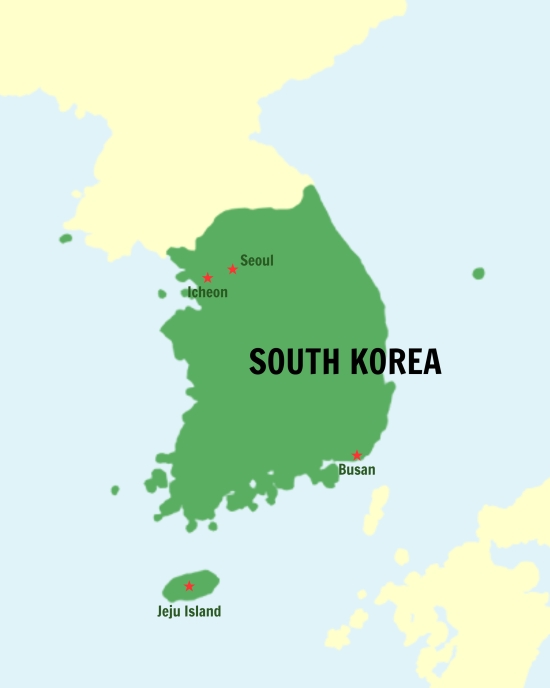
Jeju Island
- India issued a travel advisory clarifying Jeju Island’s visa-free entry rules after a reported detention of an Indian traveller under the Republic of Korea’s visa waiver scheme.
- The advisory emphasised that visa-free eligibility does not guarantee entry, which remains subject to immigration clearance under Korean law.
About Jeju Island
- Geographic Type: Jeju is South Korea’s largest and southernmost volcanic island.
- Location: Jeju lies near the Korean Strait, separating South Korea from Japan (Tsushima Islands).
- Administrative Status: Jeju is formally designated as the Jeju Special Self-Governing Province, enjoying enhanced administrative autonomy within the Republic of Korea since 1 July 2006.
- Highest Peak: Mount Hallasan (1,950 m), a dormant volcano, is the tallest mountain in South Korea.
- UNESCO Status: Jeju Volcanic Island and Lava Tubes were designated a UNESCO WHS (2007).
- Climate Character: Warm ocean currents give an oceanic climate supporting subtropical vegetation.